Mainland Southeast Asia · Volume 42, The Tea Leaf, the Curry Oil and the Caravan Road
Khao Soi
Lanna and the Yunnanese caravan world, Chiang Mai
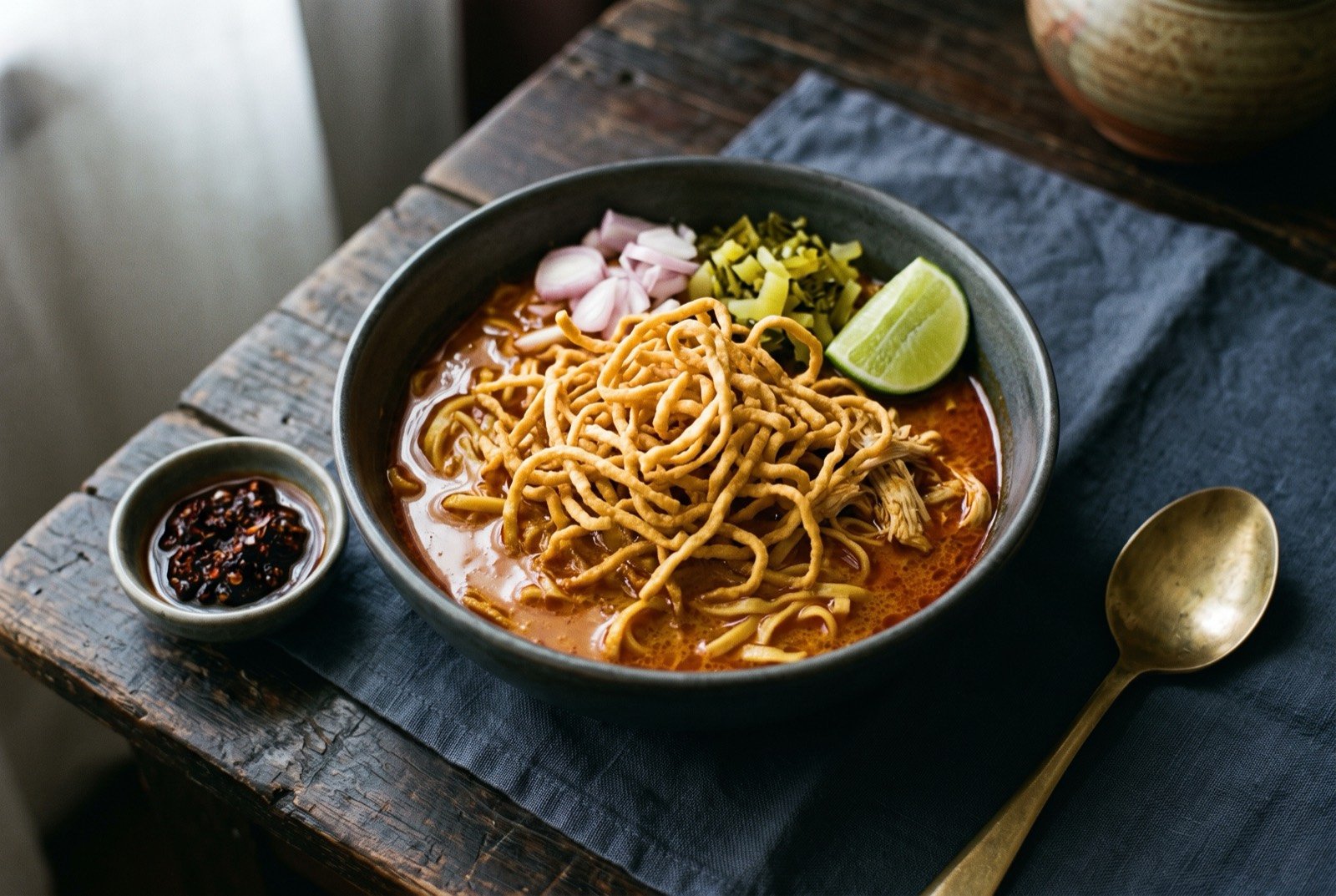
An illustration of the dish, not a photograph of it cooked.
- Time
- 1 hour
- Researched
- 12 sources cited
- Reviewed
- Not yet reviewed from inside the tradition
- Cooked
- Not yet cooked and reported
As tradition built it
Serves 2 to 3. About 1 hour.
Ingredients
- 50g dried large chillies
- 15g dried small chillies
- 10g galangal
- 50g lemongrass
- 10g kaffir lime zest
- 10g coriander root
- 100g shallot
- 150g garlic
- 15g coriander seed
- 10g cumin seed
- 10g black pepper
- 20g shrimp paste
- 15g salt
- 3 to 4 chicken pieces, thigh or drumstick
- 2 cups coconut milk
- 1 cup water
- 2 tbsp oil
- 100g egg noodles, boiled, plus a portion deep-fried
- for garnish sliced shallot, pickled mustard greens, lime, chilli-oil relish, to garnish
Method
- Dry-roast the coriander seed, cumin seed, black pepper and dried chillies in a bare pan until fragrant. Grind, then pound or blitz together with the galangal, lemongrass, kaffir lime zest, coriander root, shallot, garlic, shrimp paste and salt into a paste.
- Heat the coconut milk's thick cream in a pot, fry the paste in it until the paste itself fries and the oil visibly separates, before adding the chicken.
- Cook the chicken through in the fat, then loosen with the water and remaining coconut milk, simmer until tender.
- Blanch and drain the noodles well, then deep-fry a portion until puffed and crisp for the topping.
- Serve the soft noodles in the broth, topped with the crispy fried noodles, sliced shallot, pickled mustard greens, a lime wedge and chilli-oil relish, all kept separate rather than stirred through.
What a modern chef changes
Both oil-breaks respected as the actual technique, and the toppings deliberately kept apart
Rung 2
Method
- Toast the whole spices fully and separately before grinding, using a dedicated spice grinder rather than throwing everything into a blender together; the dry-roast is doing real chemical work that a wet pound alone cannot replicate.
- Fry the finished paste hard in the coconut cream until it visibly breaks, twice if it re-emulsifies too early, before adding the chicken. This second oil-break is the paste's own concentration step and skipping it is the single biggest reason a bought-paste version tastes flat.
- Serve every topping separately on the tray, following Win Srinavakool's own deconstructed service, so the crispy noodle stays crisp until the diner adds it.