The Indian subcontinent · Volume 13, The Tandoor Wall, the Wagah Line and a Contested Butter Chicken
Sarson da saag with makki di roti
Punjab, both sides of the border
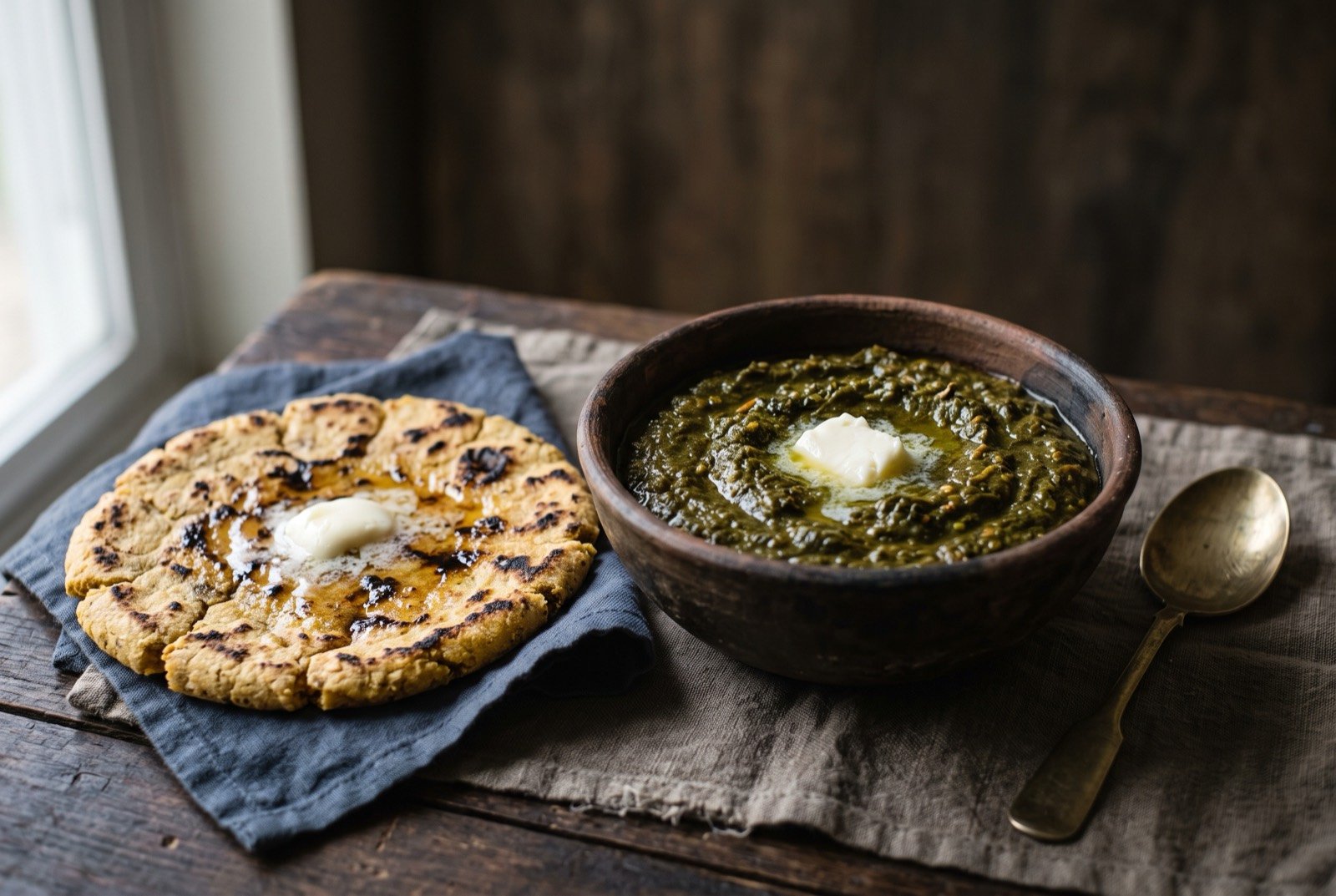
An illustration of the dish, not a photograph of it cooked.
- Time
- 1 hour 30
- Reviewed
- Not yet reviewed from inside the tradition
- Cooked
- Not yet cooked and reported
Mustard greens cooked down slowly with spinach and, where available, bathua and methi, thickened traditionally with a little maize flour rather than cream, finished with a knob of white butter. Its partner, makki di roti, a maize-flour flatbread made without gluten's help, is handled and patted rather than rolled thin. Dawn's own Urdu food-history reporting states the dish has existed in Punjab for roughly five centuries, originally specifically the food of rural field labourers, its density suited to a day of hard physical farm work, seasoned with little beyond salt, ginger, green chilli and the greens themselves. A cluster of English-language lifestyle sites claims the pairing became iconic specifically because Partition-era migrants ate it on the street; this chapter has deliberately not repeated that claim, since it appears in no stronger source and the Pakistani-side sourcing instead independently confirms the dish's older, working-class rural roots.
As tradition built it
Serves 8 to 10. About 1.5 hours.
Ingredients
- 1.8kg mustard greens, stems included
- 900g spinach
- 900g fenugreek leaves, if available
- 0.5 cup water
- 5 to 7 green chillies
- 1 inch ginger
- 1 tsp jaggery
- to taste salt and butter, to taste
For the roti
- 4 cups cornmeal (makki ka atta)
- 2.5 to 3 cups lukewarm water
- optional, to taste coriander and green chilli, chopped, optional
Method
- Wash the mustard greens, spinach and fenugreek leaves, if available, two to three times, roughly chop, and cook down slowly in a covered pot with the water, chillies and ginger until fully softened.
- Mash or blend to a coarse puree and return to low heat with the jaggery and salt, simmering a further 10 to 12 minutes to thicken.
- Finish with a generous knob of butter stirred through, or melting on top at the table.
- For the roti, mix the cornmeal with lukewarm water and any additions into a soft dough, and pat, rather than roll, into rounds by hand, cooking on a hot tawa with oil or butter until lightly charred, serving with the coriander and green chilli, if using.
What a modern chef changes
A finish worth the same discipline as the churn itself.
Rung 6
Method
- Finish with genuine bilona-style or hand-churned butter, rather than an ordinary supermarket block, since this is exactly the dish where dairy carries real weight and a real difference in flavour is easiest to taste.
- Reduce the saag slightly further than instinct suggests before adding the final butter, so the fat sits on top rather than thinning the puree.
- Cook the makki roti on a well-seasoned cast-iron tawa specifically, its heat retention giving the maize flatbread the light char that a modern non-stick pan struggles to produce given how little gluten the dough has to hold it together.