The Indian subcontinent · Volume 13, The Tandoor Wall, the Wagah Line and a Contested Butter Chicken
Dal makhani
Amritsar and Delhi
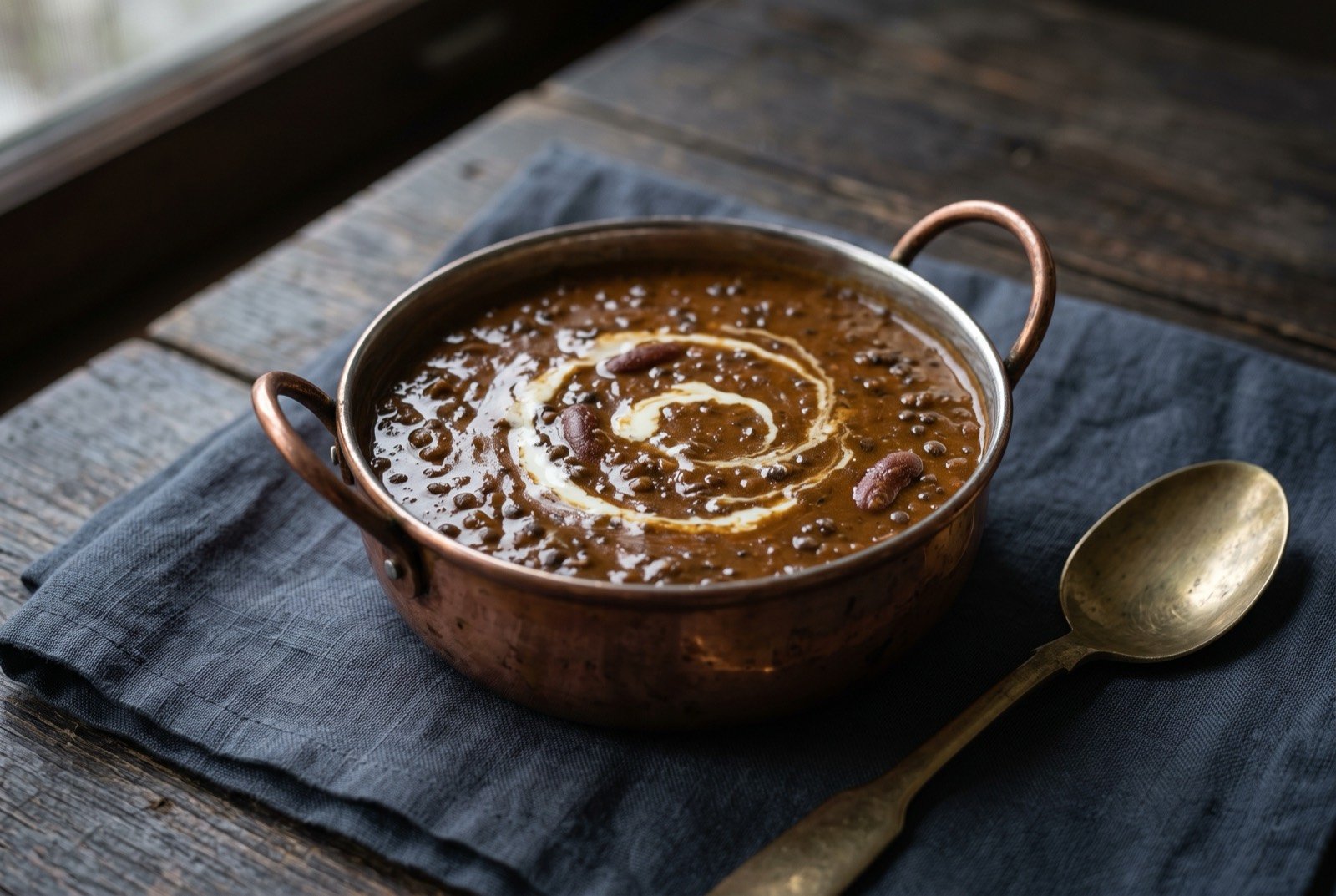
An illustration of the dish, not a photograph of it cooked.
- Time
- 1 hour
- Reviewed
- Not yet reviewed from inside the tradition
- Cooked
- Not yet cooked and reported
Whole black urad dal, sometimes with a portion of rajma, cooked for many hours until the lentils' own starch breaks down into a naturally creamy body, finished with butter and cream in its modern restaurant form. The dish descends from a much older, plainer village stew, maa ki dal, cooked without butter or cream at all. Both Kesar Da Dhaba, Amritsar, and Moti Mahal, Delhi, claim to have created the buttery restaurant version now eaten worldwide; food historian Pushpesh Pant disputes the whole framing of a single inventor regardless, noting plainly that meat and lentils have been cooked in a tandoor "since Vedic and Indus Valley times."
As tradition built it
Serves 6. About 1 hour, plus soaking and a long slow simmer.
Ingredients
- 200g whole urad dal (black gram), soaked overnight
- 55g rajma (red kidney beans), soaked overnight
- to taste salt
- 2 tbsp ghee
- 1 onion, finely chopped
- 3 cloves garlic, minced
- 1 tbsp ginger, grated
- 200g tomato puree
- 1 tsp Kashmiri red chilli powder
- 50g butter
- 100ml cream
Method
- Drain the soaked dal and rajma and simmer in fresh salted water 45 minutes to 2 hours, depending on method, until the lentils can be smashed easily between the fingers.
- In a separate pan, soften the onion in ghee, add garlic and ginger, then the tomato puree and chilli powder, and cook down 10 minutes.
- Combine the cooked lentils with the tomato base and simmer gently for as long as time allows, a minimum of a further 30 to 40 minutes on the stove, considerably longer if replicating a genuine overnight ember simmer.
- Finish with the butter and cream, stirred through off the heat.
Notes
No restaurant's own published recipe with real quantities was found for this dish; the method above is a credible home-kitchen reconstruction, useful for proportion, not a substitute for the ember method described in the Technique Ladder.
What a modern chef changes
Time treated as the actual ingredient.
Rung 3
Method
- Cook the lentils overnight in a very low oven or a slow cooker, rather than only pressure-cooking and finishing quickly, the closest realistic domestic equivalent to a dying tandoor's embers.
- Judge doneness by texture, not the clock alone: a properly slow-cooked dal holds together in a spoon rather than collapsing into grit.
- Add the cream in two stages, most of it stirred through gently during the last hour of cooking so it has time to marry with the lentils, a final small amount finished raw at the table for shine.