France and the Alps · Volume 11, Butter, Cider and the Buckwheat Line
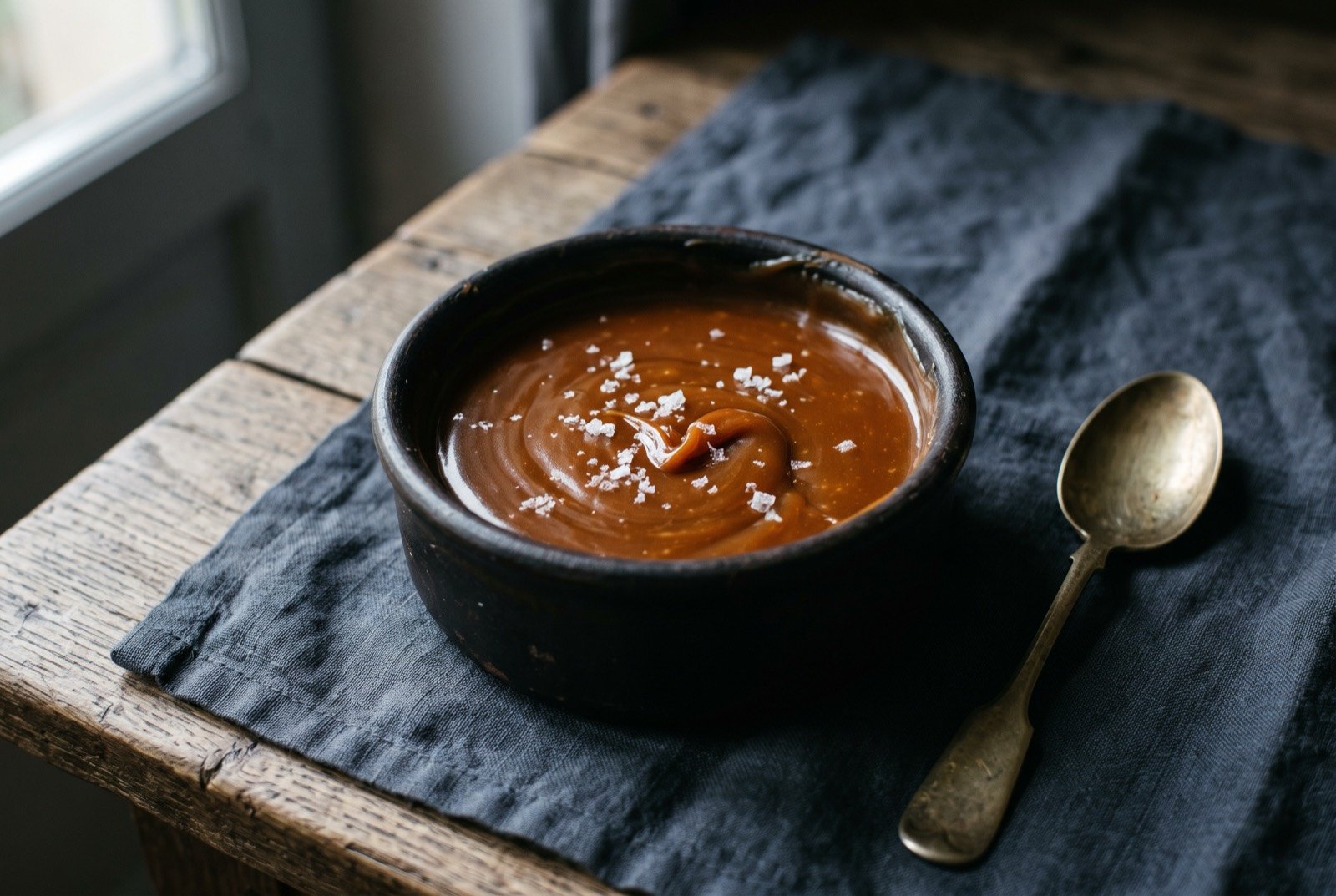
Caramel au beurre salé, Isigny
Isigny, Normandy
Illustration
- Time
- 10 minutes
- Researched
- Researched from 72 sources in the brief
A genuinely Norman claim, and one this chapter is careful to keep separate from the better-known Breton salted caramel tradition associated with Quiberon and the confectioner Henri Le Roux, which is a real but later and separate story, generally dated to the 1970s and 1980s. The Norman version is older: the first recipe for a hard milk-and-cream caramel from Isigny was developed in 1932 by the Établissements Galliot, with a second Lower Normandy producer, Dupont d'Isigny, credited with popularising it commercially using Isigny's own AOP butter.
As tradition built it
Makes about 400 g. Cooks 8 to 10 minutes over low heat before the butter is added.
Ingredients
- 100 g sugar
- 120 g Isigny cream, warmed
- 60 g, or to taste salted Isigny butter
Method
- Dry-caramelise the sugar to a deep amber.
- Carefully deglaze with the warmed Isigny cream.
- Off the heat, beat in the salted Isigny butter until glossy.
- Pour to set, or bottle hot as a sauce.
Notes
No specific historical recipe with fixed quantities survives in the sourcing behind this chapter; the method is given honestly instead of an invented precision.
What a modern chef changes
A darker caramel, a sous vide-warmed cream, and a chinois finish
Method
- Toast the sugar to a genuinely dark, near-bitter amber, further than most home cooks are comfortable taking it, since the AOP butter's own salt and the cream's fat both need a real depth of caramel behind them to balance rather than simply sweeten.
- Warm the cream separately in a sous vide bath to a precise, held temperature before deglazing, so it meets the hot sugar without the sudden violent bubble-up a cold or unevenly warmed cream causes, giving a smoother, more controlled emulsion.
- Pass the finished caramel through a chinois before it sets, for a glass-smooth result with none of the small sugar crystals a home batch can otherwise carry.