The Horn · Volume 10, The Highland Ferment
Abish / hulbat marakh
Harar and the Oromo of eastern Ethiopia
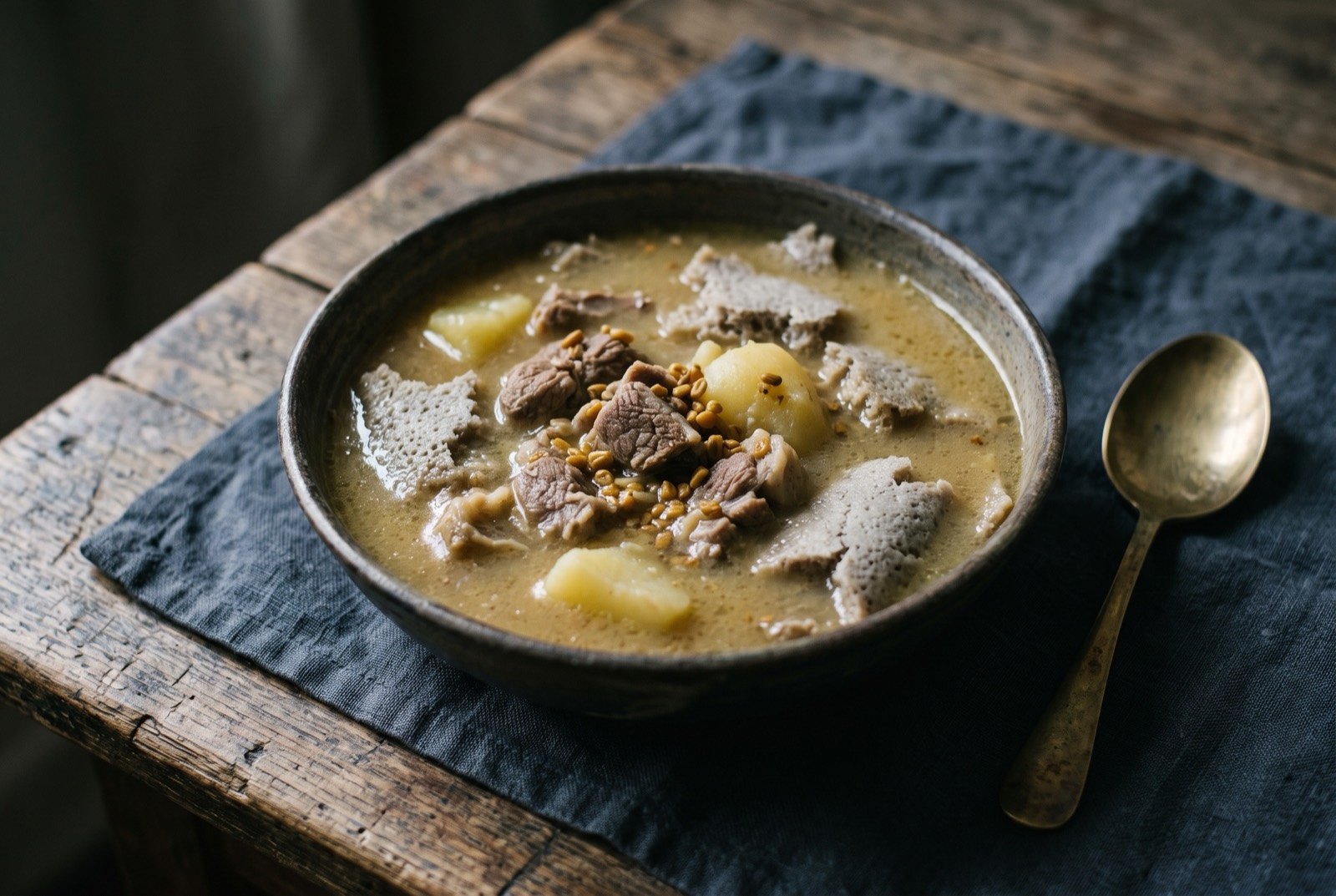
Illustration
- Time
- 1 hour 30
- Researched
- Researched from 149 sources in the brief
- Reviewed
- Awaiting a reader from inside the tradition
- Cooked
- Awaiting a cook report
Every generalisation in this chapter breaks on this dish, which is why it is here. Abish is traditionally made without butter and without berbere. Fenugreek is the dominant flavour, not chilli, the base is meat and potato with tomato and onion, and the injera is torn into the broth rather than laid underneath it. It is the national dish of the Harari and of the Oromo around Harar, and it belongs to a food world that faces the Red Sea rather than the plateau. Cook it straight after the other ten: nothing will show you as clearly how much of what you think of as Ethiopian food is actually highland Christian food.
As tradition built it
Serves 4. About 1 hour 30.
Ingredients
- 700 g lamb or beef shoulder, in 3 cm pieces
- 3 tbsp fenugreek seeds, whole
- 3 onions, chopped, and 4 tomatoes, chopped
- 500 g potatoes, in large chunks
- 4 garlic cloves and 20 g ginger, pounded
- 1 tsp cumin seed, toasted and ground
- 60 ml oil
- 1.2 L water
- to taste, injera torn in salt, and injera to tear in
Method
- Toast the fenugreek seeds in a dry pan under a minute, until it smells of maple and celery, then grind two thirds and leave a third whole.
- Soften the onions in the oil, then add the garlic cloves and 20 g ginger, and the toasted, ground cumin seed.
- Add the lamb or beef shoulder and brown it lightly, then the tomatoes, and cook them down 15 minutes.
- Add the ground and whole fenugreek and the water. Simmer covered 45 minutes.
- Add the potatoes and simmer a further 25 to 30 minutes, until they break under a spoon and the broth has thickened slightly from their starch.
- Salt, and serve in bowls with injera torn in, not laid under.
Notes
The Harari material available here is thinner than the highland material, so this follows the documented description rather than a weighed household recipe, and the chapter says so rather than inventing numbers.
What a modern chef changes
The bitterness controlled, the broth clarified, and the starch used deliberately
Rungs 4, 5 and 6
Method
- Split the fenugreek into three doses. A third toasted and ground into the base, a third whole in the simmer for slow release, and a third soaked in cold water for an hour with the water discarded, added in the last 10 minutes for aroma without full bitterness. The bitter principles are water-soluble; the aroma compounds are not lost with them.
- Build the broth separately and clarify it. Simmer the bones and trim, strain through muslin, defat, and cook the meat in that. Real body and no scum.
- Use the potato as the thickener, on purpose. Cook a third to complete collapse and crush it in, and add the rest 20 minutes later so it stays in pieces. Same ingredient, two jobs.
- Fry a piece of injera for the top. Rung 6: one crisp element added at the table gives a broth full of soft bread the only contrast it lacks. Do not stir it in.
Notes
Part Four