The Horn · Volume 10, The Highland Ferment
Tihlo
Tigray and highland Eritrea
Illustration
- Time
- 1 hour
- Researched
- Researched from 149 sources in the brief
- Reviewed
- Awaiting a reader from inside the tradition
- Cooked
- Awaiting a cook report
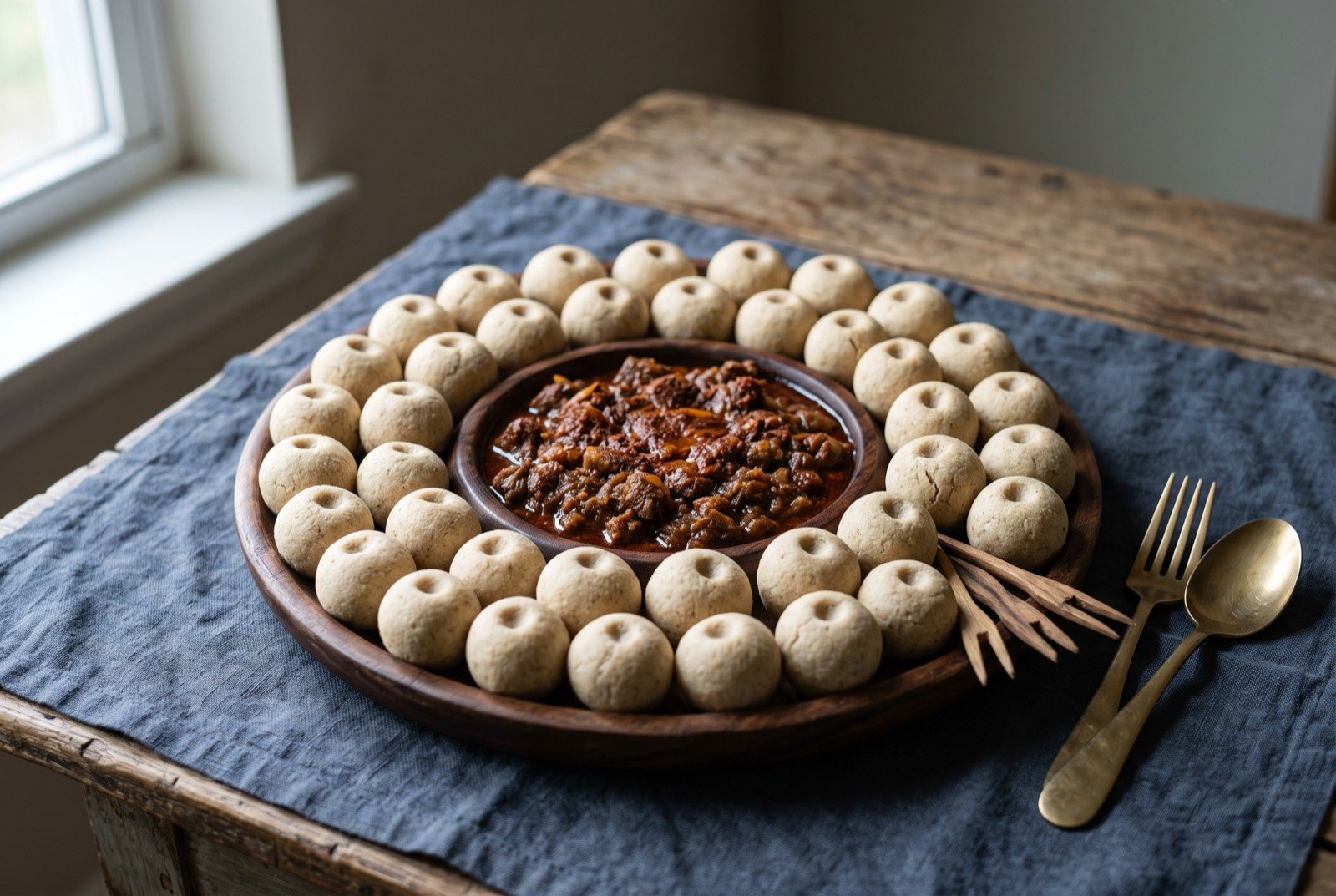
Tihlo is the argument that this region is not one cuisine. It uses no teff, no injera and no wat architecture at all: roasted barley flour worked with warm water into a stiff dough, rested, and rolled into balls the size of a golf ball, arranged around a central well of zigni on a shared gebeta tray. Each ball is speared on a small forked wooden stick, the shenter or mefeteshia, and dipped. It is prepared and served by women, and it is a dish of hospitality and celebration. Mechanically it is closer to a Swiss or Tibetan barley preparation than to anything else in this chapter, which is what happens when you follow the ecology rather than the flag.
As tradition built it
Serves 4. About 1 hour, plus the zigni.
Ingredients
- 500 g barley flour, roasted
- 400 to 450 ml hot water
- 1 tsp salt
- 1 batch zigni, as dish six
Method
- If the barley flour is not already roasted, toast it dry over medium heat, stirring constantly, until it turns a shade darker and smells of biscuit rather than raw flour. Cool it.
- Salt the water and bring it to just under the boil. Work the hot water into the flour gradually with a strong wooden spatula to a stiff, smooth, cohesive dough.
- Rest it covered 15 minutes. The starch hydrates fully and the dough becomes markedly easier to shape.
- With wet hands, roll into balls of about 25 g, pressing a small dimple into each with the thumb.
- Arrange in a ring around a central well of hot zigni, and serve with the forked sticks.
What a modern chef changes
The roast measured, the hydration weighed, and the dip concentrated
Rungs 4 and 6
Method
- Roast the flour to a colour and a temperature, not a feeling. A pale biscuit colour, stopping when the aroma turns from raw starch to toasted grain, around 130°C on a probe in the flour bed. Further and it goes bitter; short of it and the dish tastes of nothing much.
- Weigh the water at 85 to 90 per cent of the flour weight. Barley flours vary in absorption more than teff does, and a dough 5 per cent too wet slumps off the stick.
- Reduce the zigni for the well. The dip must cling to a dry ball rather than soak into bread, so reduce a ladleful by a third and mount it with a teaspoon of tesmi off the heat. Rung 4.
- Toast the outside of the balls. Thirty seconds a side on a hot dry plate gives a thin dry skin over a soft interior. Rung 6: the one textural axis the dish will accept without becoming a different thing.