The Sinosphere · Volume 37, The Barley Line, the Butter Churn and What Exile Carried Out
Balep korkun
Ü-Tsang, central Tibet
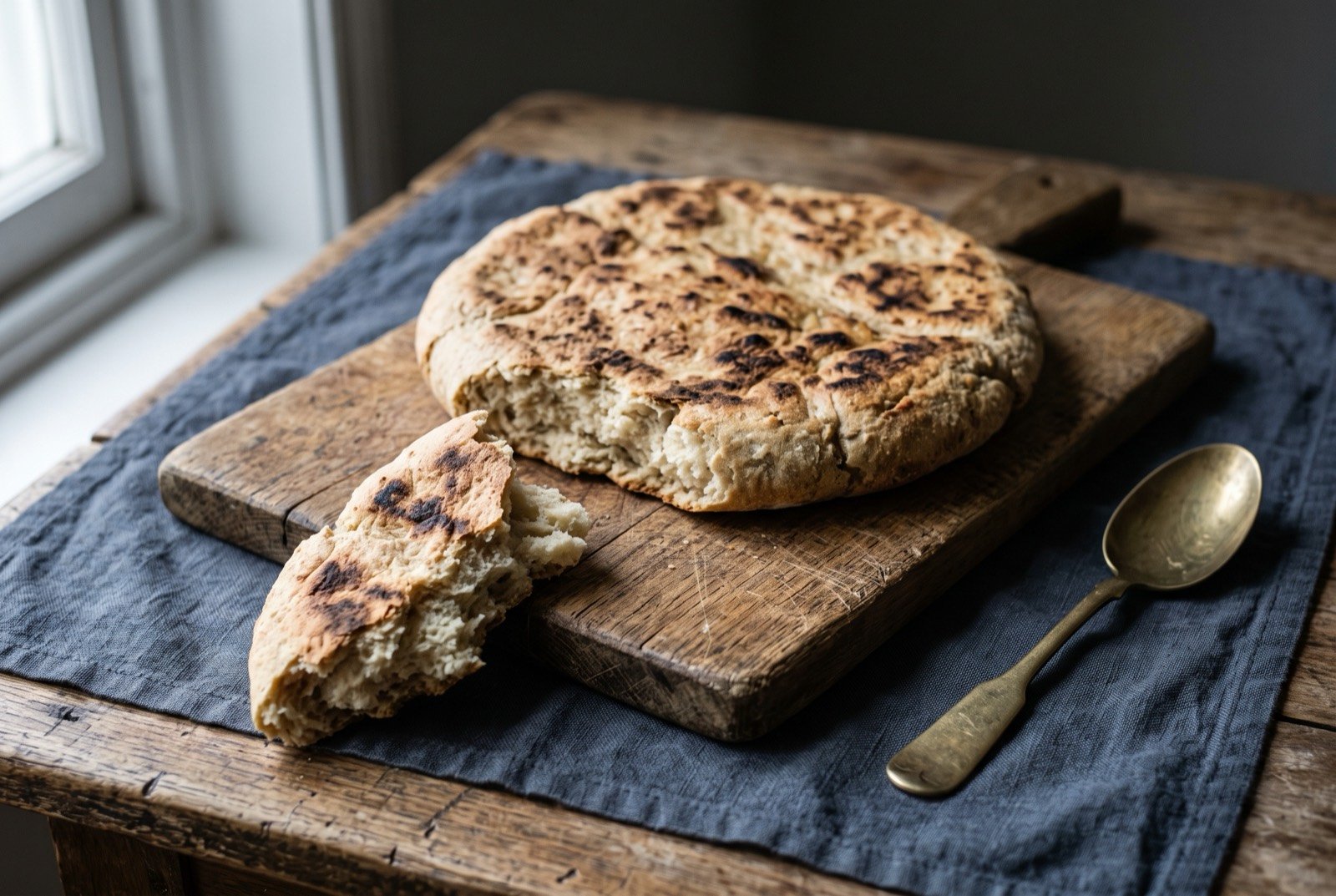
An illustration of the dish, not a photograph of it cooked.
- Time
- 35 minutes
- Reviewed
- Not yet reviewed from inside the tradition
- Cooked
- Not yet cooked and reported
Central Tibet's everyday flatbread, unleavened, made from plain wheat or historically barley flour and water. This is a genuine regional marker rather than one generic "Tibetan bread": the Amdo version of balep is yeasted and includes oil, sugar and yoghurt in the dough, a different bread entirely, and this chapter treats the central Tibetan, Ü-Tsang version as its own dish rather than conflating the two.
As tradition built it
Makes 4. About 35 minutes, plus resting.
Ingredients
- 2 cups (roughly 250 g) plain flour
- 1 tbsp baking powder
- 1 cup water
Method
- Mix 2 cups (roughly 250g) plain flour with 1 tablespoon baking powder and 1 cup water by hand into a smooth, flexible dough, kneading until it no longer sticks to the bowl.
- Divide into 4 portions, shape into balls, and rest, covered, for 15 to 20 minutes.
- Roll each ball flat into a round about 1.5 to 2cm thick.
- Cook in a covered, ungreased, dry skillet: high heat to begin, then reduced to medium, for a total of about 15 minutes, turning every 4 to 5 minutes so both sides cook through evenly without the exterior burning before the centre sets.
What a modern chef changes
A third of the flour roasted, and a griddle held steady
Rung 1
Method
- First, replace a portion of the wheat flour, up to a third, with the elevated tsampa flour from dish one, a genuine departure from the strictly wheat-based tradition but one that ties the bread back to the same barley economy the rest of this chapter is built on, honestly flagged as an addition rather than claimed as traditional practice.
- Second, cook on a Big Green Egg's flat griddle plate held at a steady, measured temperature rather than a variable domestic hob, for an even, controlled crust across every bread in a batch.
- Third, brush the finished bread with a little dri-adjacent cultured butter, see Sourcing below, the moment it comes off the heat, so it melts into the surface rather than sitting on top of it.
- Fourth, serve one portion torn warm and unadorned, as tradition eats it, alongside a second portion split and filled with a small amount of the shabhaleb filling below, an honest, stated fusion of two dishes from this same chapter rather than an invented foreign pairing.