The Sinosphere · Volume 37, The Barley Line, the Butter Churn and What Exile Carried Out
Shabhaleb
Ü-Tsang, central Tibet
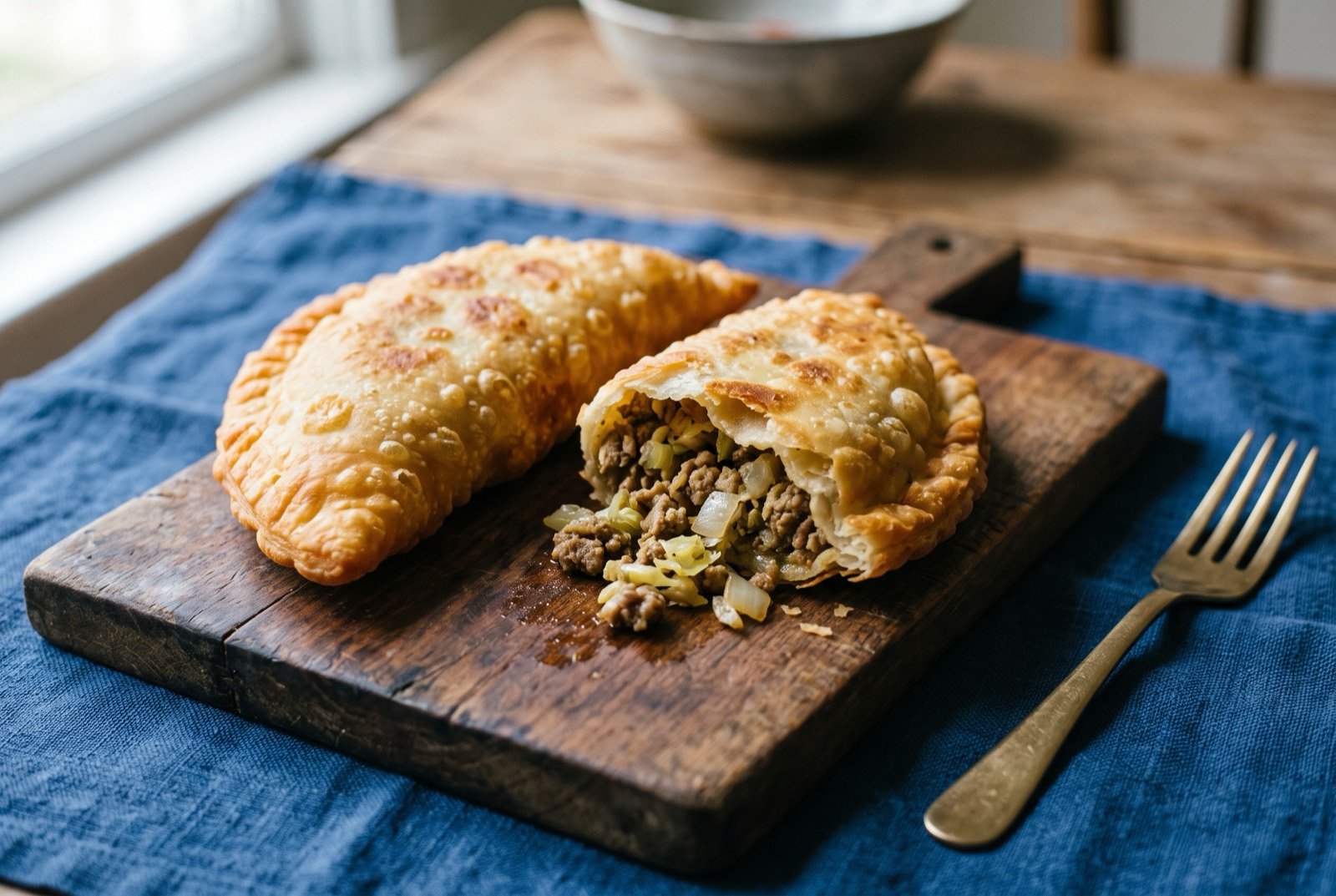
An illustration of the dish, not a photograph of it cooked.
- Time
- 45 minutes
- Reviewed
- Not yet reviewed from inside the tradition
- Cooked
- Not yet cooked and reported
Fried meat pastry, its name meaning literally "meat bread." In central Tibet specifically, many people eat sha phaley for breakfast, a detail worth keeping because elsewhere, and more generally, it functions as a lunch or dinner dish, usually served with a soup alongside.
As tradition built it
Makes about 8. About 45 minutes.
Ingredients
For the dough
- 500 g plain flour
- a pinch salt
- 2 tbsp oil
- roughly 250 ml warm water
For the filling
- 400 g minced meat, traditionally yak
- 1, small onion, finely chopped
- a handful cabbage, finely shredded
- a little ginger, grated
- a little garlic
- to taste salt and pepper
Method
- Make a simple dough from 500g plain flour, a pinch of salt, 2 tablespoons oil and roughly 250ml warm water, kneaded smooth and rested, covered, for 20 minutes.
- For the filling, combine 400g minced meat, traditionally yak, with a small finely chopped onion, a handful of finely shredded cabbage, a little grated ginger and garlic, and salt and pepper to taste, keeping the mixture on the drier side deliberately: a practitioner-facing source states plainly that the dough should be pressed as flat as possible without tearing, and that an over-wetted filling is what causes the dough skin to split during shaping or frying, a genuinely traditional technical note rather than recipe-blog invention.
- Divide the dough into portions, flatten each thin, place a spoonful of filling in the centre, fold and seal into a flattened semi-circle or circle, and pan-fry or deep-fry until golden on both sides and the filling is cooked through, 3 to 4 minutes a side in a well-oiled pan.
Notes
This chapter's exact quantities are a working recipe cross-checked across several diaspora sources rather than a single definitive in-tradition text with quantities of its own, a gap worth stating rather than smoothing over.
What a modern chef changes
A longer rest, a basted filling, and the guthuk broth as its dip
Technique note: a soup-dumpling logic applied to a fried pastry
Method
- First, rest the dough for a full hour rather than 20 minutes, for a more extensible gluten structure that presses thinner without tearing, directly addressing the tearing risk the tradition's own technique note flags.
- Second, bind the filling with a small amount of reduced, gelatinous stock folded in cold, so it bastes the meat from within as it cooks without over-wetting the raw mixture, the same soup-dumpling logic used for momo elsewhere in the atlas, applied here to a pan-fried pastry rather than a steamed one.
- Third, cook a portion on a Big Green Egg's flat plate with a small amount of clarified dri-adjacent butter rather than a neutral pan oil, for a richer crust.
- Fourth, serve alongside a small cup of the guthuk broth from dish four rather than a plain accompanying soup, tying two dishes in this chapter together rather than inventing a dip from outside it.