The Sinosphere · Volume 37, The Barley Line, the Butter Churn and What Exile Carried Out
Dresi
Ü-Tsang, central Tibet; eaten across Tibet at weddings and Buddhist holidays
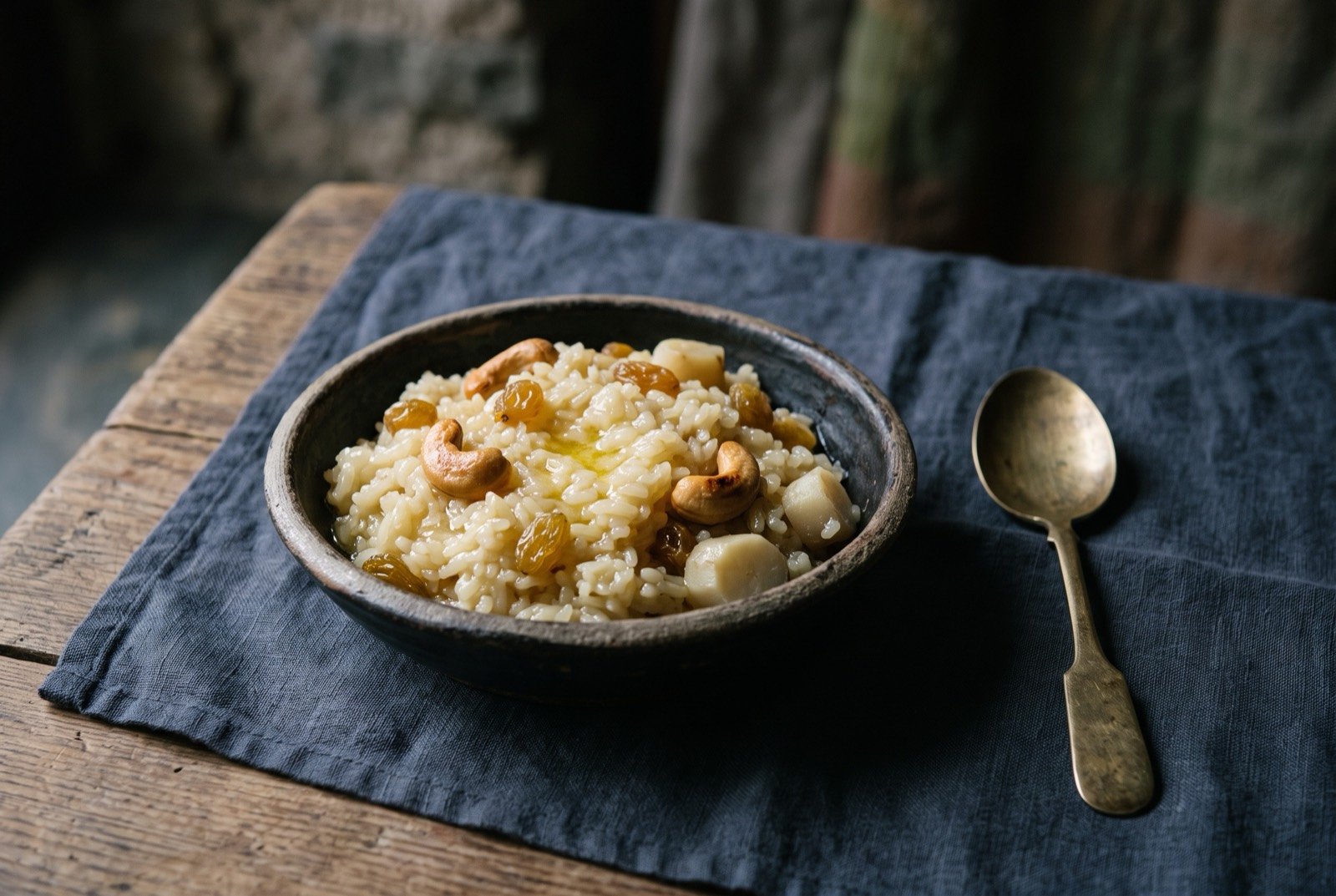
An illustration of the dish, not a photograph of it cooked.
- Time
- 45 minutes
- Reviewed
- Not yet reviewed from inside the tradition
- Cooked
- Not yet cooked and reported
Tibet's festival sweet rice, served at weddings and Buddhist holidays generally, but specifically the dish eaten first thing on the morning of the first day of Losar, New Year. "Droma dresil," made with the wild droma tuber, is common enough that the two names are often used interchangeably.
As tradition built it
Serves 6. About 45 minutes.
Ingredients
- 2 cups (roughly 400 g) rice, basmati is a workable substitute outside Tibet
- 3.5 cups water
- 1 cup, optional droma, boiled separately in 3 to 4 cups water
- 6 tbsp butter
- ½ cup unsalted cashew nuts
- 1 cup raisins
- ¼ cup, optional sugar (often left out given the sweetness of the raisins)
- optional, for the fuller Losar-morning version dried cherries, pecans and pine nuts
Method
- Cook 2 cups (roughly 400g) rice, basmati is a workable substitute outside Tibet, in 3.5 cups water until tender.
- If using droma, boil 1 cup separately in 3 to 4 cups water for 35 to 40 minutes until softened but not mushy, then drain and rinse thoroughly to remove grit, since it is dug straight from the ground.
- Combine the cooked rice with 6 tablespoons butter, ½ cup unsalted cashew nuts, 1 cup raisins, ¼ cup sugar (optional; often left out given the sweetness of the raisins) and the droma if using.
- Mix everything together gently and serve warm in small bowls.
- On the morning of Losar itself, a fancier version adds dried cherries, pecans and pine nuts alongside the standard fruit and nuts.
What a modern chef changes
Toasted nuts, a savoury stock and a disc of browned butter
Toasting, reduction and clarification
Method
- First, toast the cashew nuts and any additional nuts separately in a dry pan before folding them through, a small step the tradition's straight mix skips, for a deeper roasted flavour against the plain sweetness of the rice.
- Second, cook the rice in a rich, reduced stock in place of a portion of the water, an honest savoury undertone the traditional plain-water method does not have, stated clearly as a modern addition rather than dressed up as authentic.
- Third, dehydrate a portion of the raisins and cherries to a leathery, concentrated state and fold them through at the very end rather than with the rest, for a more intense pocket of fruit flavour scattered through the dish rather than evenly diffused.
- Fourth, finish with a disc of clarified, browned butter poured over just before serving, its nutty depth standing in for the plain melted butter tradition calls for, made with a chinois to strain out the milk solids cleanly.