The Sinosphere · Volume 37, The Barley Line, the Butter Churn and What Exile Carried Out
Khapse
Pan-Tibetan, central Tibetan Losar tradition
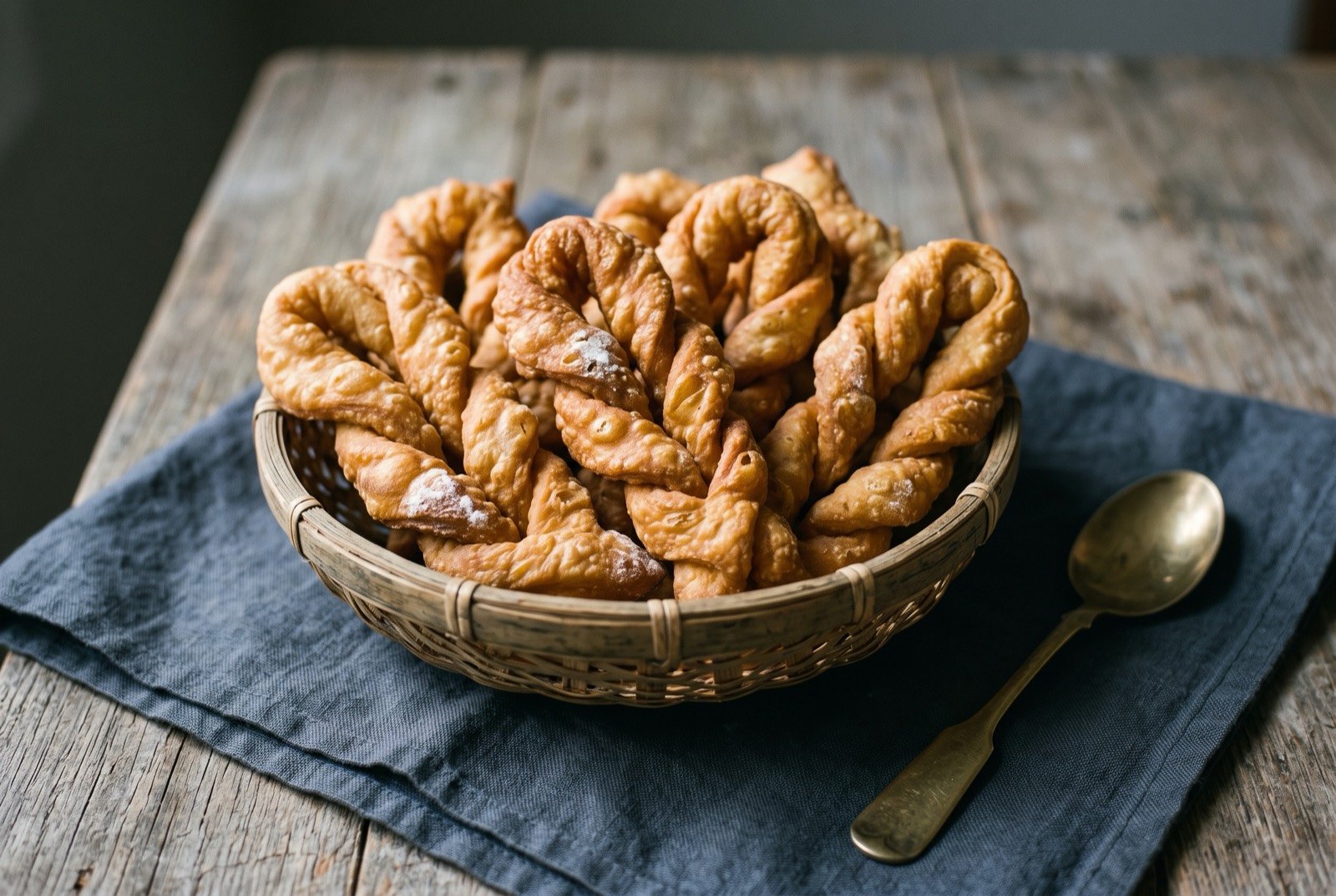
An illustration of the dish, not a photograph of it cooked.
- Time
- 1 hour
- Reviewed
- Not yet reviewed from inside the tradition
- Cooked
- Not yet cooked and reported
Deep-fried Losar pastries, made in large batches well before the festival, shaped into knots, braids and flower-like forms carrying symbolic meaning around abundance, prosperity and hospitality.
As tradition built it
Makes a large batch. About 1 hour, plus resting.
Ingredients
- 4 cups (about 800 g) flour
- ⅓ cup (about 67 g) sugar
- 1 cup (about 200 g) milk, or a milk-and-cream mix
- ½ cup (about 100 g) oil or melted butter
- about 1 litre oil for deep-frying, traditionally butter or mustard oil; corn oil is a common exile substitute, giving a lighter colour
Method
- Combine 4 cups (about 800g) flour, ⅓ cup (about 67g) sugar and 1 cup (about 200g) milk or a milk-and-cream mix into a smooth dough, working in ½ cup (about 100g) oil or melted butter as you go.
- Rest the dough under a damp cloth for 30 minutes.
- Shape into knots, braids or simple twists, and deep-fry in about 1 litre of oil, traditionally butter or mustard oil, heated to a moderate temperature, until golden brown and crisp, turning as needed for even colour.
Notes
A nunnery-diaspora source notes corn oil is commonly substituted in exile, giving a lighter colour than the traditional frying fat; exact fry temperature and any egg quantity some family recipes include could not be confirmed from any source consulted, and are left as a genuine gap rather than invented.
What a modern chef changes
A monitored fry temperature, and a taste of what storage does to the crumb
Technique note: a precisely held frying temperature
Method
- First, hold the frying oil at a precisely monitored temperature with a probe thermometer, rather than by eye, for consistent colour and crumb across a large batch, exactly the kind of control the tradition's open-fire frying could never offer.
- Second, laminate a portion of the dough with a thin layer of butter before shaping, a genuine departure from the plain enriched dough tradition uses, for a flakier bite on a portion of the batch, presented honestly as an addition rather than a traditional variant.
- Third, dehydrate a light citrus zest, if using, before working it into the dough, concentrating the aromatic without adding the moisture fresh zest would.
- Fourth, serve a portion still warm from the fryer alongside a portion made a day ahead and stored, since khapse is traditionally made well in advance of the festival itself, letting a diner taste the genuine difference storage makes to the texture rather than pretending the dish is only ever eaten fresh.