The Indian subcontinent · Volume 19, The Ash Pot, the Bamboo Basket and a Border the Map Draws Wrong
Bai
Mizoram, Mizo
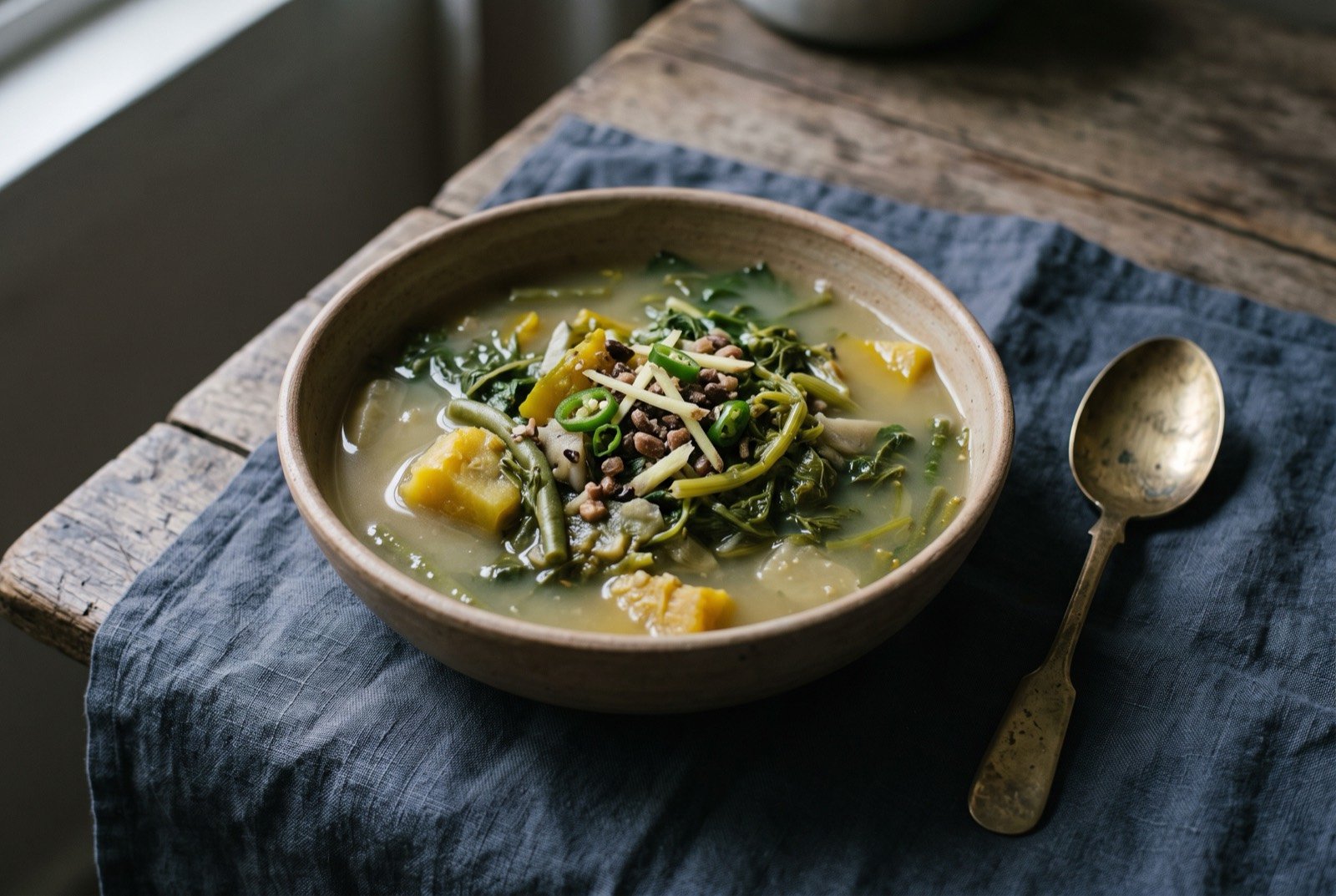
An illustration of the dish, not a photograph of it cooked.
- Time
- 30 minutes
- Reviewed
- Not yet reviewed from inside the tradition
- Cooked
- Not yet cooked and reported
A minimal oil Mizo vegetable stew, historically made with lard and now more often a small amount of mustard oil, built on whatever forest foraged or seasonal vegetables are available and flavoured with bekang, fermented soybean, or sa-um, fermented pork fat, rather than a spice base.
As tradition built it
Serves 4. About 30 minutes.
Ingredients
- 1 tbsp mustard oil, or traditionally a spoon of rendered lard
- 1 onion, sliced
- 2 green chillies, chopped
- 1 thumb ginger, chopped
- 2 garlic cloves, chopped
- 300 g mixed seasonal or foraged greens, roughly chopped, plus any vegetable to hand, pumpkin, bamboo shoot, mustard leaf
- 2 tbsp bekang, or 1 tbsp sa-um in its place
- Enough to just cover water, to just cover
- to serve plain rice, to serve
Method
- Heat the mustard oil, or traditionally a spoon of rendered lard, and soften the sliced onion, green chillies, ginger and garlic.
- Add the mixed greens and any vegetable to hand, along with the bekang, or the sa-um in its place, stirred through to break down and season the vegetables rather than added as a garnish.
- Add enough water to just cover and simmer 15 to 20 minutes until the vegetables are tender and the liquid has reduced slightly.
- Serve with plain rice.
What a modern chef changes
A natto based bekang, greens blanched separately and an aged pork fat
Rungs 3 and 5
Method
- First, since genuine bekang is not obtainable in Britain, mash shop bought natto lightly and cook it out gently for several minutes as the fermented base, the same substitution this chapter uses for axone, since both ferments share the same Bacillus subtilis fermentation.
- Second, forage or select the freshest possible seasonal greens and blanch each variety separately for its own correct time before combining, since a single simmer treats a delicate leaf and a tougher stem identically and the tradition dish, built on whatever is available, was never designed to control for that the way a British kitchen with a full vegetable market can.
- Third, render pork fat separately and age it briefly, a few days refrigerated, for a flavour closer to sa-um's fermented character than fresh lard gives, an honest approximation rather than a true ferment.
- Fourth, finish with a dehydrated vegetable powder, made from the trim of whatever greens went into the pot, dusted over the top for a concentrated, savoury note that intensifies the dish's own vegetables rather than adding anything foreign to it.