The Indian subcontinent · Volume 19, The Ash Pot, the Bamboo Basket and a Border the Map Draws Wrong
Masor tenga
Assam
Illustration
- Time
- 30 minutes
- Researched
- Researched from 121 sources in the brief
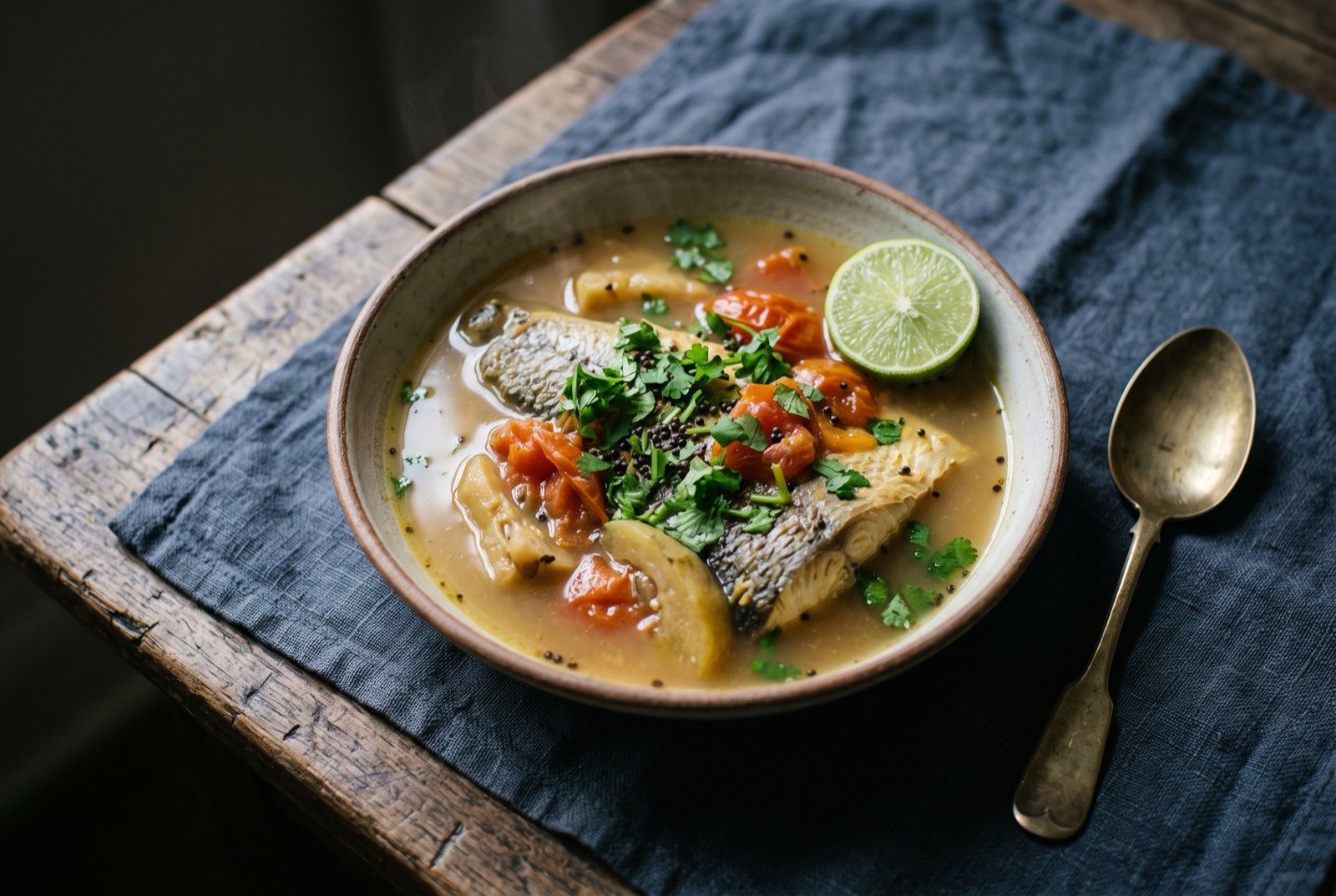
Assam's closest thing to a signature dish, a sour fish curry that traditionally closes a meal opened by khar rather than sharing a plate with it. Real Assamese versions sour with tomato, with dried thekera, or with elephant apple depending on season, never with the garlic and ginger a mainland Indian cook might reach for automatically, which traditionalists consider a departure from the dish's own logic.
As tradition built it
Serves 4. About 30 minutes.
Ingredients
- 4 to 5 rohu fillets, about 100g each
- A pinch each salt and a pinch of turmeric, for the fish
- 2 tbsp mustard oil
- 1/2 tsp fenugreek seed
- 1/2 tsp black mustard seed
- 1 onion, sliced
- 1 tomato, chopped
- 500 ml water
- 1/2 tsp turmeric
- 2 tbsp dried thekera, soaked in warm water, or a handful of crushed ou tenga, or 2 tbsp lime juice (souring agent)
- for garnish chopped coriander, to finish
- to serve plain rice, ideally joha, to serve
Method
- Season the rohu fillets with salt and a pinch of turmeric; pat dry.
- Heat the mustard oil to smoking point, temper with the fenugreek seed and black mustard seed until they crackle, then add the sliced onion and chopped tomato and cook until softened.
- Add the water, turmeric and your souring agent, either the thekera soaked in warm water, or the ou tenga, or in their absence the lime juice, and bring to a simmer.
- Slide in the fish and simmer 5 to 7 minutes without stirring, so the fillets do not break up; finish with chopped coriander.
- Serve with plain rice, ideally joha if you can find it, tenga always the last dish onto the table.
What a modern chef changes
A brief cure, a clarified tempering oil and a reduced sour top note
Rung 5
Method
- First, cure the fish briefly, 20 minutes in a light salt and turmeric brine, before cooking, tightening the flesh so it holds its shape through a shorter, more precise simmer.
- Second, clarify the tempering oil by straining it through a chinois after blooming the fenugreek and mustard seed, so the finished broth carries a clean, intensely aromatic oil rather than scorched seed fragments.
- Third, reduce a portion of the souring liquid, thekera or ou tenga, separately to a syrup in a small pan and swirl it back through the finished broth for a concentrated sour top note rather than relying on the simmer alone to extract it.
- Fourth, finish the plate with a disc of dehydrated tomato skin, crisped in a low oven or dehydrator, a textural echo of the same vegetable that seasons the broth.