The Indian subcontinent · Volume 24, Nepal, Bhutan, Ladakh, Sikkim and Darjeeling
Choila
Kathmandu Valley (Newar)
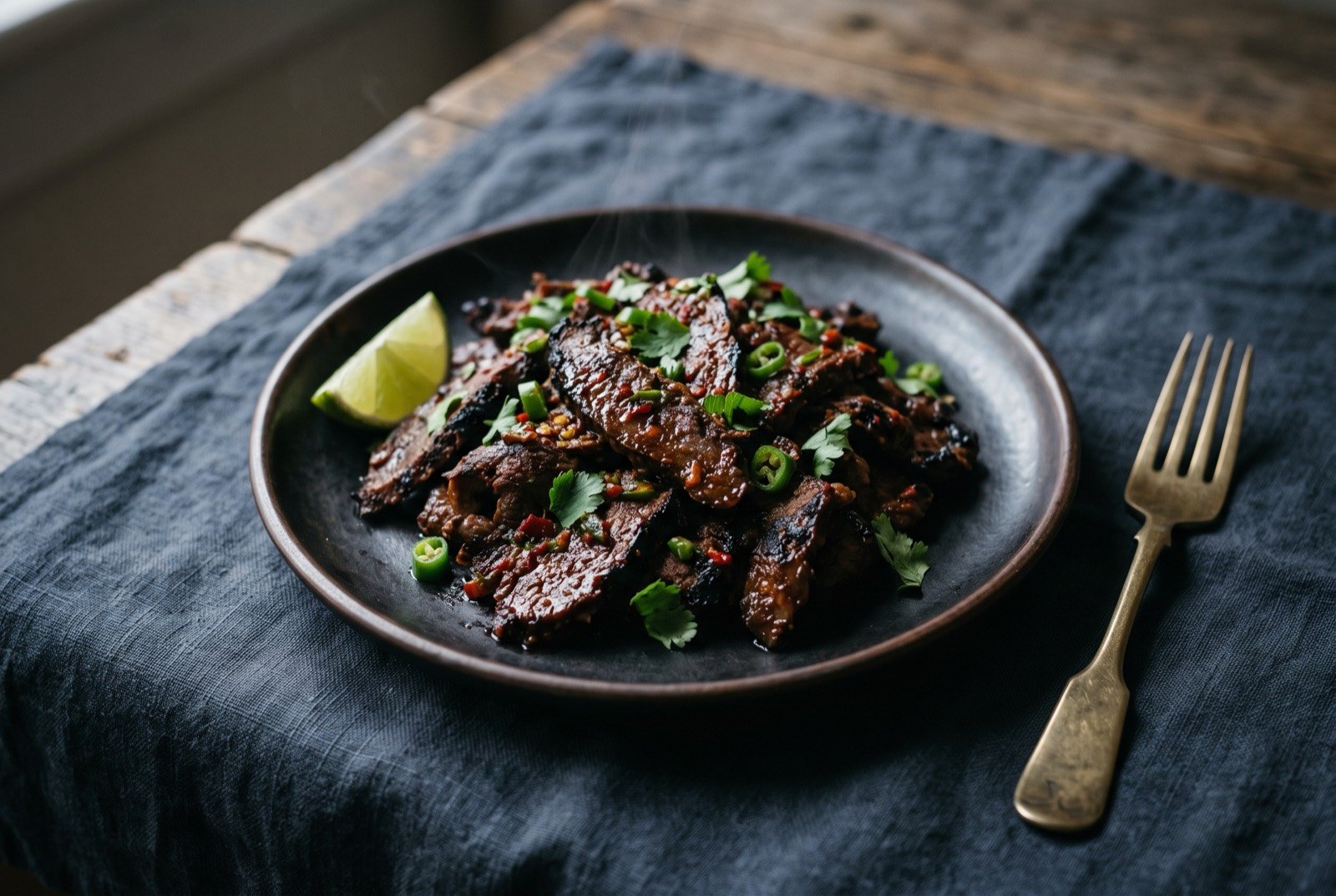
An illustration of the dish, not a photograph of it cooked.
- Time
- 20 minutes
- Reviewed
- Not yet reviewed from inside the tradition
- Cooked
- Not yet cooked and reported
Newari haku choila, buffalo meat grilled over an open flame until charred outside and pink within, then hand-worked with a hot spice paste, is one of the clearest indigenous ancestors of a modern flame-finish technique in this whole atlas, and it needs almost no elevation to prove the point.
As tradition built it
Serves 4. About 20 minutes, plus resting.
Ingredients
For the meat
- 500 g buffalo (mutton or duck are honest modern substitutes)
For the spice paste
- 4 garlic cloves
- 1 thumb of ginger
- 2 to 3 dalle khursani (fresh or reconstituted dried)
- a pinch a pinch of salt
- 3 tbsp mustard oil
- 1/2 tsp fenugreek seed
To finish
- a squeeze a squeeze of lime
- to scatter chopped coriander and green chilli, to scatter
Method
The meat
- Grill the buffalo over a hot direct flame, ideally over rice straw or, failing that, hardwood charcoal, until deeply charred on the outside and still rare at the centre, roughly 4 to 5 minutes a side depending on cut.
- Rest 5 minutes, then slice thin against the grain while still warm.
The paste
- Pound the garlic, ginger, dalle khursani and salt into a rough paste.
- Heat the mustard oil until smoking, add the fenugreek seed and let it darken almost to black, then pour the hot oil straight over the paste, working it together.
To finish
- Toss the hot oil and paste immediately through the warm sliced meat with a squeeze of lime and a scattering of chopped coriander and green chilli. Serve immediately; the dish does not improve with rest.
What a modern chef changes
Doneness decoupled from the char
Rung 4
Method
- First, cook the meat sous vide to a precise medium-rare, 54°C for 90 minutes, then flash it over the hottest possible direct heat, a Big Green Egg run wide open or a blowtorch, for the char alone, decoupling the doneness from the charring so both are controlled independently rather than traded against each other.
- Second, ferment the chilli paste itself for 48 hours before use, a controlled lacto-ferment rather than a fresh pound, adding a genuine acid dimension underneath the heat that a straight raw paste cannot give.
- Third, render the fenugreek oil separately and clarify it through a chinois, so the finishing pour is a clean, intensely fragrant oil rather than one carrying scorched seed fragments.
- Fourth, plate the sliced meat over a thin purée of the same greens used for gundruk, blanched rather than fermented for this purpose, for a bitter, vegetal base note the tradition dish does not have but that the ecology around it would recognise.