The Indian subcontinent · Volume 24, Nepal, Bhutan, Ladakh, Sikkim and Darjeeling
Thukpa and thenthuk
Pan-Himalayan and Tibetan, thenthuk specifically Sikkim's Bhutia community
Illustration
- Time
- 2 hours
- Researched
- Researched from 116 sources in the brief
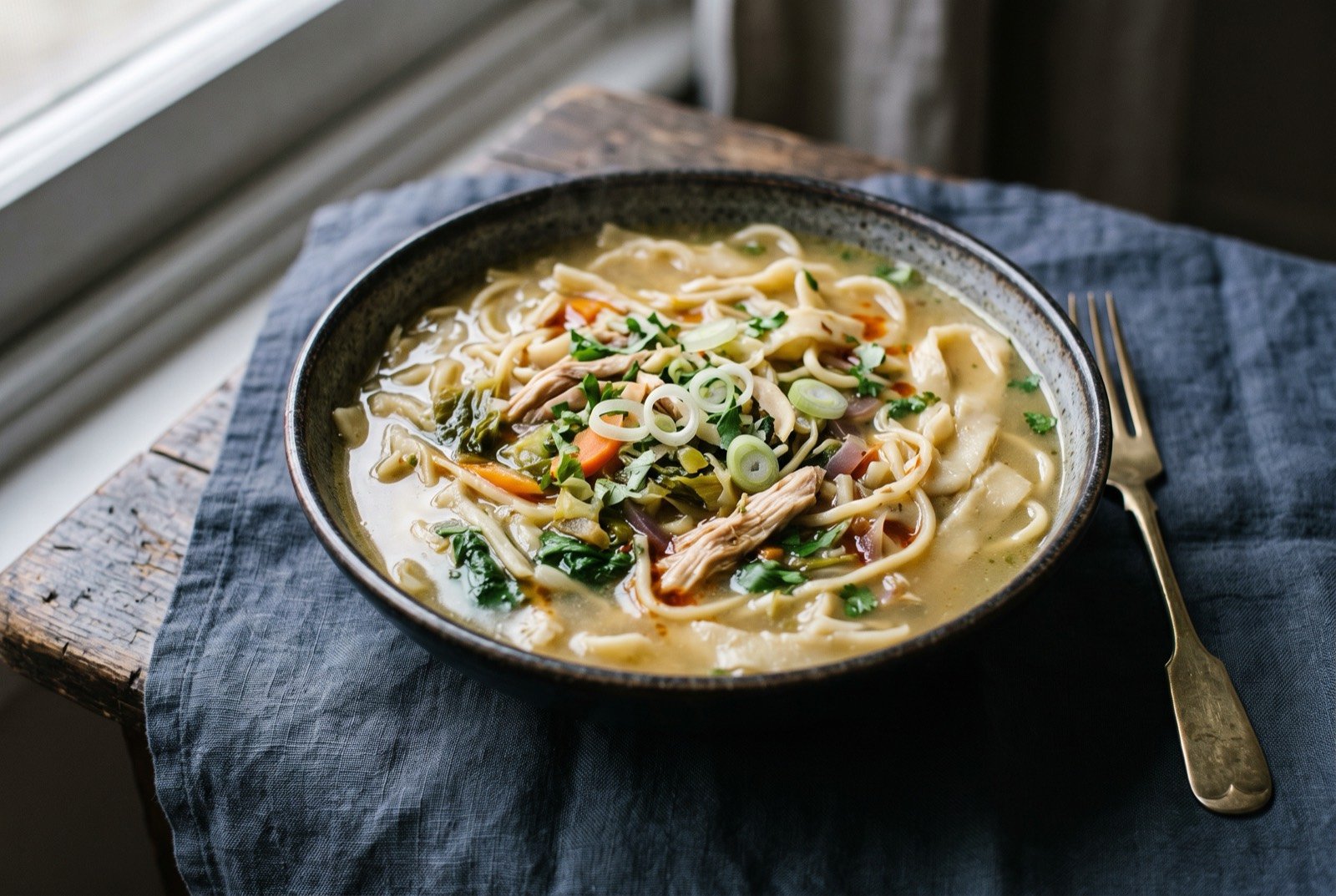
Thukpa, a noodle soup built on a proper meat or bone broth, and thenthuk, its hand-pulled, torn-noodle sibling, are both pan-Himalayan and Tibetan in origin, not inventions of any one place in this chapter; what is genuinely specific here is thenthuk's association with Sikkim's Bhutia community, who carried it from Tibet and adapted it to local ingredients, and it is presented here as such rather than dressed up as a Sikkimese invention it is not.
As tradition built it
Serves 4. About 2 hours.
Ingredients
For the broth
- 1 kg meaty bones, goat or lamb trotters and marrow bones give the richest result
- 2.5 litres water
- 1 onion, roughly chopped
- a thumb of ginger, a few cloves of garlic ginger and garlic
For thukpa
- 100g thin wheat noodles
- as available tomato, onion, pak choi or whatever greens are to hand
- reserved from the broth shredded cooked meat
- to taste salt, black pepper and a little soy
For thenthuk
- 300g flour, about 240ml water flour and water, for a firm dough
Method
The broth
- Build the broth first and treat it as the whole dish: simmer the meaty bones in the water with the roughly chopped onion, ginger and garlic, skimming carefully, for a minimum of an hour and ideally two, until the liquid has real body rather than simply flavour. Strain.
For thukpa
- Cook thin wheat noodles separately and add to the hot strained broth with sautéed vegetables, tomato, onion, pak choi or whatever greens are to hand, and shredded cooked meat, seasoned with salt, black pepper and a little soy.
For thenthuk
- Skip the dried noodle: make a firm dough from flour and water, rest it 20 minutes, then pull and tear it by hand directly into the simmering broth in flat, irregular strips a few centimetres long, cooking them through in the broth itself rather than separately, the torn edges giving the noodle a rougher, more sauce-catching surface than a cut one.
What a modern chef changes
A pressure-accelerated broth and a consommé side pour
Rung 2
Method
- First, treat the broth as the whole technical exercise it deserves to be: pressure-cook the bones for the first 90 minutes to accelerate gelatine extraction, then finish uncovered and skimmed for a final 30 minutes to concentrate and clarify, getting the "properly soupy" body Michelin's own description of a strong New York momo house singles out, in a fraction of the traditional time without sacrificing the result.
- Second, clarify a portion of the finished broth into a consommé using an egg-white raft, and serve it alongside the standard cloudy version so a diner tastes the same broth in two states, one rustic, one refined, side by side.
- Third, for thenthuk, dye a portion of the dough with spinach or nettle before tearing it, for both flavour and a visual signal of which noodle is which within the same bowl.
- Fourth, finish with a timur oil, whole peppercorns infused in a neutral oil at low heat, drizzled at the table rather than cooked in, so its citrus-numb top note stays bright rather than dulling in the broth's heat.