The Gulf and Arabia · Volume 06, The Khaleeji Pearling and Bedouin Coast
Harees
Bahrain and Qatar
Illustration
- Time
- 2 hours
- Researched
- 3 sources cited
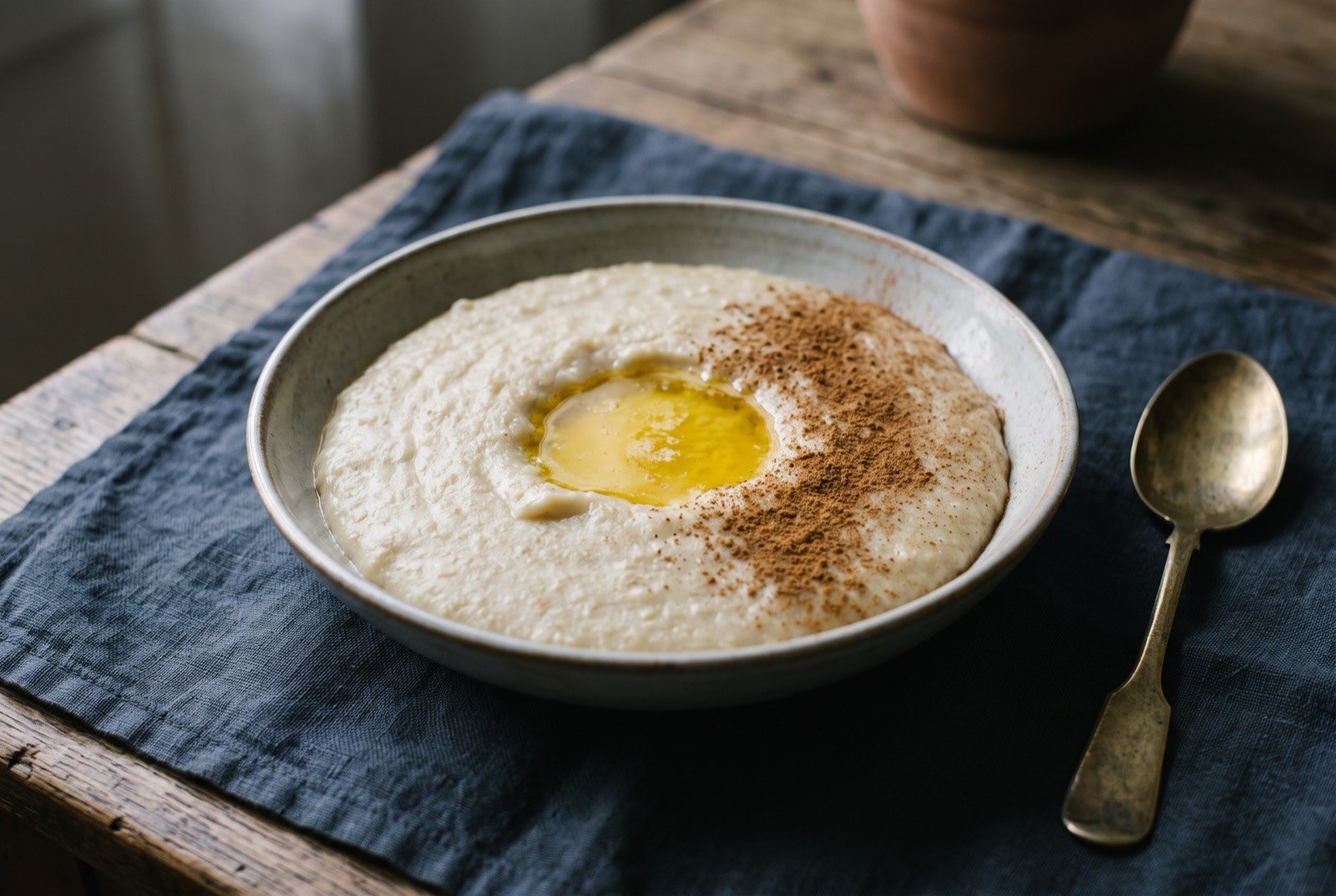
Wheat and meat, simmered for hours until indistinguishable, then beaten into one dense, savoury porridge. Not the North African chilli paste of the same root name.
As tradition built it
Serves 4. Around 2 hours.
Ingredients
- 600 g bone-in chicken thighs, or lamb shoulder
- 1 onion, halved
- 1 bay leaf
- 4 cardamom pods
- 4 cloves
- 2 dried loomi
- to taste salt and black pepper
- 300 g whole wheat groats (samid al-harees), soaked at least 1 hour
- a generous knob, to taste samn, to finish
- a light dusting, to taste cinnamon or sugar, to dust
Method
- Simmer the chicken or lamb with the onion, bay leaf, cardamom, cloves, loomi, salt and pepper for around 90 minutes, until the meat falls from any bone.
- Drain the soaked wheat and cook it separately, in fresh water, until fully soft.
- Remove any bones, then combine the meat and wheat with enough of the reserved cooking stock to keep the mixture loose, and beat with a wooden spoon or beater until the two are no longer distinguishable, a single, thick, unified porridge.
- Serve with samn poured hot over the top, and a dusting of cinnamon or sugar.
Notes
This chapter's sourced method gives real timings but not an exact weight ratio between wheat and meat; the weights below are this chapter's own reasonable scaling of that method to a household quantity, flagged rather than presented as a named in-tradition ratio.
Bahraini sources describe surplus harees being deliberately cooked in a quantity too large for one household, then distributed to neighbours during Ramadan; Qatari sources place it, with thareed, at the centre of the Ramadan table specifically. These read as differences of emphasis within one shared dish rather than genuinely different recipes.
What a modern chef changes
The beating, done by a blender, finished by a sieve
Rung 3
Method
- Cook the wheat and meat together, sous vide, at 85°C for 6 hours, sealed in one bag so nothing that would traditionally enrich the beaten porridge is lost as steam.
- Blend the finished contents in a high-power blender to the same silken texture traditional beating reaches, then pass through a chinois to remove any remaining fibre.
- Finish with brown butter samn, foamed rather than simply melted, poured at the table.