The Gulf and Arabia · Volume 09, The Terrace, the Wadi and a Kitchen Carried Out
Asida
The highlands, Taiz especially
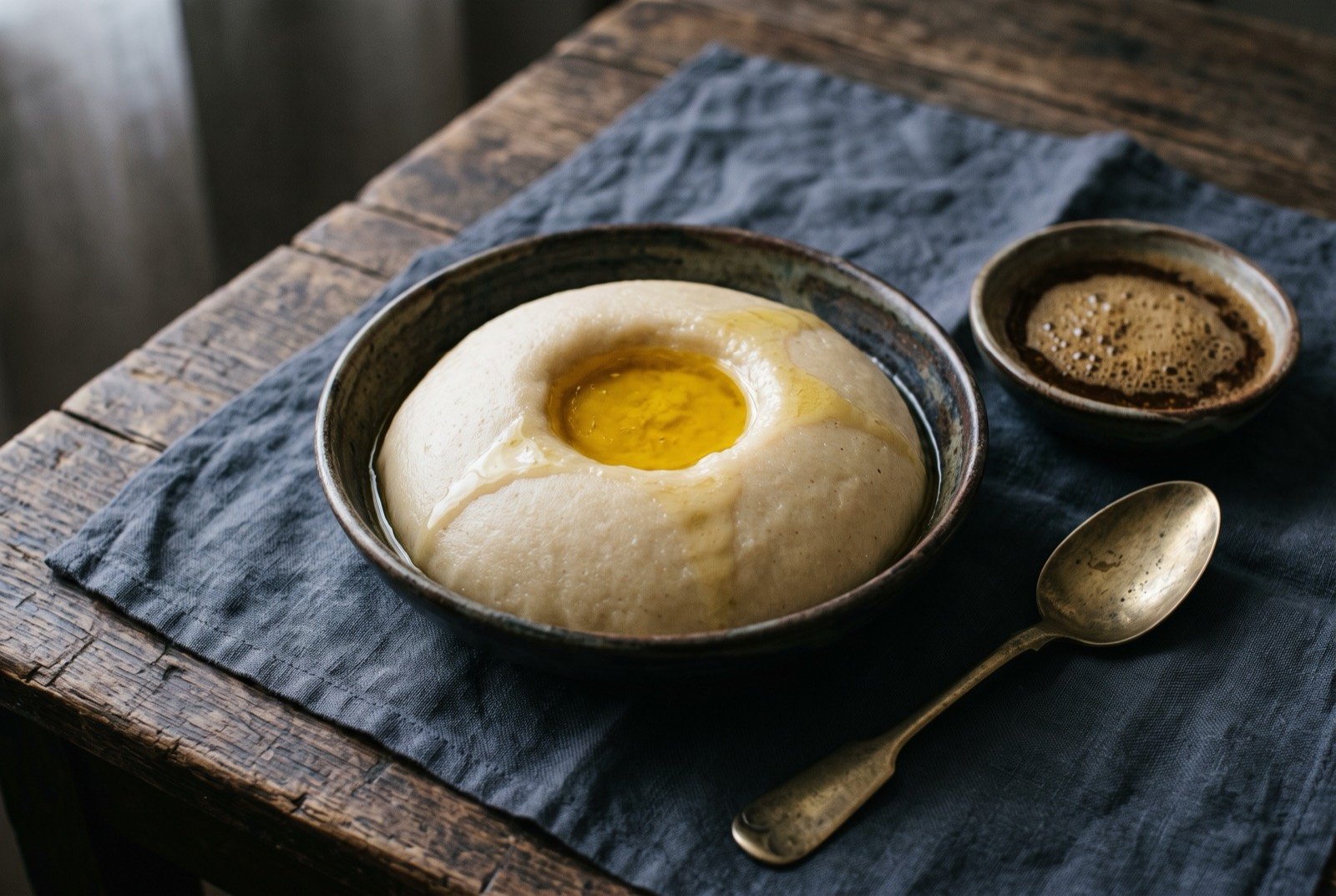
An illustration of the dish, not a photograph of it cooked.
- Time
- 20 minutes
- Reviewed
- Not yet reviewed from inside the tradition
- Cooked
- Not yet cooked and reported
Wheat flour, or sometimes sorghum, millet or semolina, is stirred into boiling salted water with a long wooden stick, al-majhi, until thick and cohesive, then eaten hot, dipped into hilbeh, broth, a dairy product called haqeen, or a dried-sardine sahawiq, with samn often worked through. Al-Araby Al-Jadeed frames it plainly as the food of Yemen's poor, more than 80 per cent of the population by the paper's own estimate, yet also eaten by the wealthy, oil-free, and reckoned favourable for diabetics; the poet Fathi Abu Al-Nasr, quoted in the same feature, calls it a "philosophy of life... sufficiency with little and creativity through it." The Al-Azaziz area near Taiz has a specific reputation for asida restaurants.
As tradition built it
Serves 4. About 20 minutes.
Ingredients
- 500ml water
- 200g wheat flour
- to taste salt
- a generous knob samn, to finish
- as available hilbeh, broth, or a dried-sardine sahawiq, to serve
Method
- Bring the salted water to a rolling boil.
- Add the flour gradually, stirring constantly with a sturdy wooden stick, until the mixture thickens into a smooth, cohesive dough that pulls cleanly from the pan's sides.
- Continue stirring over low heat a further 5 minutes, working out any lumps.
- Turn out, make a well in the centre, and fill with melted samn.
- Serve hot, for dipping into hilbeh, broth or sahawiq.
Notes
No source consulted gave a precise flour-to-water ratio; the figure above is this chapter's own indicative reconstruction from the dish's described texture, thick and cohesive enough to hold a stirring stick upright, and should be adjusted by feel rather than treated as a tested standard.
What a modern chef changes
The same dough, worked for a smoother crumb
Rung 1, adapted
Method
- Stir with a stand mixer's dough hook on the lowest speed rather than by hand once the mixture is too thick to whisk, for a genuinely lump-free result without the arm work traditional preparation demands.
- Finish with brown, not just melted, samn, cooked gently until it smells nutty, for a depth the plain melted version does not have.
- Serve alongside, not drowned in, the dipping sauce, keeping asida's own plain, almost austere character intact rather than dressing it up into something it deliberately is not.