The Gulf and Arabia · Volume 09, The Terrace, the Wadi and a Kitchen Carried Out
Lahoh
The Tihama and the highland fringe
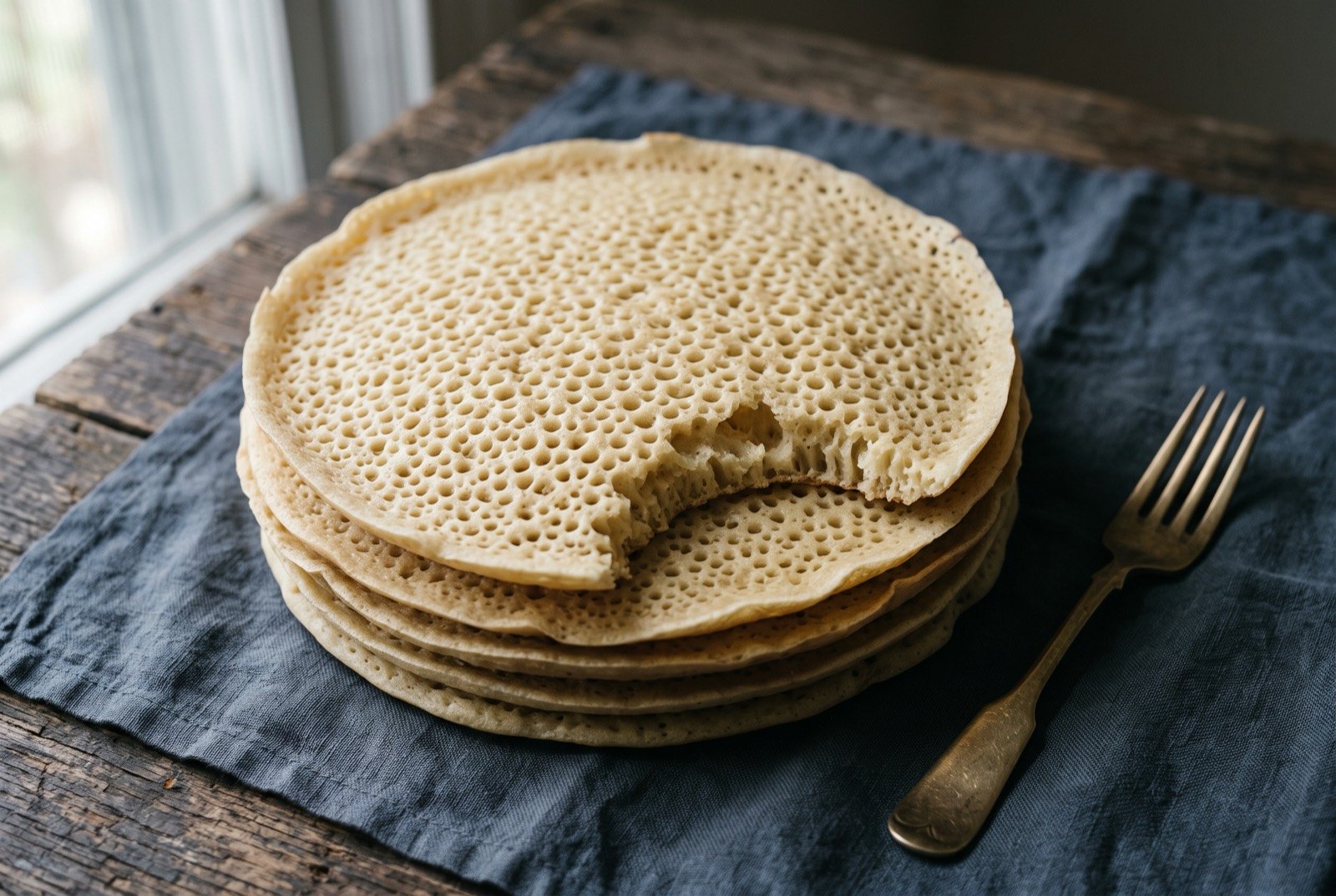
An illustration of the dish, not a photograph of it cooked.
- Time
- 3 hours
- Reviewed
- Not yet reviewed from inside the tradition
- Cooked
- Not yet cooked and reported
A spongy, semolina-and-wheat flatbread, cooked one side only on a hot griddle, its surface covered in small, even bubble "eyes" formed as the fermented batter sets. Lahoh's structural relative, laxoox, canjeero, is already fully treated in this atlas's Somalia volume, AF-11, which names lahoh directly as its own Yemeni ancestor, carried across the Bab-el-Mandeb strait by the same Red Sea trade this chapter has already described. AS-09 is lahoh's actual home volume; this is its first full tradition-and-elevation treatment.
As tradition built it
Makes 6 to 8. About 3 hours, mostly fermenting.
Ingredients
- 250g fine semolina
- 100g plain flour
- 1 tsp fast-action yeast
- 0.5 tsp sugar
- 0.5 tsp salt
- 500ml warm water
Method
- Whisk the semolina, flour, yeast, sugar and salt with the water to a thin, pourable batter.
- Cover and leave in a warm place 2 to 3 hours, until visibly bubbling and smelling faintly sour.
- Heat a griddle or heavy non-stick pan over medium heat. Pour a ladleful of batter, spreading it thin.
- Cover with a domed lid and cook 2 to 3 minutes, until the surface is covered in small holes and set through, and the underside is lightly golden. Do not flip.
- Stack, covered, to keep soft, and serve warm.
Notes
No precise traditional ratio or fermentation time specific to Yemeni lahoh, as distinct from Somalia's related laxoox, was found in this chapter's research; the ratio above follows the general logic of a wet, fermented semolina-and-wheat batter and should be judged by the eyes it produces, per Rung 5, rather than by the clock alone.
What a modern chef changes
The eyes judged, not guessed at
Rung 5
Method
- Ferment overnight in the refrigerator instead of a few hours at room temperature, for a more developed, complex sourness and a more reliable eye structure.
- Loosen the batter with a little extra water than instinct suggests before cooking; a wetter batter, within reason, produces more eyes than a stiff one.
- Judge doneness by the surface, not the clock: once the eyes have fully opened and the surface has lost its wet sheen, it is done, whatever the timer says.