The Mediterranean · Volume 02, Durum, Oil and the Arab-Norman Kitchen
Orecchiette
Puglia
Illustration
- Time
- 45 minutes
- Researched
- 16 sources cited
A live 2025 authenticity controversy is worth an honest line rather than a glossed-over one: the Bari Procura investigated "nonne della pasta" allegedly repackaging factory-made pasta as artisanal, a raid seizing 151kg of merchandise and fining three women 5,000 euros each. This genuinely complicates the postcard image of the hand-forming ritual, and this chapter names it rather than pretending the tradition is untouched by the pressure of tourism demand.
As tradition built it
Serves 4. About 45 minutes.
Ingredients
- 500 g semola rimacinata
- 230 to 250 g water
- 3 g salt
Method
- Mix the semola, water and salt to a deliberately dry, almost granular dough. Too much water makes it easier to work but harder to shape into a clean concave orecchietta.
- Knead 10 minutes until smooth.
- Roll into ropes about 1cm thick, cut into small pieces.
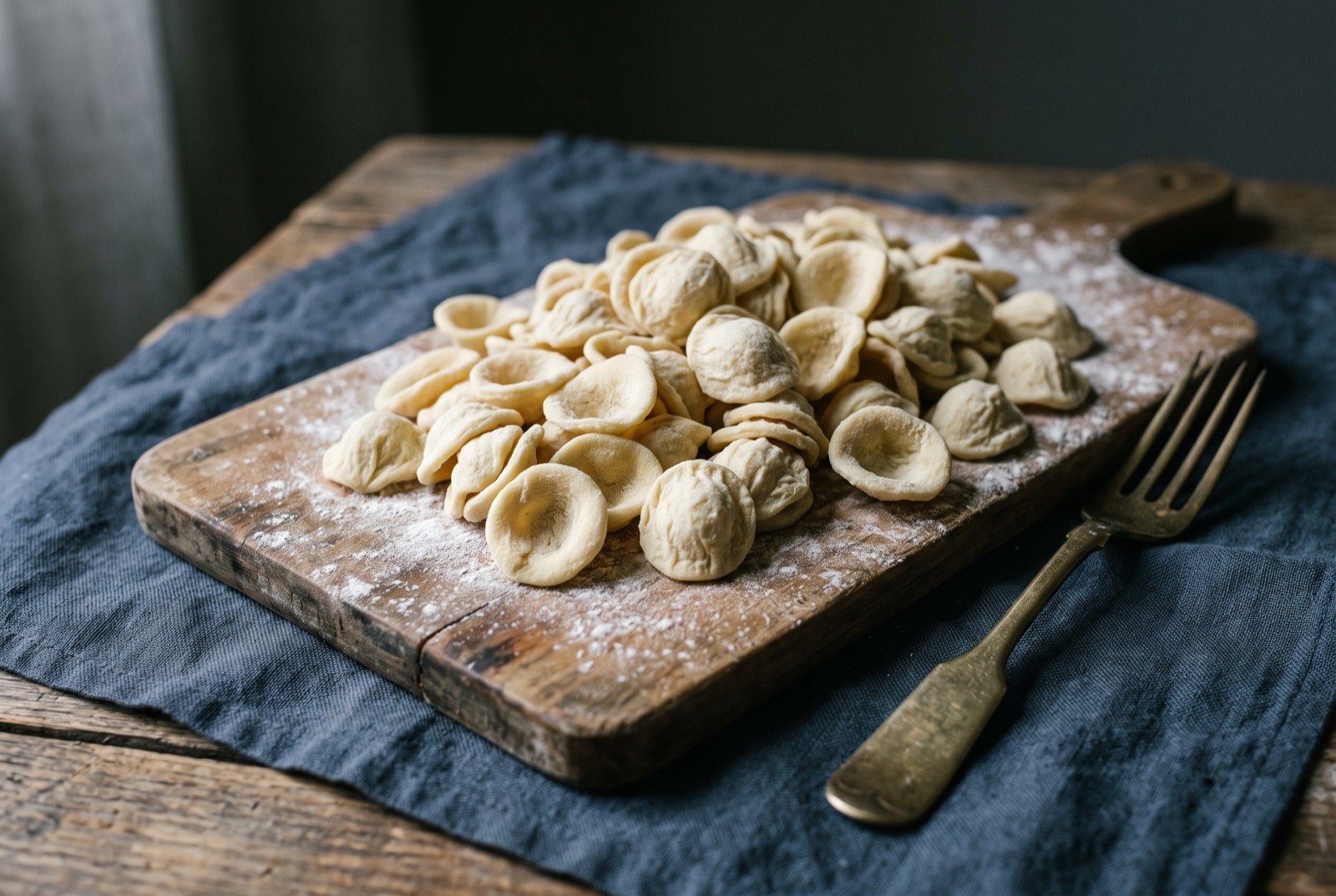
- Drag each piece across a wooden board with a table knife, then turn it back over your thumb to form the concave shape, so the hollow will hold sauce.
- Dry on a floured cloth before cooking.
What a modern chef changes
The dough treated as a precise ratio, and the shaping as the one thing worth mastering by hand
Rung 4
Method
- Weigh the water rather than judging by feel, working to the 45 to 52% hydration range the dough wants; going wetter for ease of handling produces pasta that loses its shape in the pot.
- Practise the knife-and-thumb motion as its own discrete skill, deliberately, the way you would practise a knife cut, rather than treating it as incidental to rolling the dough. This is Rung 4's honest point: there is no shortcut here, only repetition.
- Dry the shaped pasta properly before cooking, at least 30 minutes uncovered, which firms the surface and gives a better bite than cooking it fresh off the board.