The Mediterranean · Volume 02, Durum, Oil and the Arab-Norman Kitchen
Ragù Napoletano
Naples
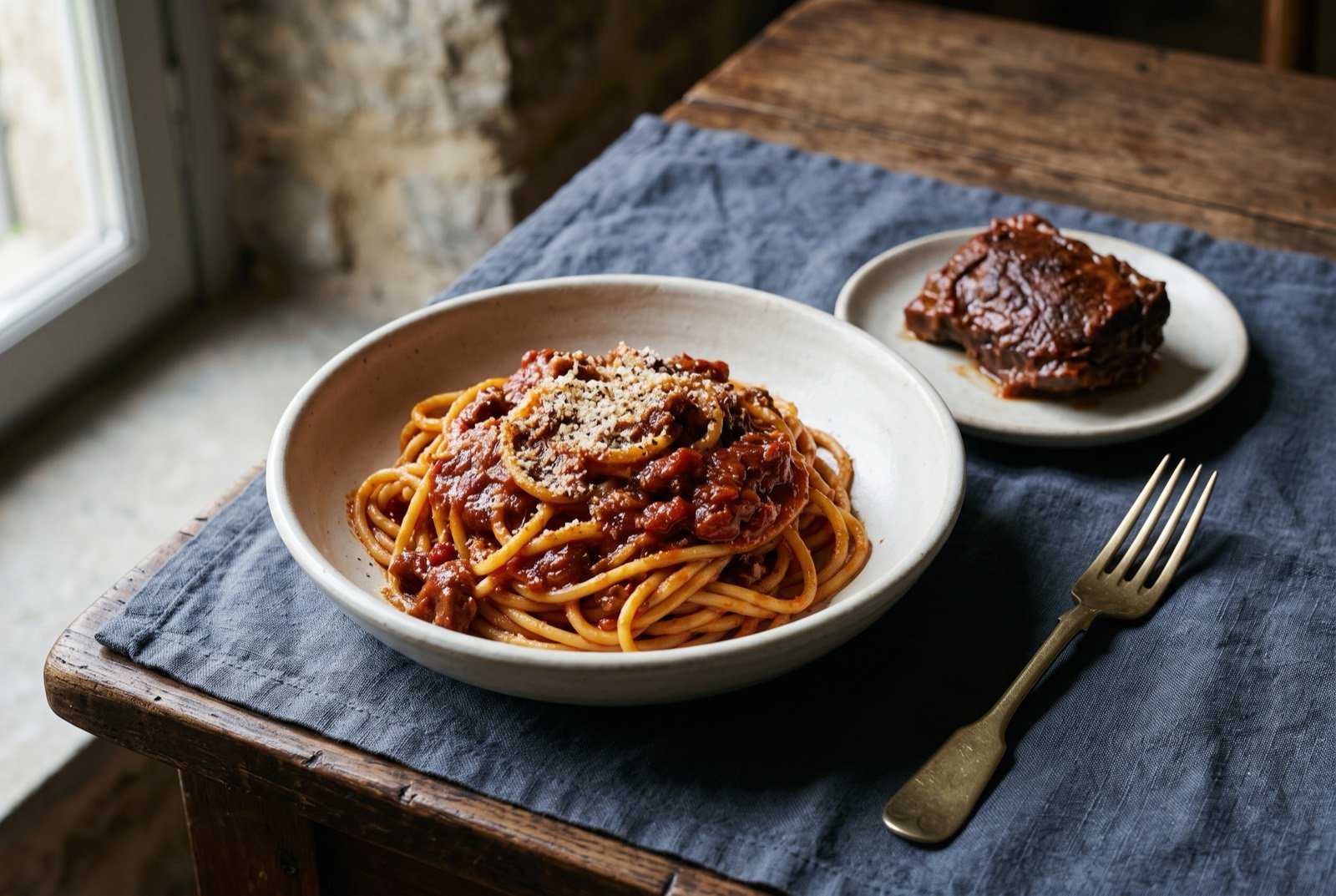
An illustration of the dish, not a photograph of it cooked.
- Time
- 7 hours
- Researched
- 16 sources cited
- Reviewed
- Not yet reviewed from inside the tradition
- Cooked
- Not yet cooked and reported
Cooking time genuinely varies across sources, from three hours at the weaker end to six hours minimum, ideally seven to eight, at the stronger, more traditional end, with one source stating the original preparation ran five to six hours but has roughly halved in modern home practice. This chapter states a range rather than inventing a single figure.
As tradition built it
Serves 6 to 8. 4 to 7 hours.
Ingredients
- 1 kg mixed whole cuts, beef biancostato, veal gamboncello, pork ribs or sausages, not minced
- 2 onions, thinly sliced
- 1.5 kg tomato passata, or a mix of passata and concentrate
- 200 ml red wine
- a drizzle for browning, salt to taste olive oil, salt
Method
- Brown the whole meat cuts well in olive oil, in batches, then set aside.
- Soften the onion slowly in the same pot.
- Return the meat, add the wine, let it evaporate.
- Add the passata, a splash of water to loosen, and salt.
- Simmer at the barest bubble, uncovered, 4 to 7 hours, stirring occasionally, topping up with water if it dries out. Cover slightly if it spits too much.
- Remove the meat, which is served separately, often as a second course.
- Dress pasta with the sauce alone.
Notes
Ragù alla genovese, despite the name a Neapolitan dish with no real equivalent in Liguria today, is worth knowing as a genuine cousin: a white ragù of meat and a large quantity of onion, traditionally the ramata onion, stewed until the onion essentially dissolves into a creamy sauce, little or no tomato. Its Aragonese-Genoese-tavern origin story is an explicit hypothesis in the sources, not settled fact.
What a modern chef changes
A genuinely long simmer treated as the point, not an inconvenience
Rung 1
Method
- Commit to the long end of the range. Six to seven hours at the barest simmer, not three, gives the whole cuts time to release collagen slowly and the sauce time to concentrate without ever needing to be reduced hard, which would push it toward a tomato-forward stew rather than a meat sauce carrying tomato.
- Use a low, even oven rather than a hob to hold the barest bubble reliably over that many hours without scorching the base, checking and stirring only every 45 minutes rather than constantly.
- Rest the meat in the sauce overnight if you have the time, refrigerated, then gently reheat before serving; the flavour continues to develop off the heat in a way a same-day ragù cannot replicate.