The Slavic east and the Balkans · Volume 28, Grill, Pepper and the Ottoman-Habsburg Line
Leskovački Ćevapi
Leskovac, Serbia
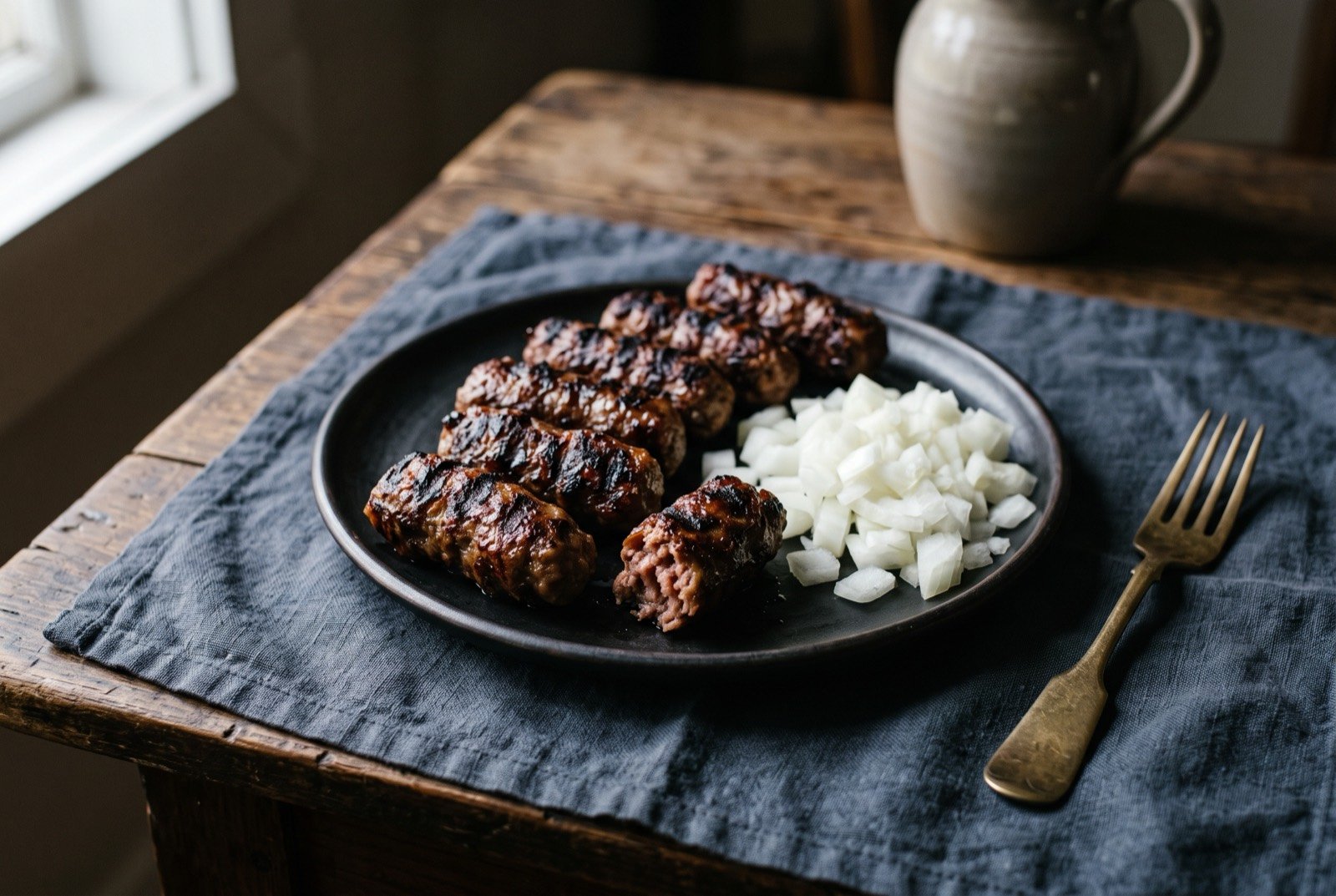
An illustration of the dish, not a photograph of it cooked.
- Time
- Hands on 20 minutes · Waiting 15 minutes
- Researched
- 10 sources cited
- Reviewed
- Not yet reviewed from inside the tradition
- Cooked
- Not yet cooked and reported
Already grill-famous by the early nineteenth century, Leskovac's version runs longer than its Bosnian cousins, carries garlic and the city's own ground pepper in the mix, and is traditionally the dish of choice on 1 May, Serbia's Labour Day. See Sarajevski Ćevapi below for the genuinely different Bosnian version and the honest, unresolved dispute over which city's claim runs oldest.
As tradition built it
Serves 4. About 20 minutes, plus a 15 minute rest.
Ingredients
- 250 g minced pork
- 250 g minced beef, ideally veal neck (podgušnjak) or well-marbled shoulder
- 1 onion, very finely chopped
- a handful a handful of parsley, finely chopped
- 1 hot pepper, finely chopped
- to taste black pepper, salt
- to serve flatbread and raw chopped onion, to serve
Method
- Combine the pork, beef, onion, parsley and hot pepper by hand, seasoning well with black pepper and salt.
- Work the mixture until it starts to bind and feels slightly springy, then rest, covered, 15 minutes.
- Shape into fingers roughly 7 to 8 cm long and 2 cm thick.
- Grill over a very hot charcoal fire, turning frequently, 4 to 6 minutes in total, until well charred outside and just cooked through, and pull them the moment they are done rather than holding them over heat.
- Serve immediately, in warm flatbread, with raw chopped onion.
What a modern chef changes
The coals given the credit they are owed, and the bind argued honestly rather than defaulted to
Rung 1 and Rung 3
Method
- Build a proper beech charcoal fire and do not substitute a gas grill. This is the single highest-leverage decision in the whole dish; nothing downstream compensates for a flameless heat source here.
- Choose your binding position and be honest about it. Either commit fully to a filler-free mix, meat, salt, fat, nothing else, and accept the slightly looser bind that comes with it, or use bicarbonate of soda at roughly half a level teaspoon per kilogram, dissolved in a tablespoon of water and worked through before shaping, named here as a genuine, disputed professional technique rather than a shameful shortcut.
- Ask your butcher for a double-grind on the finest plate. UK butchers will do this to order but rarely by default, and a single coarse grind will not give the springy, close texture the dish depends on.