The Slavic east and the Balkans · Volume 28, Grill, Pepper and the Ottoman-Habsburg Line
Tavče Gravče
North Macedonia
Illustration
- Time
- Hands on 2 hours · Waiting 8 hours
- Researched
- 10 sources cited
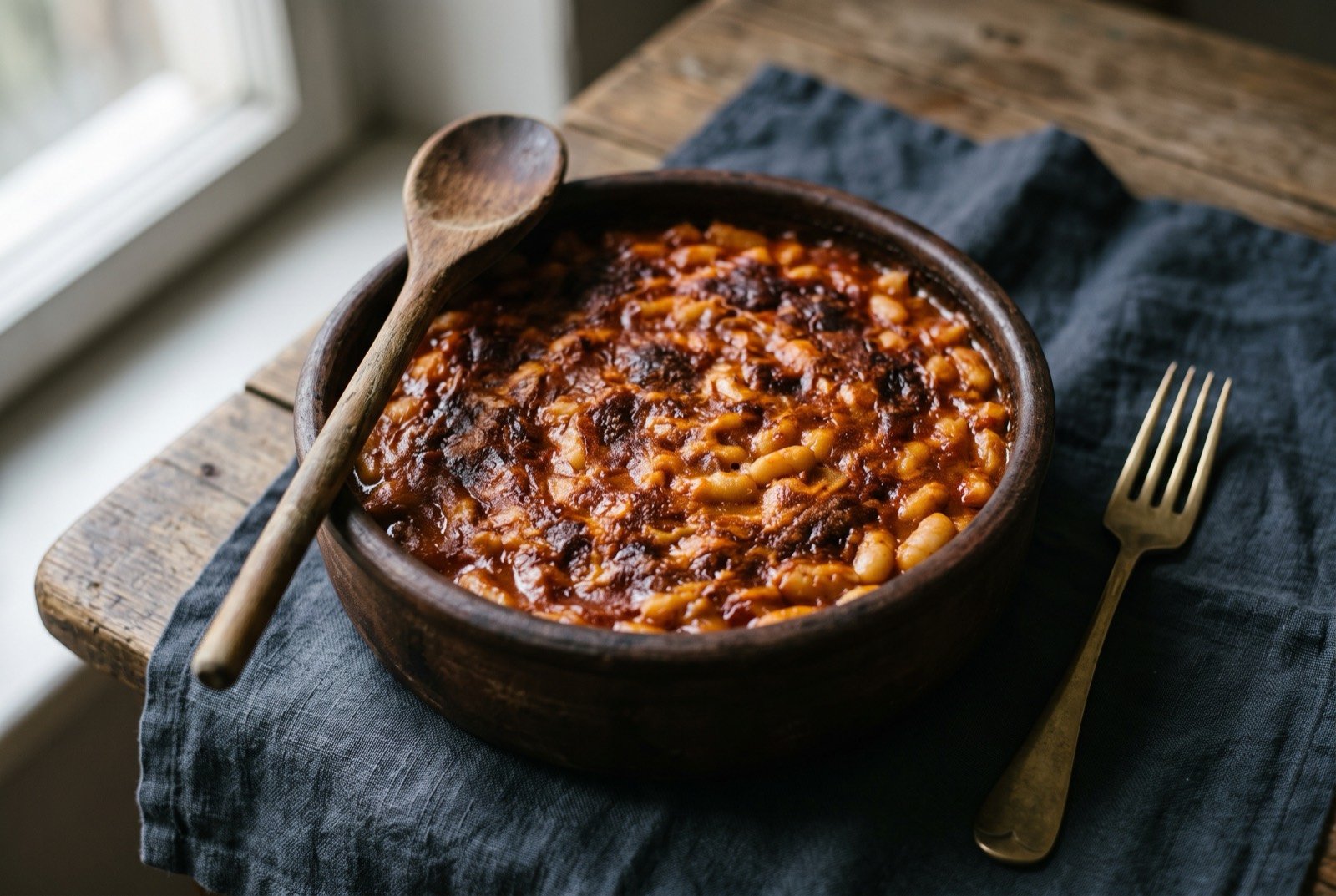
Particularly associated with Tetovo beans, though grown across several parts of the country, and traditionally served in the same earthenware dish it was baked in.
As tradition built it
Serves 4. About 2 hours, plus overnight soaking.
Ingredients
- 400 g dried white beans
- 1 onion, chopped
- a little oil
- 1 tbsp flour
- 1 tbsp paprika
- to taste salt, pepper
Method
- Soak the beans overnight in cold water.
- Drain, cover with fresh water, and simmer until they begin to soften; discard the first cooking water once it turns yellow, and continue in fresh hot water, adding the onion and seasoning with salt and pepper partway through.
- Once the beans are cooked through, make a roux with a little oil, the flour and paprika, and stir it through the beans.
- Transfer to an earthenware pot and bake at 220°C for about 15 minutes, until the liquid has reduced and a crust has formed on top.
What a modern chef changes
The crust taken seriously as the point of the finish, and the bean itself given real attention
Kit note, not tied to a numbered rung
Method
- Soak generously and cook the beans gently before the oven stage. A bean that goes into the final bake underdone will not soften further in fifteen minutes; the long soak and simmer are doing the real work, the oven stage is finishing, not cooking.
- Use a genuine unglazed earthenware pot if you have one, for the same reason a sač or a Big Green Egg earns its place elsewhere in this chapter: the vessel's own thermal mass and the crust it lets form against direct heat are part of the dish, not incidental to it.
- Do not skip the roux. It is a small step that carries a disproportionate amount of the dish's final richness and colour.