The Southern Cone · Volume 25, The Río de la Plata Table
Locro
The Northwest
Illustration
- Time
- Hands on 3 hours 30 · Waiting 8 hours
- Researched
- Researched from 179 sources in the brief
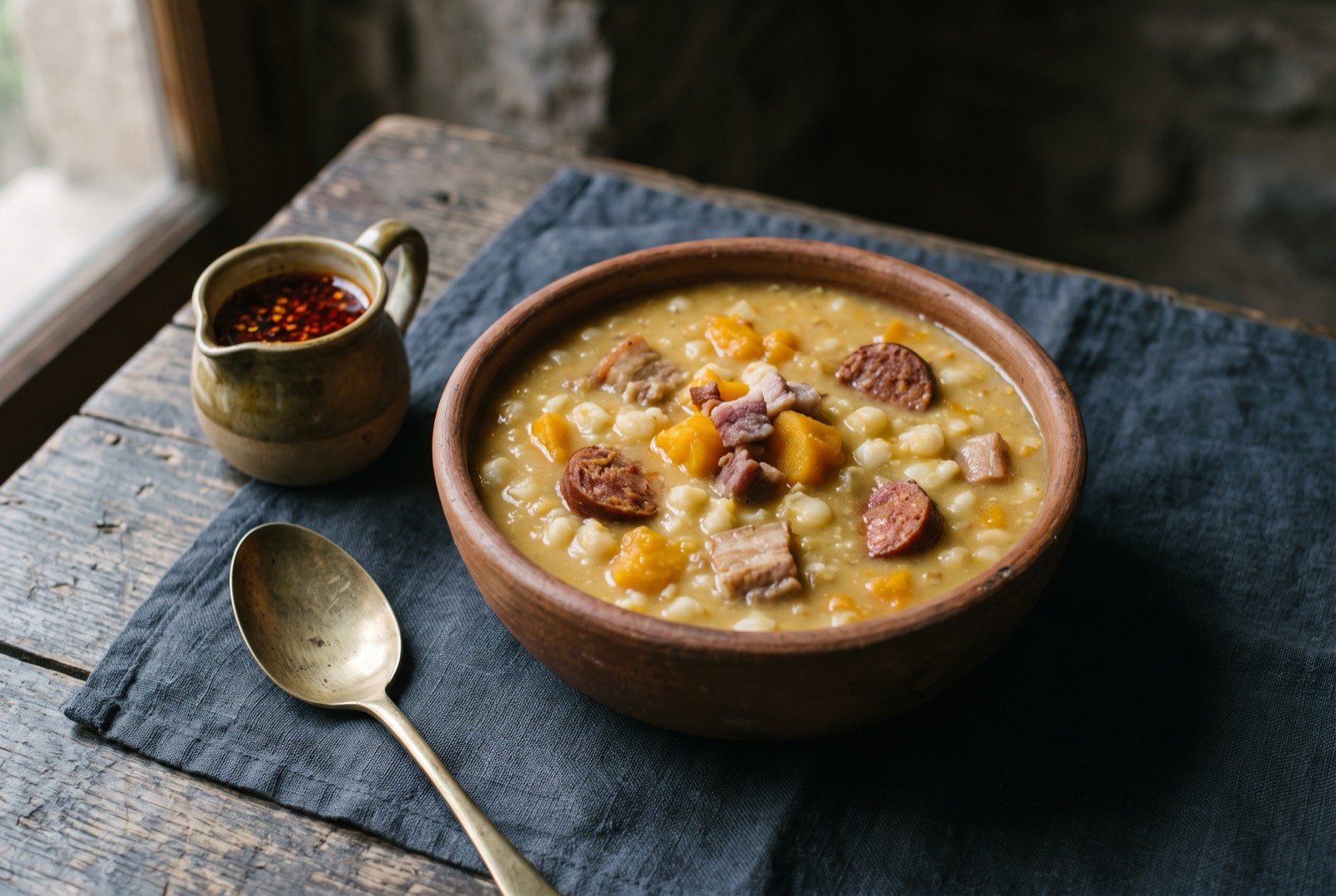
The name derives from Quechua ruqru or luqru, a thick stew from locally available ingredients; the pre-European base was squash, white maize, potato and beans, staples of American agriculture. After Spanish colonisation, beef, pork and chorizo were folded in.
No source consulted for this chapter gave a fully quantified, gram-for-gram traditional ratio for locro; only an ingredient list and a general several-hours timing were found. The quantities below are a reasonable, cookable working recipe built from that composition and standard slow-stew practice, not a claimed historical ratio, and this chapter states that gap plainly rather than inventing false precision.
As tradition built it
Serves 8. About 3.5 hours, plus overnight soaking.
Ingredients
- 400g white hominy or dried white maize, soaked overnight
- 200g dried white beans, soaked overnight
- 400g pork skin and trotters
- 300g beef, cut into chunks
- 200g pancetta
- 2 red chorizo, sliced
- 500g pumpkin or squash, peeled and diced
- to taste salt, to taste
Method
- Drain the soaked hominy and beans, and put them in a large pot with fresh water to cover generously. Bring to the boil, then reduce to a slow simmer.
- Add the pork skin, trotters, beef and pancetta. Simmer, partially covered, at least 2.5 hours, topping up water as needed, until everything is very tender.
- Add the chorizo and pumpkin in the last 45 minutes, so the squash breaks down into the broth and thickens it.
- Season and serve hot, traditionally with a sauce of chilli, paprika and oil spooned over at the table.
What a modern chef changes
A held low temperature for the tougher cuts, and the squash controlled separately so it thickens rather than dissolves unevenly
Rung 2
Method
- Cook the pork skin, trotters and beef in a sous vide bath at 85°C for 6 hours before finishing the stew, rather than relying on an unwatched stovetop simmer for the same result. This renders the collagen fully without the risk of scorching the base of the pot over such a long cook.
- Purée a portion of the squash separately and stir it back in, rather than letting all of it break down unevenly in the pot, giving a more consistent thickness across the finished stew.
- Pass the finished broth through a chinois before returning the solids, catching any stray bone fragments from the trotters and giving a cleaner, more considered base than the traditional rustic pot, without changing the dish's actual flavour.