The Southern Cone · Volume 25, The Río de la Plata Table
Torta galesa
Gaiman, Chubut, Patagonia
Illustration
- Time
- Hands on 1 hour 30 · Waiting 8 hours
- Researched
- Researched from 179 sources in the brief
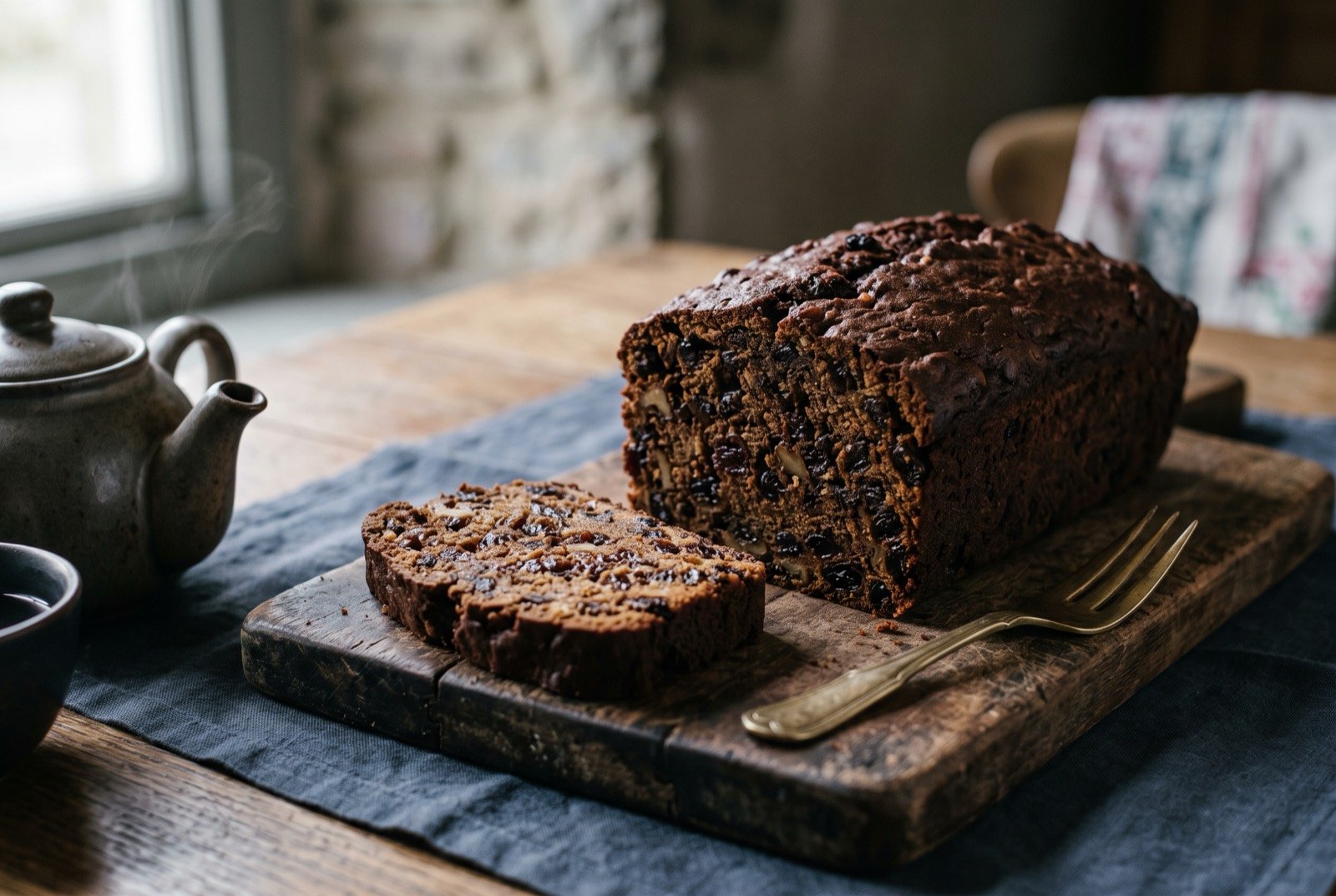
Torta galesa, also called torta negra, black cake, traces directly to 1865 and the food shortages faced by the Mimosa colonists: dried fruit, raisins, dark sugar and alcohol were used specifically because the resulting cake would keep without refrigeration and improve with age, a direct adaptation to the hardship of settling semi-arid Patagonia on limited rations. In Wales itself the same cake is made only for Christmas or weddings; in Patagonia it became a daily and tea-time staple purely because it was what the colonists had, and because it kept.
No source consulted for this chapter gave precise gram quantities for the traditional Gaiman recipe; the composition, dried fruit, dark sugar and alcohol, chosen specifically for keeping, is well documented, but the exact ratios below are this chapter's own reasonable, cookable working version rather than a transcribed household recipe.
As tradition built it
Makes one loaf. About 1.5 hours, plus overnight soaking of the fruit.
Ingredients
- 300g mixed dried fruit and raisins
- 100ml dark rum or brandy
- 200g dark brown sugar
- 200g butter, softened
- 4 eggs
- 300g plain flour
- 1 tsp baking powder
- 1 tsp mixed spice
Method
- Soak the dried fruit in the rum or brandy overnight.
- Cream the sugar and butter until light, then beat in the eggs one at a time.
- Fold in the flour, baking powder and mixed spice, then fold through the soaked fruit and its liquid.
- Bake in a lined loaf tin at 160°C for roughly 1 hour to 1 hour 15 minutes, until a skewer comes out clean.
- Cool in the tin, then wrap and store; the cake genuinely improves over the following days, which is the entire point of the recipe.
What a modern chef changes
The fruit's moisture and the cake's keeping quality both treated deliberately, using equipment the original colonists never had
Rung 5
Method
- Dehydrate a portion of fresh fruit, such as apple or pear, alongside the traditional dried fruit before soaking, giving a second layer of concentrated, slightly different sweetness without changing the cake's essential keeping logic.
- Reduce the soaking liquid separately to a light syrup after straining the fruit, and brush it over the finished, cooled cake, reinforcing the same principle, sugar and alcohol as preservation, in a more controlled, less diluting way than soaking alone.
- Wrap and store in a controlled, cool larder rather than an airtight tin, closer to how a nineteenth century Chubut household would actually have kept it, letting the cake age and darken gently over several days rather than sealing in a static, unchanging crumb.