France and the Alps · Volume 11, Butter, Cider and the Buckwheat Line
Far breton
Brittany
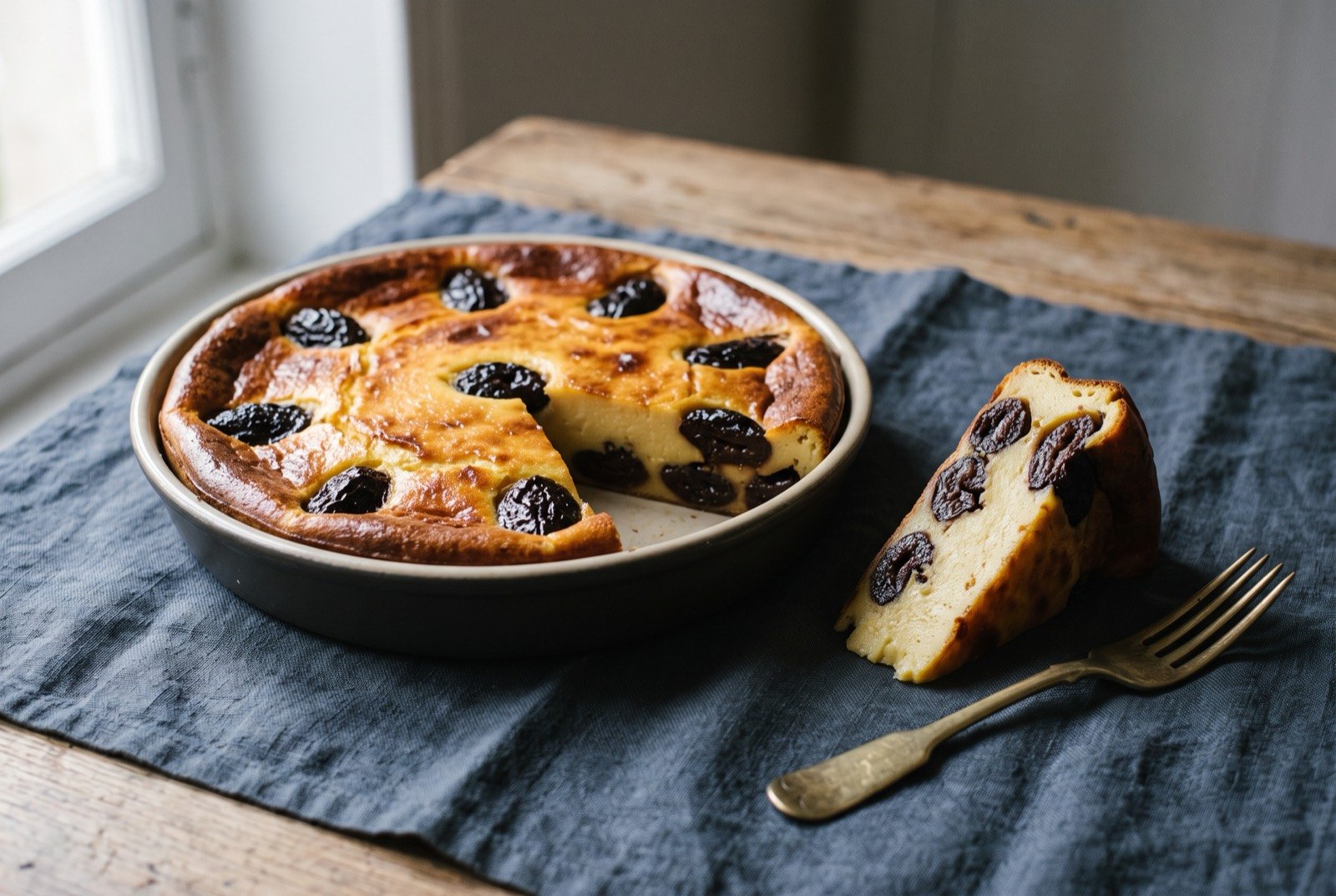
An illustration of the dish, not a photograph of it cooked.
- Time
- 4 hours 40
- Reviewed
- Not yet reviewed from inside the tradition
- Cooked
- Not yet cooked and reported
First recorded in the 18th century as a flour-based porridge eaten alongside meat, not as a dessert; the name comes from Breton farz forn, far baked in the oven. Prunes, now near-universal in the dish, arrived by an unusually specific trade route: Breton cod fishermen working months-long voyages to Newfoundland, the Terre-Neuvas, traded fish for prunes, a Southwest French speciality, bringing the fruit home into Breton kitchens this way rather than by any local orchard tradition.
As tradition built it
Serves 8. Batter rests 4 hours, then bakes 40 minutes at 200°C.
Ingredients
- 250 g flour
- 4 eggs
- 1 litre milk
- 100 g sugar
- 100 g butter
- to taste prunes, whole or halved
Method
- Make a thick, eggy, milk-based batter from the flour, eggs, sugar and butter.
- Stud with whole or halved prunes.
- Bake until set, with a deep golden top.
Notes
No specific historical recipe with fixed quantities survives in the sourcing behind this chapter; the dish's structure is well attested, the exact ratios are not.
What a modern chef changes
Prunes macerated in Calvados, a steady Big Green Egg bake, and a chinois-passed batter
Method
- Macerate the prunes in a little warmed Calvados before baking, following the same cider-and-apple-spirit logic that runs through the rest of the Norman half of this volume, a genuine cross-regional pairing rather than an imported flourish, since prunes and Calvados both already belong to this coast's own pantry.
- Bake at a lower, longer, more stable heat than a standard oven gives, using the Big Green Egg's own steady indirect setting, for a properly set, custardy interior without the dry, over-browned edge a hotter domestic oven tends to produce on a dish this simple.
- Pass the batter through a chinois before baking, catching any unbeaten egg strand, for the smooth, dense set the dish is actually known for.