Korea and Japan · Volume 56, The Haenyeo, the Black Pig and the Kingdom Before Korea
Momguk
Jeju Island
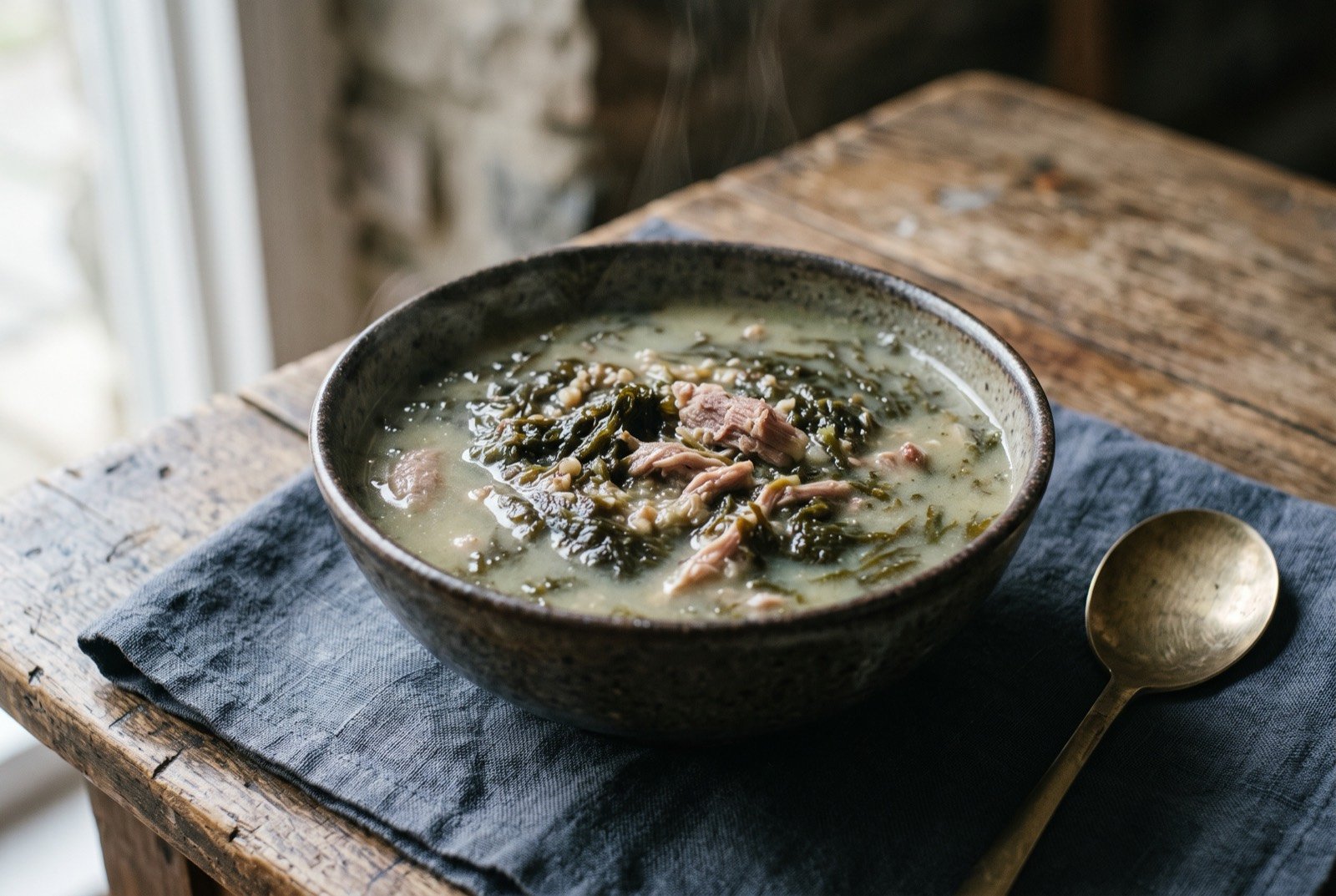
An illustration of the dish, not a photograph of it cooked.
- Time
- 3 hours
- Reviewed
- Not yet reviewed from inside the tradition
- Cooked
- Not yet cooked and reported
Pork-bone broth with mom seaweed, thickened at the end with buckwheat flour. A wedding-eve and funeral-wake dish, not an everyday soup.
Momguk is built from the water in which a whole pig was boiled for a wedding or funeral feast, combined with mom, radish greens, buckwheat flour and pork offal, cooked in a large communal cauldron and served to everyone who attended. It carries real social weight: this is life-event food, cooked once for an occasion rather than kept as a weekly staple, and the version given here scales that communal method down to a single household pot.
As tradition built it
Serves 6. About 3 hours.
Ingredients
- 1.5kg pork bones
- 500g pork belly
- 3 litres water
- 100g dried mom (or fresh mojaban, where it can be found)
- 200g radish greens, chopped
- 3 tbsp buckwheat flour
- to taste salt, to taste
Method
- Simmer the pork bones and pork belly in the water for 2 hours, skimming regularly, until the broth has taken on real body and the meat is tender.
- Lift out the meat, shred it, and set aside. Strain the broth and return it to the pot.
- Soak the dried mom in water for 20 minutes, then drain and roughly chop.
- Add the mom and the chopped radish greens to the broth and simmer a further 30 minutes.
- Mix the buckwheat flour with a little cold water to a smooth paste, then whisk into the simmering broth to thicken. Simmer 10 minutes more, stirring, until the broth has thickened and taken on the deep, rich quality Jeju dialect calls bejigeunhada.
- Return the shredded meat to the pot, season with salt, and serve hot.
What a modern chef changes
The buckwheat thickener refined with a blender, the broth built with real gelatin body.
Rungs 3 and 2
Method
- Reduce the initial simmer to 90 minutes for a cleaner, more concentrated stock, then finish with a dedicated bone reduction rather than relying on the full boil alone to build body, giving a broth with more structure to carry the buckwheat thickening.
- Disperse the buckwheat slurry in a high-power blender before returning it to the pot, blitzing it with a ladleful of hot broth until completely smooth, rather than whisking it in directly, which avoids the clumping a hand-stirred version risks and gives a silkier, more even thickened texture.
- Strain the finished broth through a chinois before adding back the mom and shredded meat, for a cleaner base that lets the seaweed and buckwheat carry the dish rather than any stray sediment from the bones.