Korea and Japan · Volume 56, The Haenyeo, the Black Pig and the Kingdom Before Korea
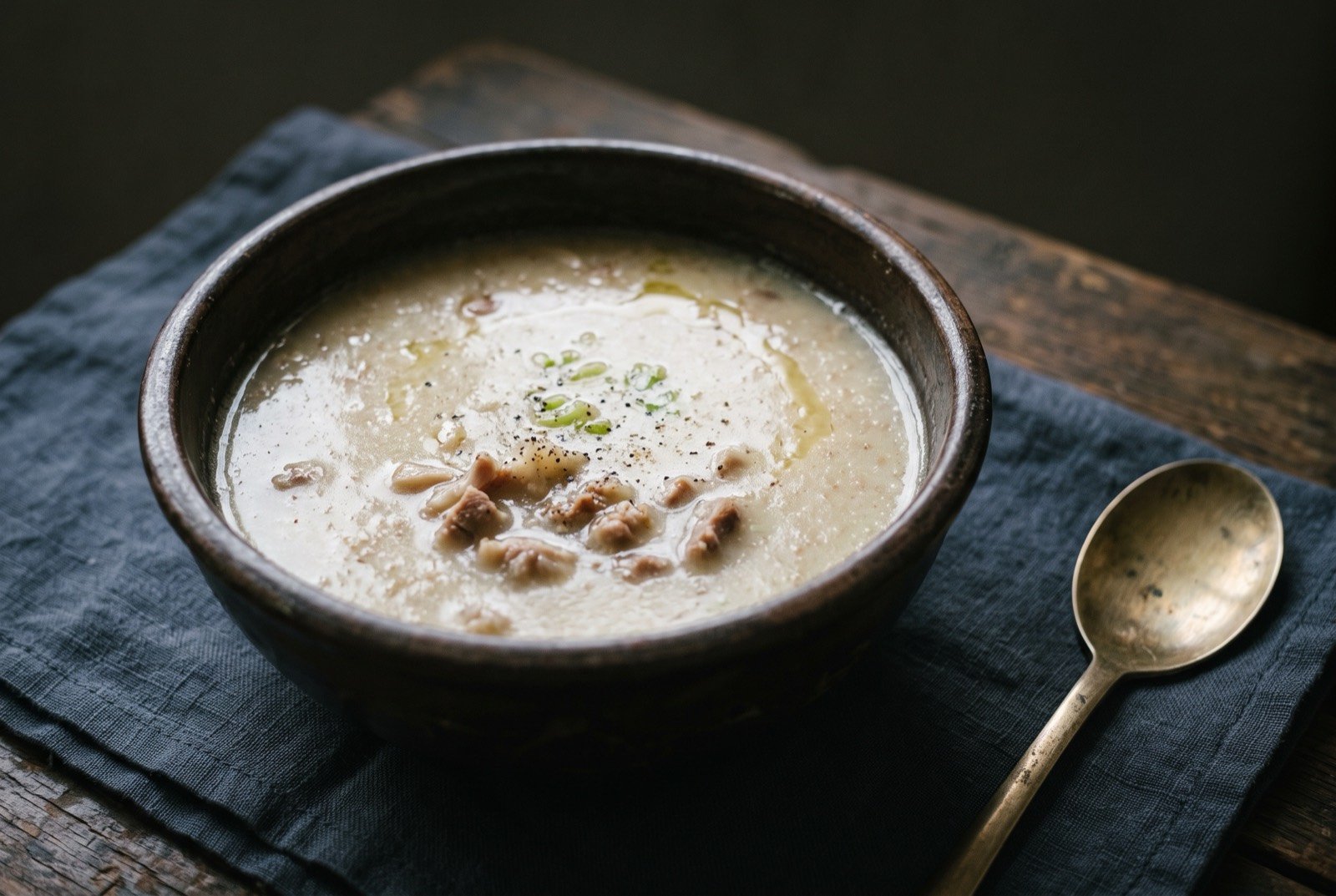
Jjeopjjakppyeguk
Jeju Island
Illustration
- Time
- 3 hours 30
- Researched
- Researched from 123 sources in the brief
Broth from the joint bone where a pig's foreleg meets the body, thickened with buckwheat flour. Traditionally the first dish served to a new bride at her wedding table.
Structurally close to momguk, built on the same pork-and-buckwheat logic, but distinguished by its own bone, its own occasion, and its own name: this is bridal food specifically, not wake or wedding-guest food, and the two dishes are kept separate in this chapter because Jeju's own tradition keeps them separate.
As tradition built it
Serves 4. About 3.5 hours.
Ingredients
- 1kg pork foreleg joint bones
- 2.5 litres water
- 3 tbsp buckwheat flour
- to taste salt, to taste
Method
- Simmer the pork foreleg joint bones in the water for 3 hours, skimming regularly, until the broth is rich and the connective tissue around the joint has fully softened.
- Lift out the bones, pick off any usable meat and cartilage, and shred finely. Strain the broth.
- Return the broth to the pot and bring back to a simmer. Mix the buckwheat flour with cold water to a smooth paste and whisk in to thicken, simmering 10 minutes.
- Return the shredded meat and cartilage to the pot, season with salt, and serve as the opening dish of the meal.
What a modern chef changes
A cleaner extraction from the joint itself, and a precisely controlled thickening.
Rungs 3 and 2
Method
- Sous vide the joint bones at 85°C for 8 hours before the final simmer, breaking down the connective tissue gently and completely, then use the resulting stock as the base for a shorter, more concentrated finishing simmer, rather than relying on a single long stovetop boil to do all the work.
- Blend the buckwheat slurry into a small portion of hot broth in a high-power blender before combining with the rest, exactly as in momguk, for the same clump-free result.