France and the Alps · Volume 11, Butter, Cider and the Buckwheat Line
Galette de blé noir
Brittany
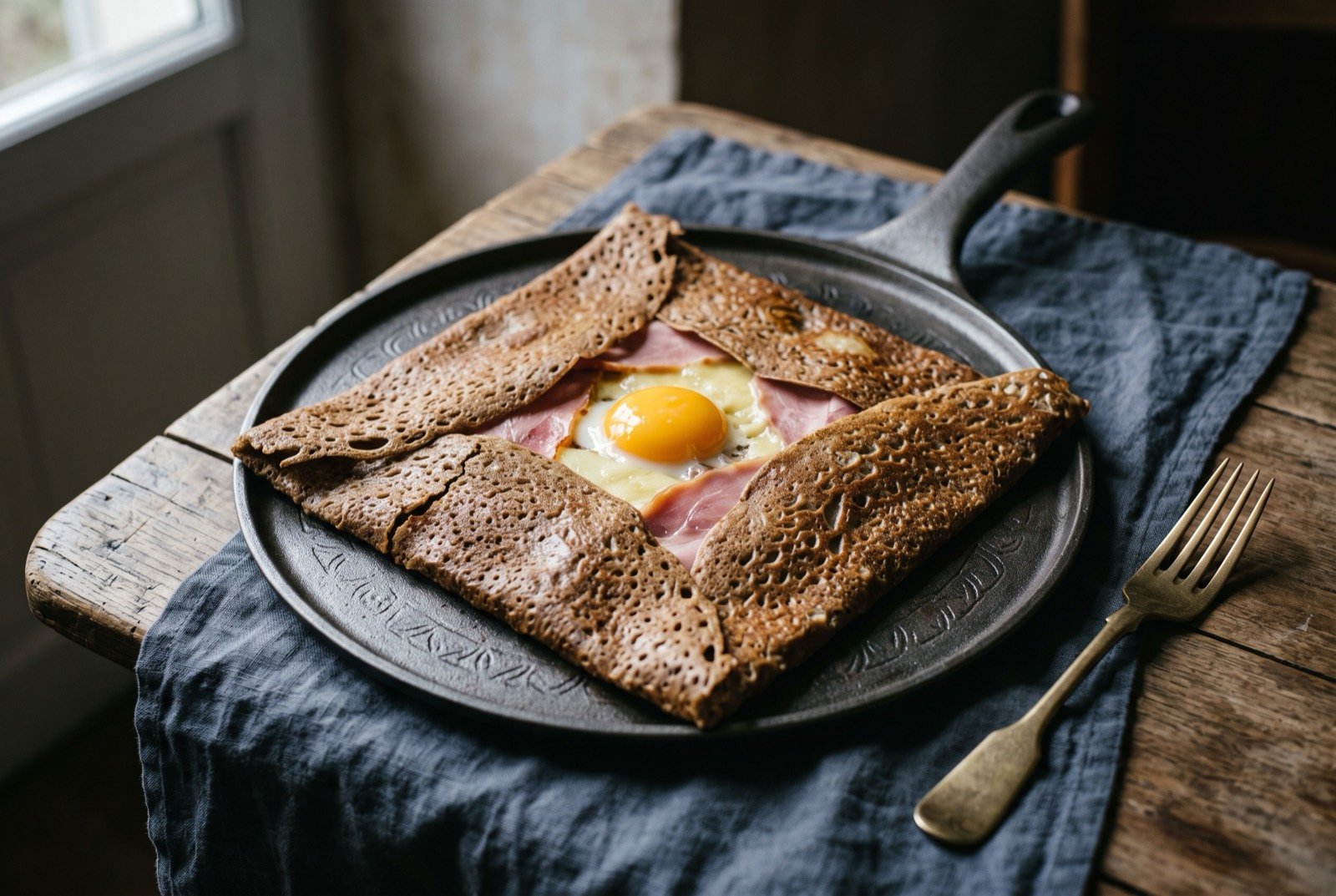
An illustration of the dish, not a photograph of it cooked.
- Time
- 2 hours
- Reviewed
- Not yet reviewed from inside the tradition
- Cooked
- Not yet cooked and reported
Brittany's central piece of food grammar, and, as the history above sets out, older as an ingredient than it is as a restaurant format. The sweet wheat crêpe, cooked the same way from an enriched, eggier batter, is the later, historically privileged half of the pairing, buckwheat's daily bread against wheat's Sunday indulgence, not two equal ancient traditions but one poor grain and one better one, kept apart by what they were actually for.
As tradition built it
Serves 4. Batter rests 1 to 2 hours, up to a full day; cooked at 200 to 240°C.
Ingredients
- 330 g buckwheat flour
- 10 g coarse Guérande salt
- 75 cl cold water
Method
- Add the water progressively to the flour and salt while whisking, to avoid lumps.
- Rest the batter, a minimum of one to two hours up to a full day, professional crêperies favour the longer rest, for more complete hydration and a rounder, less raw flavour, then bring back toward room temperature before use.
- Cook on a billig, the traditional cast-iron or steel griddle, at 200 to 240°C depending on the source consulted, spreading the batter thin and fast with a wooden rozell.
What a modern chef changes
A full 24 hour rest, high stable heat, and Breton-milled flour
Rung 1
Method
- Rest the batter the full 24 hours a professional crêperie favours, refrigerated, rather than the shorter home-kitchen minimum, and bring it fully back to room temperature before cooking, the single biggest lever on a clean, lace-thin result rather than a gluey one.
- Cook on genuinely high, stable heat, a well-seasoned iron pan or griddle held at the top of the traditional range, rather than the moderate domestic-hob heat most home cooks default to.
- Use true Breton-milled buckwheat flour where it can be sourced, milder and less assertively bitter than some generic stoneground wholegrain buckwheat.
- Finish a savoury galette with a dust of dried, ground seaweed from the spice grinder in place of, or alongside, the modern seaweed-and-butter pairing several contemporary Breton chefs now use, an honest nod to a genuinely modern technique rather than a claimed ancient one.