Korea and Japan · Volume 56, The Haenyeo, the Black Pig and the Kingdom Before Korea
Bingtteok
Jeju Island
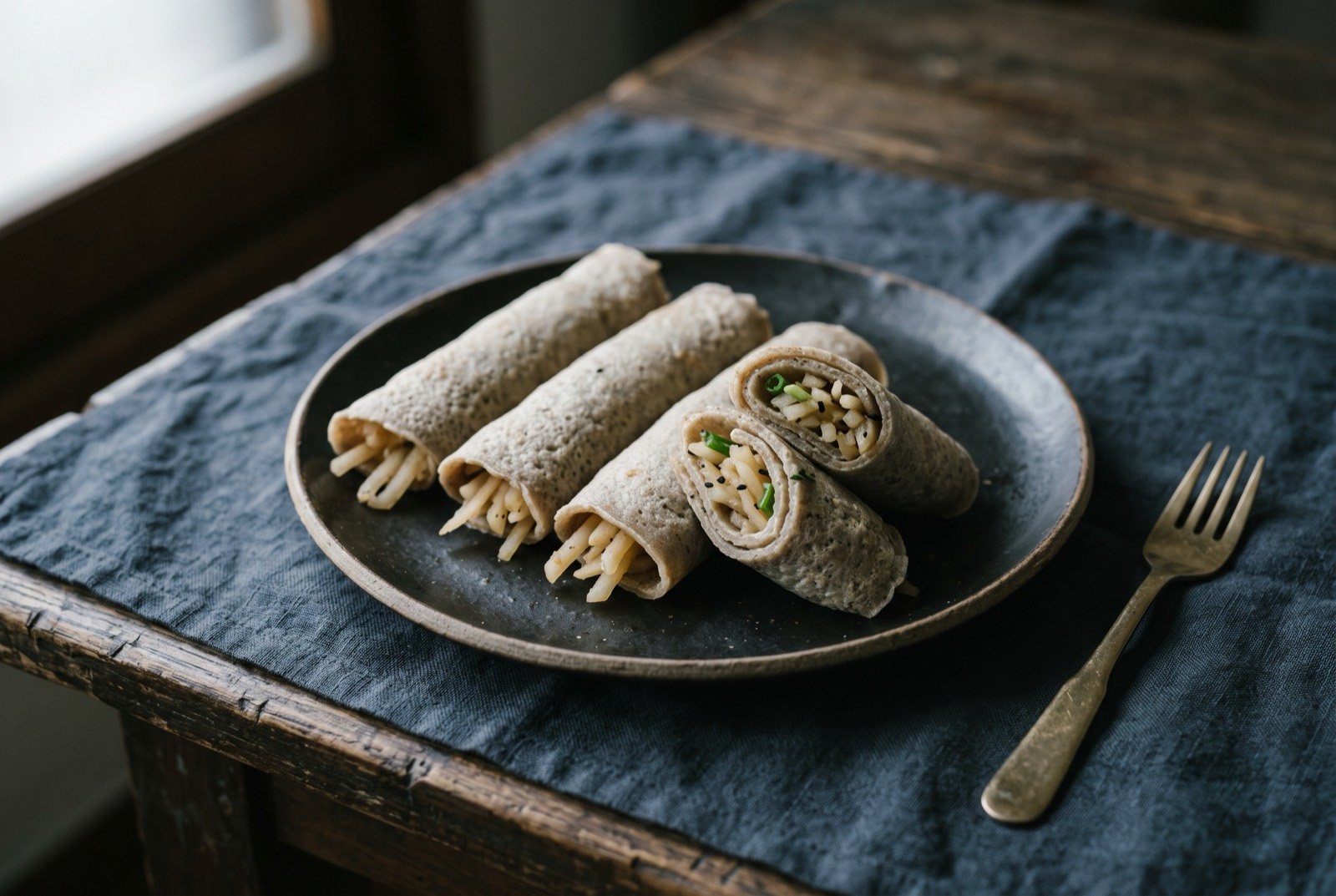
An illustration of the dish, not a photograph of it cooked.
- Time
- 45 minutes
- Reviewed
- Not yet reviewed from inside the tradition
- Cooked
- Not yet cooked and reported
An unleavened buckwheat crepe rolled around seasoned, julienned radish. Savoury throughout, with no sugar, one of Jeju's seven officially designated representative local dishes.
Structurally closer to a French galette than to mainland Korean buckwheat noodles, and a clean example of exactly the kind of dish the buckwheat rung above exists to support: two ingredients, buckwheat and radish, and a genuinely old, genuinely simple technique.
As tradition built it
Makes 8. About 45 minutes.
Ingredients
- 200g buckwheat flour
- 500ml water
- a pinch pinch of salt
- 300g radish, julienned
- a little sesame oil, a little
- 2 (about 40g) spring onion, finely sliced
Method
- Whisk the buckwheat flour with the water and a pinch of salt to a thin, smooth batter. Rest 20 minutes.
- Julienne the radish and blanch briefly, 1 minute, then drain well. Season with salt, a little sesame oil and the finely sliced spring onion.
- Heat a lightly oiled pan and pour in a thin layer of batter, swirling to coat, cooking each crepe 1 to 2 minutes a side until just set, not browned.
- Lay a portion of the seasoned radish along one edge of each crepe and roll up tightly.
- Serve warm or at room temperature, seam side down.
What a modern chef changes
The batter rested and worked for a finer crumb, and the radish given real seasoning depth.
Rung 3
Method
- Rest the batter a full 2 hours in the fridge rather than 20 minutes, letting the buckwheat flour hydrate more completely, for a smoother, less grainy crepe.
- Dehydrate a portion of the julienned radish separately at 60°C for 90 minutes until lightly crisped, then fold the crisped strands through the soft blanched radish before rolling, for a textural contrast the traditional single-texture filling does not have.