France and the Alps · Volume 11, Butter, Cider and the Buckwheat Line
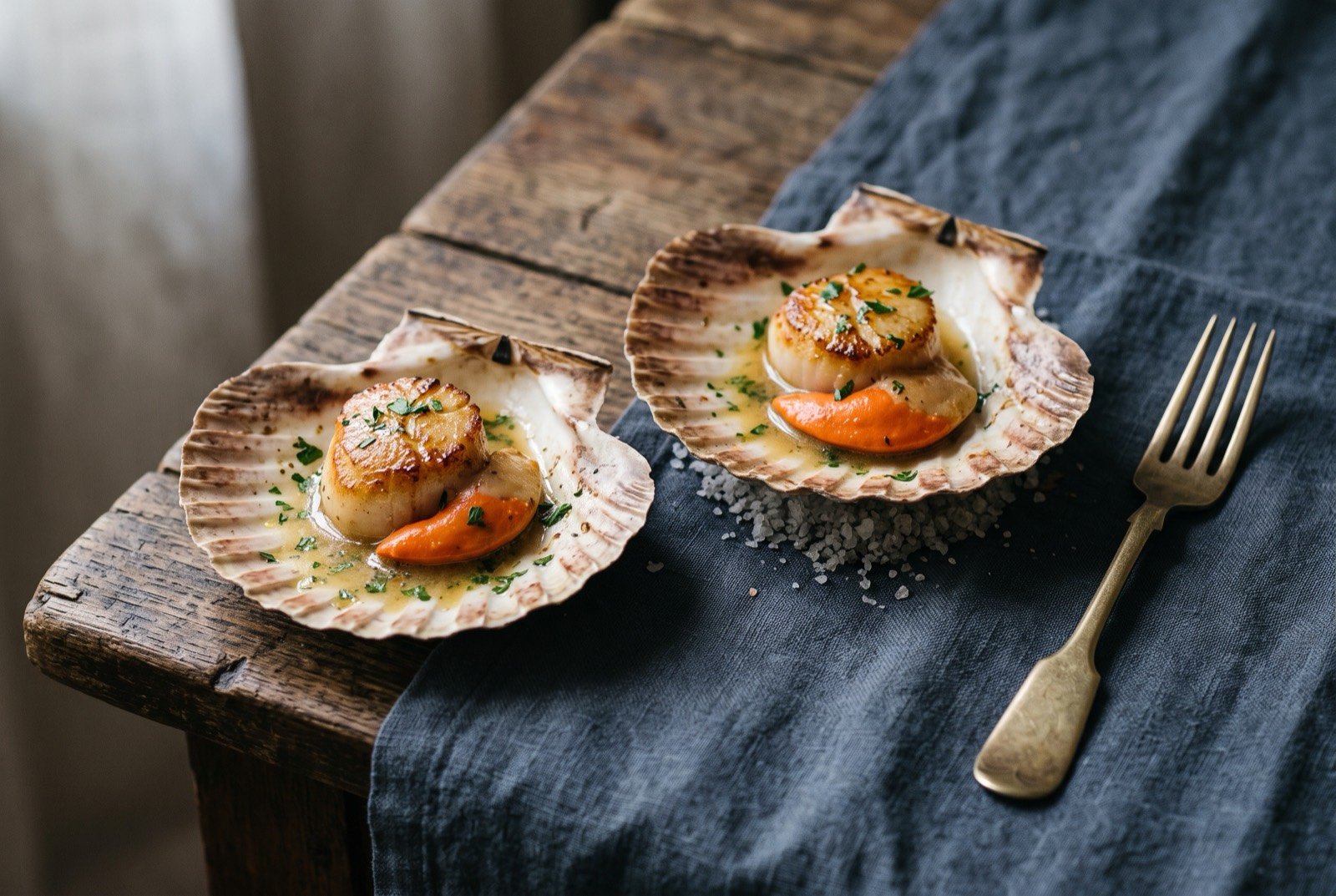
Coquilles Saint-Jacques à la bretonne
Baie de Saint-Brieuc, Brittany
Illustration
- Researched
- Researched from 72 sources in the brief
Less a single fixed heritage recipe than a genuinely well-regulated fishery attached to a simple, repeated preparation, and this chapter says so rather than presenting a false single authority where the sourcing does not support one. The Baie de Saint-Brieuc fishery, the reference point for Breton scallops, opens the first Monday of October to mid-May, with licensed boats dredging only on Mondays and Wednesdays for a single forty-five minute session per tide, minimum catch size 105 millimetres since 2024, the first French scallop fishery to hold MSC sustainable certification, from 2022.
As tradition built it
Ingredients
The method as the tradition gives it, ingredients named but not yet weighed. Quantities follow as we verify them, lead dishes first.
Method
- Sear the scallops briefly in butter.
- Deglaze with a little white wine or cider.
- Finish with parsley and garlic, the coral left attached and cooked alongside the nut.
What a modern chef changes
Hand-dived scallops seared to the second, and a Normandy-style cider reduction
Rungs 2 and 3
Method
- Sear the scallop nuts in a genuinely hot pan, no more than a minute a side, pulled the instant they colour while the centre stays faintly translucent, the timing rung applied with real precision, since this is the single technique on which the whole dish actually stands or falls.
- Use hand-dived rather than dredged scallops wherever they can be sourced, for the cleaner flavour and undamaged texture diver-caught scallops carry over dredged ones.
- Reduce the deglazing cider hard and separately before mounting it with cold, hand-worked butter through a chinois, exactly the Normandy technique carried across the border, for a glossier, more concentrated sauce than a quick pan reduction gives.