Britain and Ireland · Volume 34, Salt, Smoke and the Land the Clearances Remade
Stornoway Black Pudding
The Hebrides
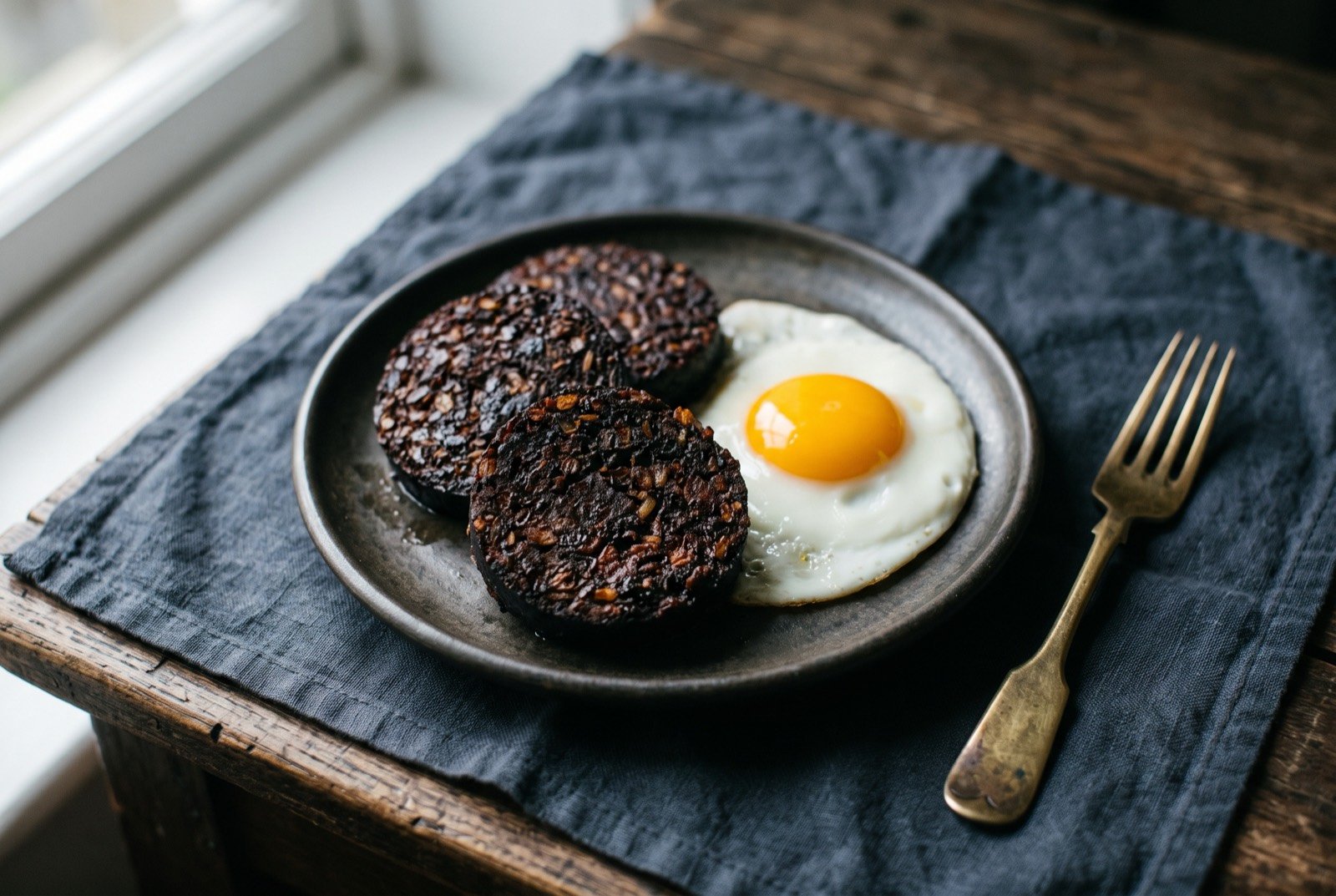
An illustration of the dish, not a photograph of it cooked.
- Time
- 10 minutes
- Researched
- 5 sources cited
- Reviewed
- Not yet reviewed from inside the tradition
- Cooked
- Not yet cooked and reported
This is a buy, not a make. The PGI specification's own suet-cutting step, described as highly skilled and judged by eye, is real butchery craft this chapter has no wish to pretend a home kitchen can casually reproduce, and this chapter is honest about that limit exactly as it has been about hákarl and lutefisk elsewhere in the atlas. Buy it from a licensed producer, and treat what follows as serving, not making.
As tradition built it
Serves 4. About 10 minutes.
Ingredients
- 1 Stornoway black pudding, licensed and PGI-marked
- for frying butter, for frying
Method
- Slice the black pudding into rounds around 1.5cm thick.
- Fry in the butter, or grill, 6 to 8 minutes, turning frequently, until piping hot throughout.
- Serve as part of a full Scottish breakfast, or simply with a fried egg.
What a modern chef changes
A harder crust against a soft interior, and a genuinely traditional ingredient turned into a seasoning.
Kit note, not tied to a numbered rung.
Method
- Sear thick slices hard on a screaming-hot cast iron griddle or the direct-heat zone of a Big Green Egg, for a genuinely crisp, caramelised crust the gentler pan-fry above does not achieve, while the interior stays soft.
- Dehydrate a small amount of cooked, crumbled pudding, then blitz it in a high power blender to a coarse powder. Scattered over an unrelated dish, a scallop or a piece of roast game, it works as a savoury, ferrous seasoning built from a genuinely traditional ingredient rather than a modern invention pretending otherwise.
- Never claim this dish, or any version of it, is interchangeable with Bury's black pudding or Cork's drisheen. All three descend from the same basic idea of using blood rather than wasting it, but their compositions, and the PGI's own strict specification for this one, are genuinely different.