Britain and Ireland · Volume 31, The Roast, the Crust and the Clotted Cream
Cornish Cream Tea
Cornwall
Illustration
- Time
- 40 minutes
- Researched
- 9 sources cited
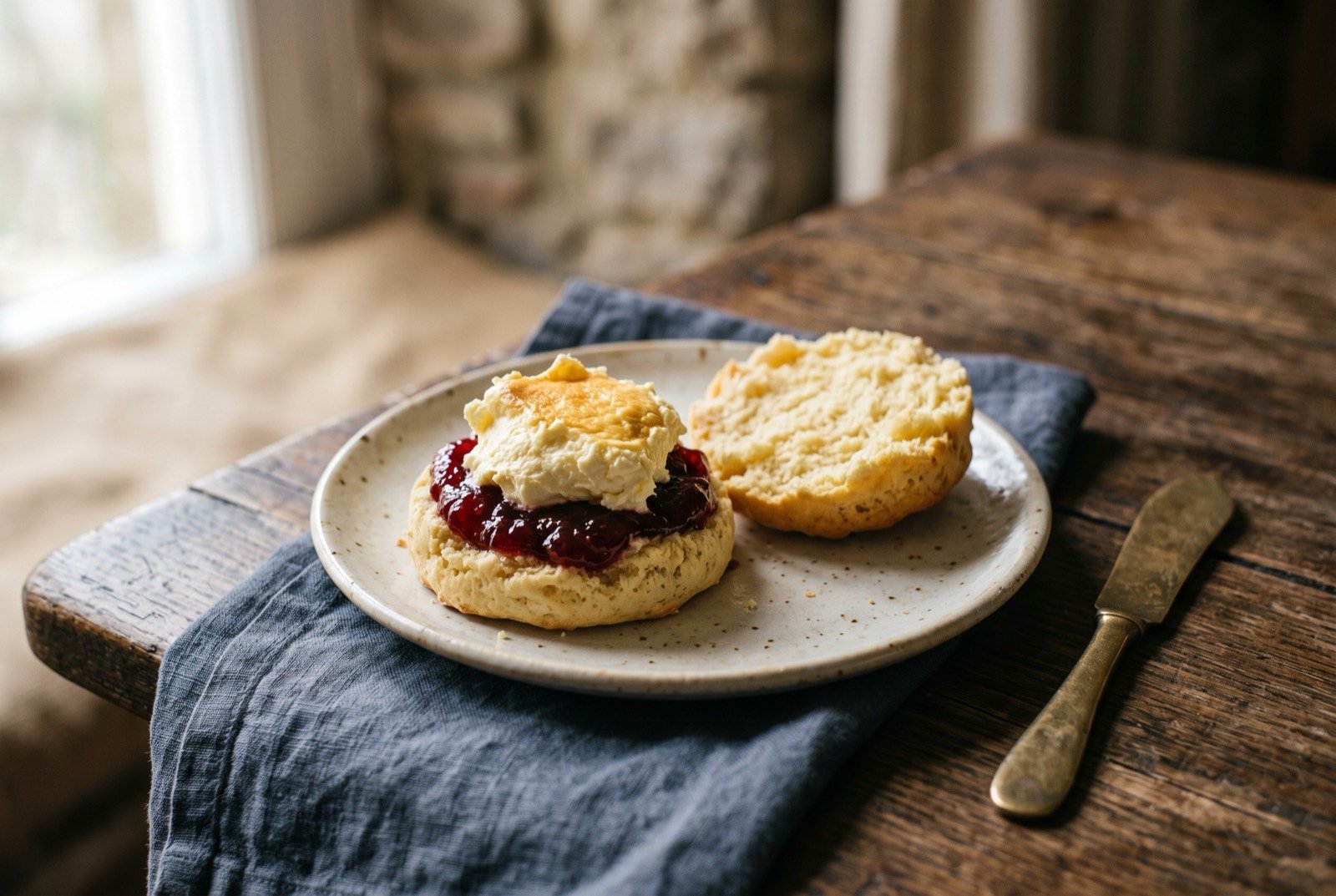
Clotted cream has held Protected Designation of Origin status in Cornwall since 1998: minimum 55% butterfat, scalded to 70 to 80°C for at least an hour, never boiled, then cooled slowly to below 5°C. Devon's own clotted cream carries no such protection. The county rivalry over how a cream tea is assembled, jam first in Cornwall, cream first in Devon, is real and current enough that the National Trust issued a public apology after a Cornwall advertisement showed the Devon order, and the Trust's own policy since has been to serve jam and cream in separate pots and let the visitor choose. This chapter presents the split itself as fact and its origin as genuinely undated folklore, not as settled history either way.
As tradition built it
Makes 8 to 10 scones. About 40 minutes.
Ingredients
- 450g self-raising flour
- 2 tsp baking powder
- 85g cold butter, cubed
- 40g caster sugar
- 275ml milk, plus extra for glazing
- to taste strawberry jam and Cornish clotted cream, to serve
Method
- Rub the butter into the flour and baking powder to fine crumbs, stir in the sugar, then bring together with the milk to a soft, only just combined dough.
- Pat out to around 2cm thick, cut rounds, and glaze the tops with a little milk.
- Bake at 220°C for 12 to 15 minutes, until well risen and golden.
- Split while still warm, and serve with jam and clotted cream, in whichever order the reader prefers, or, for the fully honest Cornish version, jam first.
What a modern chef changes
The scalding taken as seriously as the PDO specification itself demands, at home rather than assumed from a shop tub.
Rung 5
Method
- Scald the cream yourself, in a wide, shallow dish set inside a water bath, at a genuine, thermometer-checked 70 to 80°C for a full hour, never allowing it to boil. This is not a decorative flourish; it is the entire mechanism by which the crust forms and the cream beneath thickens, and it cannot be shortened.
- Cool it slowly to below 5°C rather than rushing it into the freezer, since the crust hardens and the underlying cream sets properly only across that slower chill.
- Handle the scone dough as little as possible, exactly the same gluten discipline as the suet pastry above, since an overworked scone dough rises unevenly and toughens, however good the cream sitting on top of it turns out to be.