Britain and Ireland · Volume 31, The Roast, the Crust and the Clotted Cream
Steak and Kidney Pudding
England
Illustration
- Time
- 4 hours
- Researched
- 9 sources cited
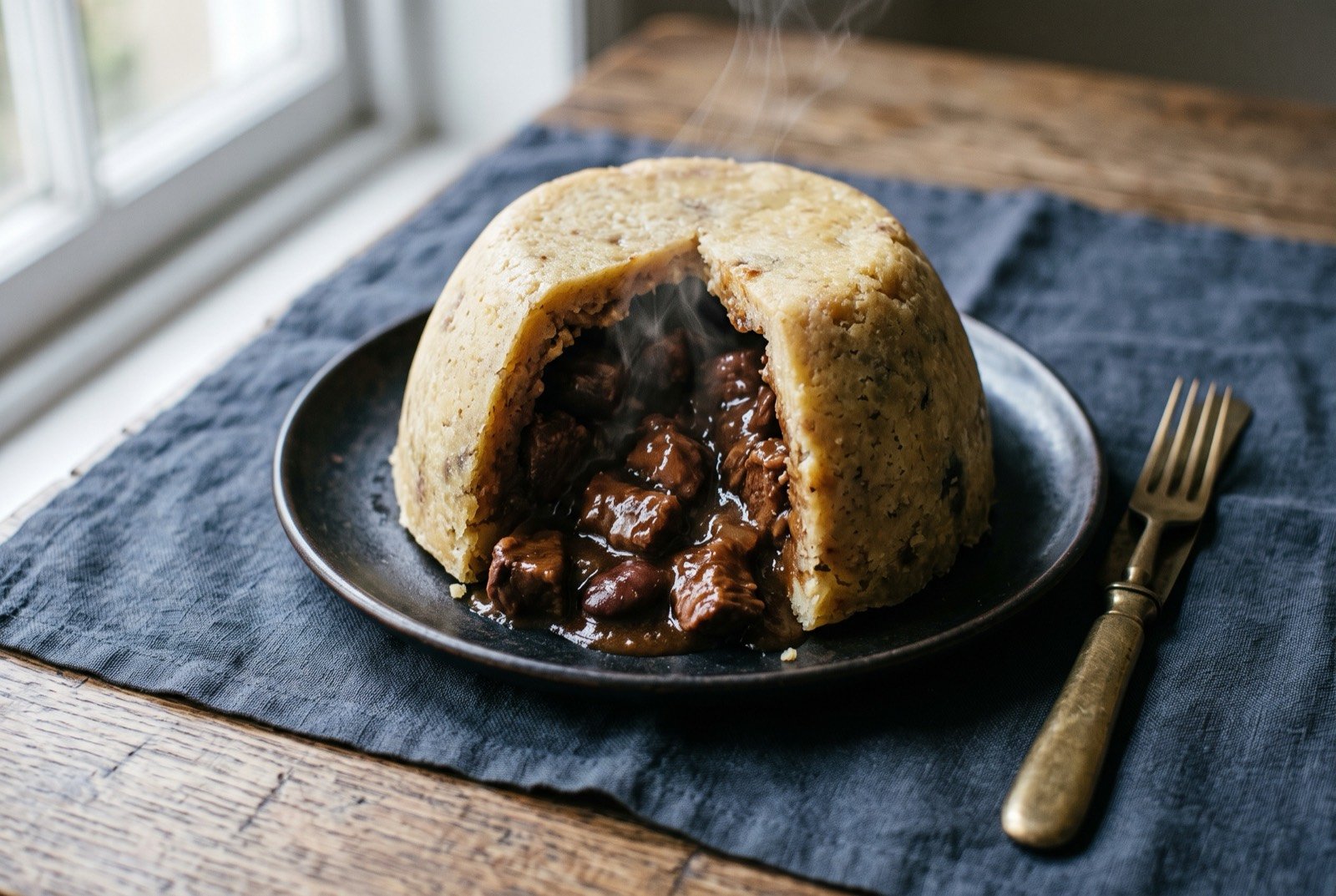
The first printed recipes for this dish are usually dated to the 1860s. It is worth stating plainly what separates it from a steak and kidney pie: a pudding is entirely encased in suet pastry and steamed in a basin for hours, never baked, giving a completely different crumb and a completely different relationship between filling and crust than a pie's rolled, baked lid ever produces.
As tradition built it
Serves 4. About 4 hours.
Ingredients
- 500g stewing beef, cubed
- 200g ox kidney, trimmed and cubed
- 2 tbsp plain flour, seasoned
- 1 onion, chopped
- 200ml beef stock
- 1 tbsp Worcestershire sauce
For the suet crust
- 350g self-raising flour
- 175g beef suet
- a pinch a pinch of salt
- as needed, to bind cold water, to bind
Method
- Toss the beef and kidney in the seasoned flour, then brown well in batches; set aside.
- Soften the onion in the same pan, return the meat, add the stock and Worcestershire sauce, and simmer, covered, for 1.5 to 2 hours until tender, then cool completely.
- Mix the flour, suet and salt with just enough cold water to bring together a soft, non-sticky dough. Do not overwork it.
- Roll two thirds of the dough and line a well-buttered pudding basin, leaving enough overhang to seal.
- Fill with the cooled meat, roll the remaining dough as a lid, seal the edges firmly, and cover with buttered greaseproof paper and foil, pleated to allow for rising.
- Steam for 3 to 4 hours, topping up the water regularly, never letting it boil dry.
- Turn out and serve straight from the basin.
What a modern chef changes
The filling's own tenderness taken further, and the suet crust given the respect its steam demands.
Rung 1
Method
- Braise the beef and kidney sous vide, around 60°C for 24 hours, rather than a stovetop simmer, for an evenly, gently broken-down filling with none of the risk of scorching or overcooking the kidney's own delicate texture over a long unattended pot.
- Handle the suet dough as little as possible, and rest it briefly, chilled, before rolling. Overworking develops gluten a suet crust does not want, toughening what should stay light.
- Steam properly, for the full time, and resist the temptation to bake it instead. This is the whole of Rung 1: a suet crust's lightness comes specifically from the humid, sustained heat of steam melting the fat slowly through the flour, and a hot dry oven cannot reproduce it.