Britain and Ireland · Volume 31, The Roast, the Crust and the Clotted Cream
Jellied Eels
London
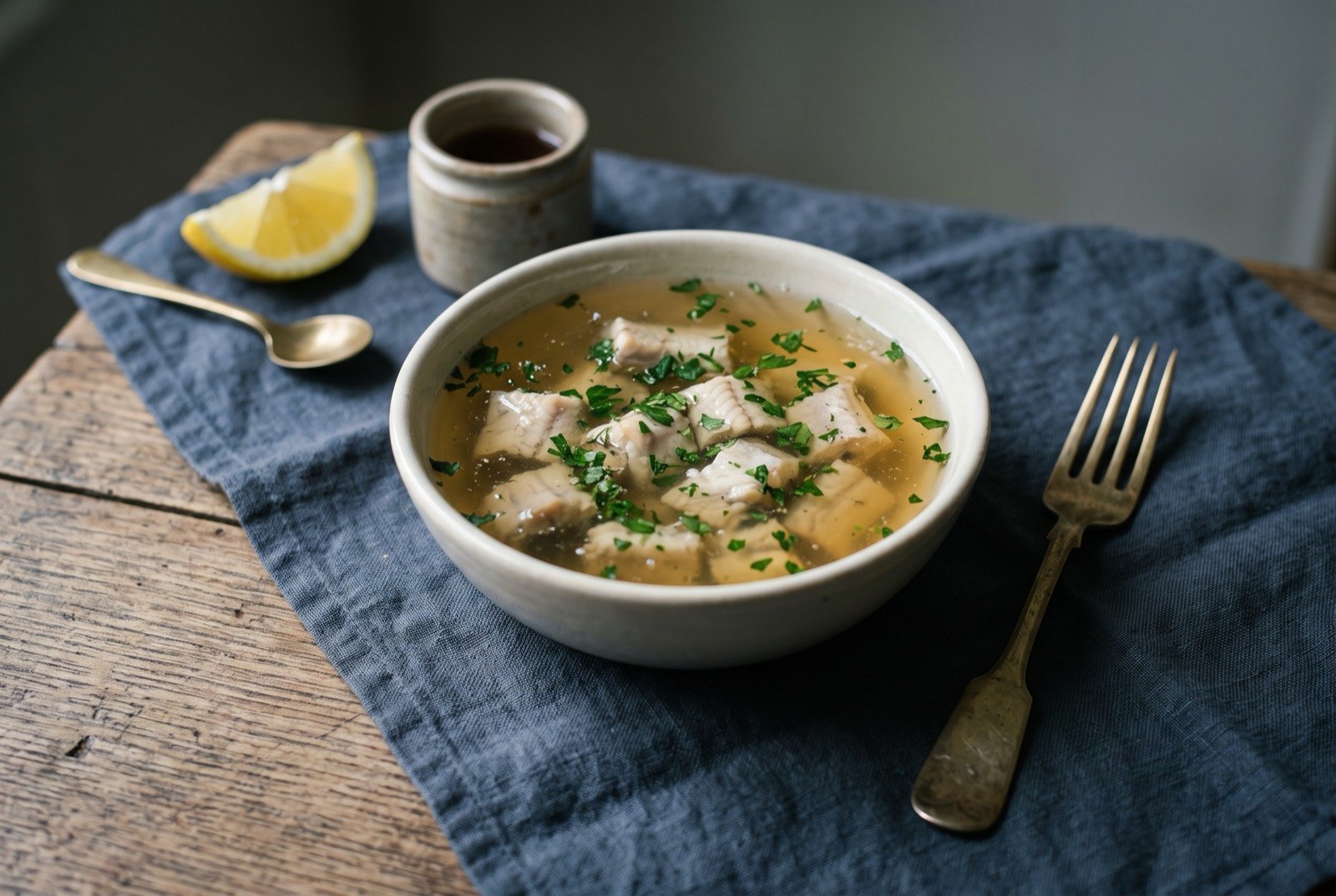
An illustration of the dish, not a photograph of it cooked.
- Time
- 45 minutes
- Researched
- 9 sources cited
- Reviewed
- Not yet reviewed from inside the tradition
- Cooked
- Not yet cooked and reported
Eels were once so abundant in the Thames and the River Lea that London's poor caught them independently of the Dutch trade that also supplied Billingsgate from at least 1412. The dish itself, chopped eel simmered in vinegar-seasoned water or stock, then cooled so the fish's own gelatinous skin and bone set a natural jelly, is genuinely old East End food. What this chapter will not do is present it uncritically. European eel is Critically Endangered, its numbers down 90 to 98% since the 1970s, and a 2023 UCL and Exeter DNA study of UK jellied eel products found most sampled contained European eel DNA, with trade patterns consistent with illegal trafficking somewhere upstream. This is not a detail to soften for the sake of a good story.
As tradition built it
Serves 4. About 45 minutes, plus setting.
Ingredients
- 1kg eel, cleaned and cut into chunks
- 600ml water
- 2 tbsp white wine vinegar
- 1 onion, sliced
- to taste a few peppercorns, a bay leaf, salt
- to taste a squeeze of lemon
Method
- Bring the water, vinegar, onion, peppercorns, bay and salt to a simmer.
- Add the eel and poach gently, 15 to 20 minutes, until just cooked through and no longer translucent.
- Lift the eel into serving bowls or a single dish.
- Strain the cooking liquid, adjust seasoning with a little lemon, and pour over the eel.
- Cool, then chill for at least 4 hours, until fully set into a firm jelly.
- Serve cold, with vinegar or white pepper alongside.
What a modern chef changes
The species question answered honestly before the technique question is asked at all.
No numbered rung; this is a sourcing discipline, not a kitchen one
Method
- Buy Lough Neagh eel specifically, PGI-protected and managed since 2011, and ask for it by name, rather than an unlabelled "eel" that carries no comparable guarantee, since this is currently the best-documented least-bad named UK source for the species.
- Treat this as an occasional dish, not a weekly one, and say so to anyone you serve it to. The most honest modernist move available here is restraint, not technique.
- If serving it, poach gently and briefly rather than at a hard simmer, watching for the point the flesh just turns opaque, since overcooked eel toughens fast and there is little reason to compound a sourcing compromise with a cooking one.