Britain and Ireland · Volume 31, The Roast, the Crust and the Clotted Cream
Fish and Chips
England
Illustration
- Time
- 45 minutes
- Researched
- 9 sources cited
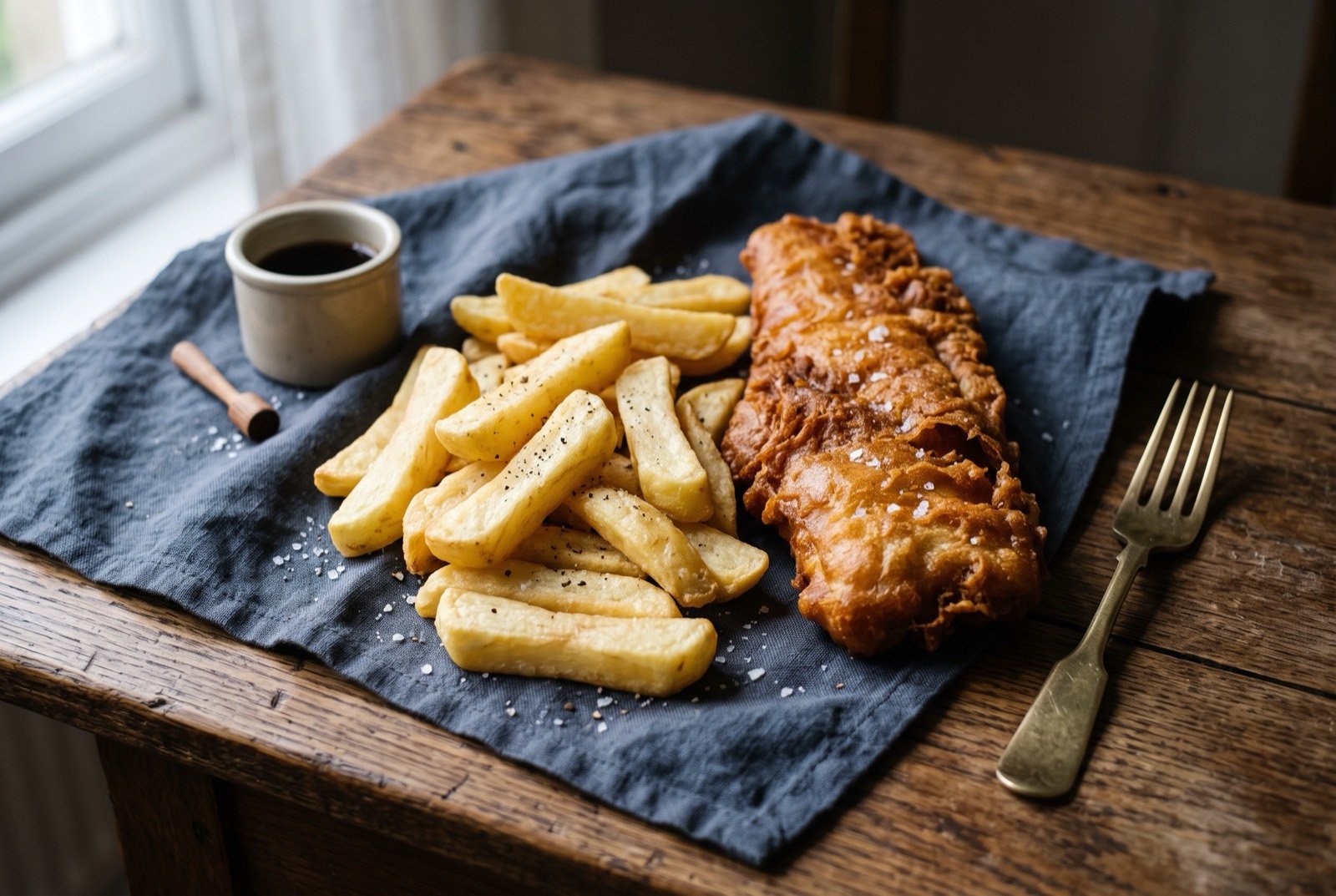
Battered fried fish and twice-fried chips, sold together from a shop rather than cooked at home, is the dish most readers of this book already half know, and the one most often let down by careless frying rather than a bad recipe.
As tradition built it
Serves 4. About 45 minutes.
Ingredients
- 1kg Maris Piper potatoes, cut into thick chips
- 4 fillets white fish (cod or haddock)
- 200g plain flour, plus extra for dusting
- 1 tsp baking powder
- 250ml cold lager or pale ale
- for deep frying vegetable oil or beef dripping, for frying
- to taste malt vinegar and salt, to serve
Method
- Rinse the cut chips in cold water to remove surface starch, then dry thoroughly.
- Heat the oil to 120°C, and fry the chips in batches 6 to 8 minutes, until just cooked through but pale. Drain and rest.
- Whisk the flour, baking powder and a pinch of salt with the cold lager to a smooth, thin batter, and use immediately.
- Raise the oil to 190°C. Dust the fish lightly in flour, dip in the batter, and fry 6 to 8 minutes, until deep golden and crisp.
- Raise the oil back to 190°C and refry the chips 2 to 3 minutes, until crisp and golden.
- Drain both on kitchen paper, salt generously, and serve with malt vinegar.
What a modern chef changes
The two-stage discipline taken seriously at every step, and doneness judged by more than colour.
Rung 4
Method
- Hold the chip's first fry to a genuine 120°C and pull it purely on tenderness, not colour, checking with a skewer rather than eyeballing a pale chip, since the first fry's whole job is cooking the potato through, not browning it.
- Rest the fried chips fully, at room temperature, before the second fry. A hot second fry straight after the first steams rather than crisps, since the chip's own residual moisture has nowhere to escape.
- Mix the batter cold and fry the fish within minutes of mixing, never leaving it to stand. A batter that has sat loses its raising agent's lift and its own chill, both of which are doing real structural work in the fryer, not just a texture preference.