Britain and Ireland · Volume 36, The Grass, the Grain and the Border That Doesn’t Cut the Table
Galway Bay Oysters
The west coast
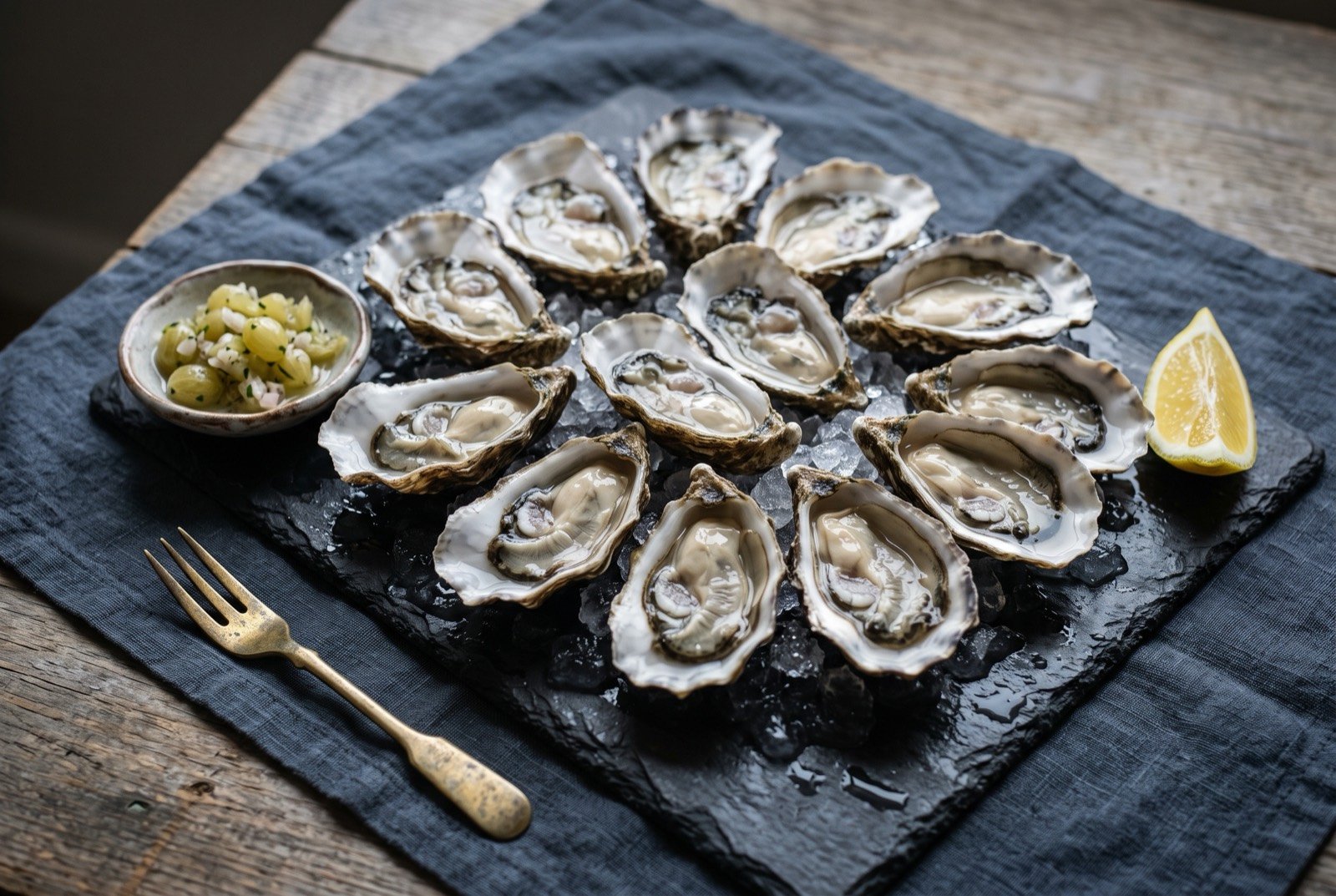
An illustration of the dish, not a photograph of it cooked.
- Time
- 15 minutes
- Researched
- 1 source cited
- Reviewed
- Not yet reviewed from inside the tradition
- Cooked
- Not yet cooked and reported
The Galway International Oyster Festival was founded in 1954 by Brian Collins, manager of the Great Southern Hotel, together with Guinness and Paddy Burke's Bar in Clarenbridge, starting with 34 attendees and now drawing well over half a million visitors across its run, named among Europe's best festivals by the AA Travel Guide in 1987. It celebrates specifically the Galway Native Oyster, harvested by families such as Kelly Oysters, farming Galway Bay for over 60 years, whose native Edulis stock takes roughly six years to mature. JP McMahon's kitchen at Aniar treats the wider Atlantic larder as part of the same dish rather than a separate garnish: clams there are paired with pepper dulse and salted gooseberry, a real, documented pairing logic this chapter's modernist version borrows directly.
As tradition built it
Serves 4, as a starter. About 15 minutes.
Ingredients
- 24 native oysters, freshly shucked
- to serve brown soda bread and butter, to serve
- as available a wedge of lemon or a splash of malt vinegar
- to cover crushed ice, to serve on
Method
- Shuck each oyster just before serving, keeping as much of the natural liquor in the shell as possible.
- Arrange on crushed ice.
- Serve simply, with brown soda bread and butter alongside, and lemon or vinegar for those who want it.
What a modern chef changes
The Atlantic larder built back around the oyster, the way a modern Galway kitchen does it.
Rung 5
Method
- Make a quick pickle of chopped gooseberry, sharpened with a little of its own vinegar and a pinch of salt, standing for 20 minutes before serving, echoing Aniar's own salted gooseberry pairing.
- Grind dried dulse to a fine powder in a dedicated spice grinder, and dust it lightly over the pickle rather than the oyster itself, so the seaweed's savoury note reaches the dish without overwhelming the oyster's own brine.
- Serve one oyster completely unadorned alongside the dressed ones, so the diner can taste the difference the pairing actually makes rather than assuming it.