Britain and Ireland · Volume 36, The Grass, the Grain and the Border That Doesn’t Cut the Table
Colcannon
The Republic
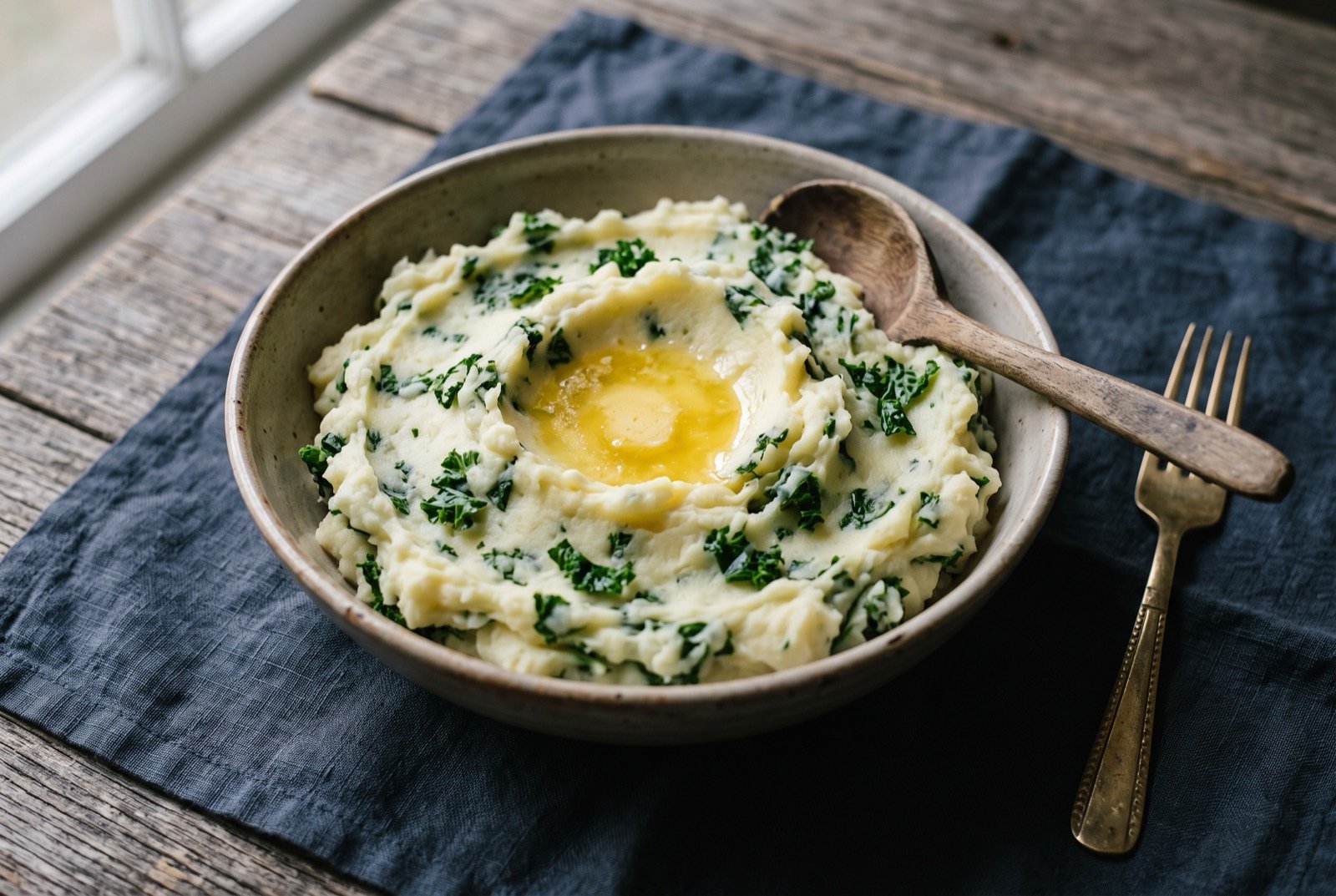
An illustration of the dish, not a photograph of it cooked.
- Time
- 40 minutes
- Researched
- 1 source cited
- Reviewed
- Not yet reviewed from inside the tradition
- Cooked
- Not yet cooked and reported
Darina Allen of Ballymaloe distinguishes colcannon, potato mashed with a cooked green, kale, cabbage, or in the Dublin variant parsnip, from champ, potato beaten with scallions cooked in milk and no green vegetable at all, two dishes that share an ingredient list but not a method. She attributes the Dublin parsnip variant specifically to the late broadcaster Gay Byrne, "Uncle Gaybo," who "insisted that it was the Dublin way of making it and the way his mother always made it," and confirms the same Halloween tradition barmbrack carries below: "Threepenny or sixpenny bits were sometimes hidden in the colcannon at Hallowe'en for the children to find."
As tradition built it
Serves 8. About 40 minutes.
Ingredients
- 450 g old potatoes, such as Golden Wonder or Kerr's Pink
- 450 g parsnips
- 450 g curly kale
- 250 to 300 ml creamy milk
- 2 tbsp chopped scallions
- 55 g butter
- to taste salt and black pepper
Method
- Boil the potato and parsnip together until tender, drain, steam-dry over low heat for a minute, and mash.
- Separately boil the kale until just tender, drain very well, and chop finely.
- Heat the milk with the scallions for 3 to 4 minutes.
- Fold the kale through the warm mash, then beat in the hot milk and scallions to a fluffy purée.
- Finish with the butter, season with salt and black pepper, and serve with a well of melted butter in the centre.
What a modern chef changes
The same mash, made silkier, with the green kept as its own distinct texture rather than lost inside it.
Kit note, not tied to a numbered rung
Method
- Pass the potato and parsnip mash through a chinois after mashing, for a genuinely smooth, restaurant-grade purée the traditional method, mashed by hand or fork, never quite achieves.
- Blitz half the kale to a fine, bright purée in a high-power blender, and keep the other half roughly chopped, folding both through separately, for a dish that reads as one colour but carries two distinct textures of the same vegetable.
- Dehydrate a handful of kale leaves to a crisp, then crush them over the top at the table, restoring some genuine texture contrast to a dish that is otherwise entirely soft.