Britain and Ireland · Volume 36, The Grass, the Grain and the Border That Doesn’t Cut the Table
Yellowman and Dulse
Ballycastle, County Antrim
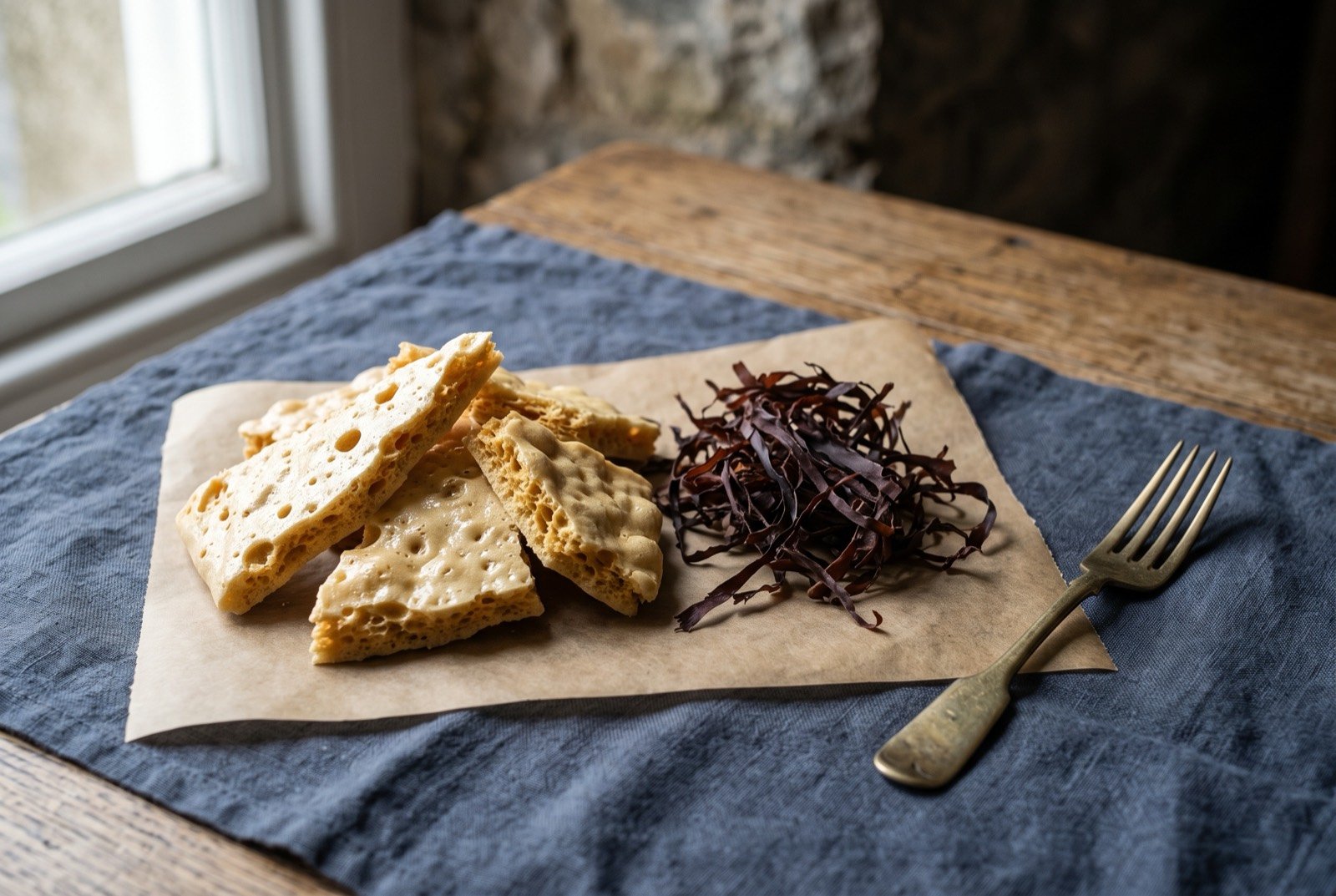
An illustration of the dish, not a photograph of it cooked.
- Time
- 20 minutes
- Researched
- 1 source cited
- Reviewed
- Not yet reviewed from inside the tradition
- Cooked
- Not yet cooked and reported
The Auld Lammas Fair has run on the last Monday and Tuesday of August in Ballycastle since Sir Randal MacDonnell, 1st Earl of Antrim, secured a royal charter from King James I in 1606. Yellowman, a brittle, golden honeycomb toffee traditionally broken from large blocks and sold in paper cones, is historically paired there with dulse, dried seaweed eaten as a snack in its own right, a pairing credited by several accounts to a local shopkeeper and bog-oak carver, John Henry McAuley, though only in secondary retellings rather than a primary heritage document, and this chapter names that limit rather than repeating the attribution as settled fact.
As tradition built it
Makes about 500g. About 20 minutes.
Ingredients
- 200 g golden syrup
- 200 g granulated sugar
- 50 g butter
- 2 tbsp malt vinegar
- 2 tsp bicarbonate of soda
- to serve dried dulse, to serve alongside
Method
- Combine the syrup, sugar, butter and vinegar in a heavy pan, and heat gently until the sugar dissolves.
- Bring to a boil and cook, without stirring, to hard-crack stage, about 150°C on a sugar thermometer.
- Remove from the heat, and beat in the bicarbonate of soda quickly, it will foam up dramatically.
- Pour immediately onto a lined tray, and leave to cool and set completely.
- Break into rough pieces, and serve alongside torn dried dulse, exactly as sold from the fair's paper cones.
What a modern chef changes
The seaweed worked into the toffee itself, rather than simply served beside it.
Rung 5
Method
- Grind dried dulse to a fine powder in a dedicated spice grinder, and fold a spoonful directly into the toffee just before the bicarbonate goes in, distributing its savoury, mineral note through the whole batch rather than leaving it as a separate pairing.
- Reserve a portion of the batch unseasoned, so a taster can compare the plain version against the dulse-folded one directly, honestly showing what the addition actually changes.
- Break the set toffee with a light dusting of extra dulse powder over the broken faces, echoing the same technique this chapter's oyster entry uses.