Britain and Ireland · Volume 36, The Grass, the Grain and the Border That Doesn’t Cut the Table
Dublin Coddle
Dublin
Illustration
- Time
- 1 hour 45
- Researched
- 1 source cited
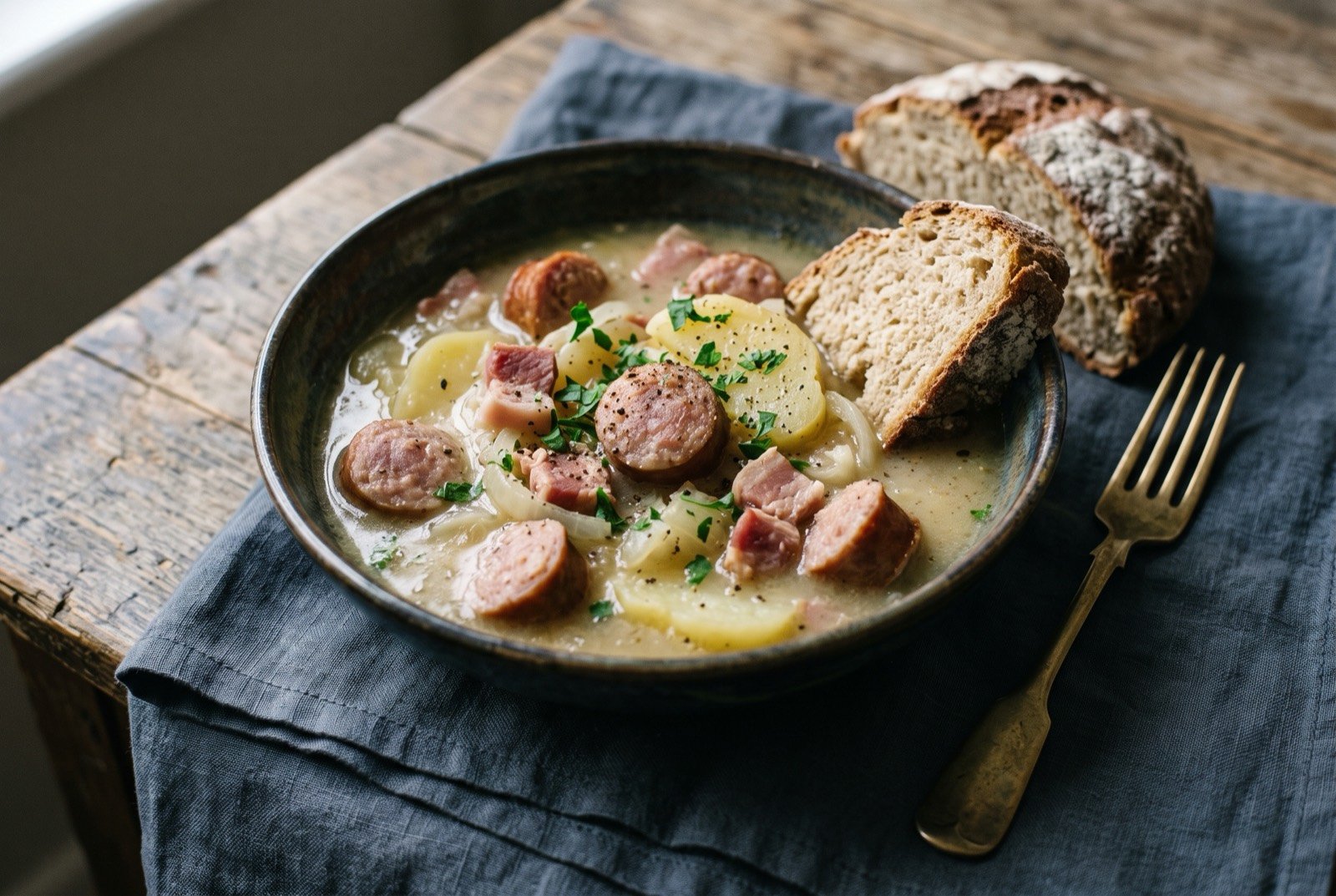
Coddle is widely described as a working-class Dublin dish built from whatever affordable meat came off the docks, sausages and bacon standing in for costlier cuts, cooked slowly in one pot. The word itself is said to come from the French caudle, to boil gently. What genuinely divides Dubliners is whether a proper coddle contains tomato: one Irish Times writer insists "A true Dublin Coddle is potatoes, bacon and sausages," dismissive of "unorthodox" additions, while other sources state flatly that a traditional coddle should "never use tomatoes, Worcestershire sauce, beer or flour," and neither camp settles the question for the other. This chapter presents both versions as genuinely, currently contested rather than choosing a winner.
As tradition built it
Serves 4 to 6. About 1.75 hours.
Ingredients
- 500 g rindless bacon rashers, cut into large pieces
- 8 pork sausages
- 900 g potatoes, thickly sliced
- 2 large onions, sliced
- 600 ml ham or chicken stock, to just cover
- to taste black pepper
- to taste chopped parsley, to finish
Method
- Brown the sausages briefly in a dry pan, just to colour, then set aside.
- Layer the bacon, sausages, potatoes and onions in a heavy pot, seasoning with pepper between layers.
- Add stock to just cover.
- Bring to a simmer, cover, and cook 1.5 hours, until the potatoes have started to break down and thicken the broth.
- Scatter with parsley, and serve with soda bread.
What a modern chef changes
The broth given real body, and the sausages kept from splitting in the pot.
Rung 3
Method
- Cook the sausages separately sous vide, around 65°C for 45 minutes, before adding them to the pot only to finish and take on flavour for the final 10 minutes, keeping their casings intact rather than letting them split and cloud the broth over 1.5 hours of direct simmering.
- Use a proper bone stock, reduced beforehand, rather than a light ham stock, for a broth with real body once the dish is finished.
- Add the onions raw in the final 20 minutes rather than throughout, keeping some genuine bite against the otherwise fully soft potato and meat.