Britain and Ireland · Volume 36, The Grass, the Grain and the Border That Doesn’t Cut the Table
Waterford Blaa
Waterford, southeast Ireland
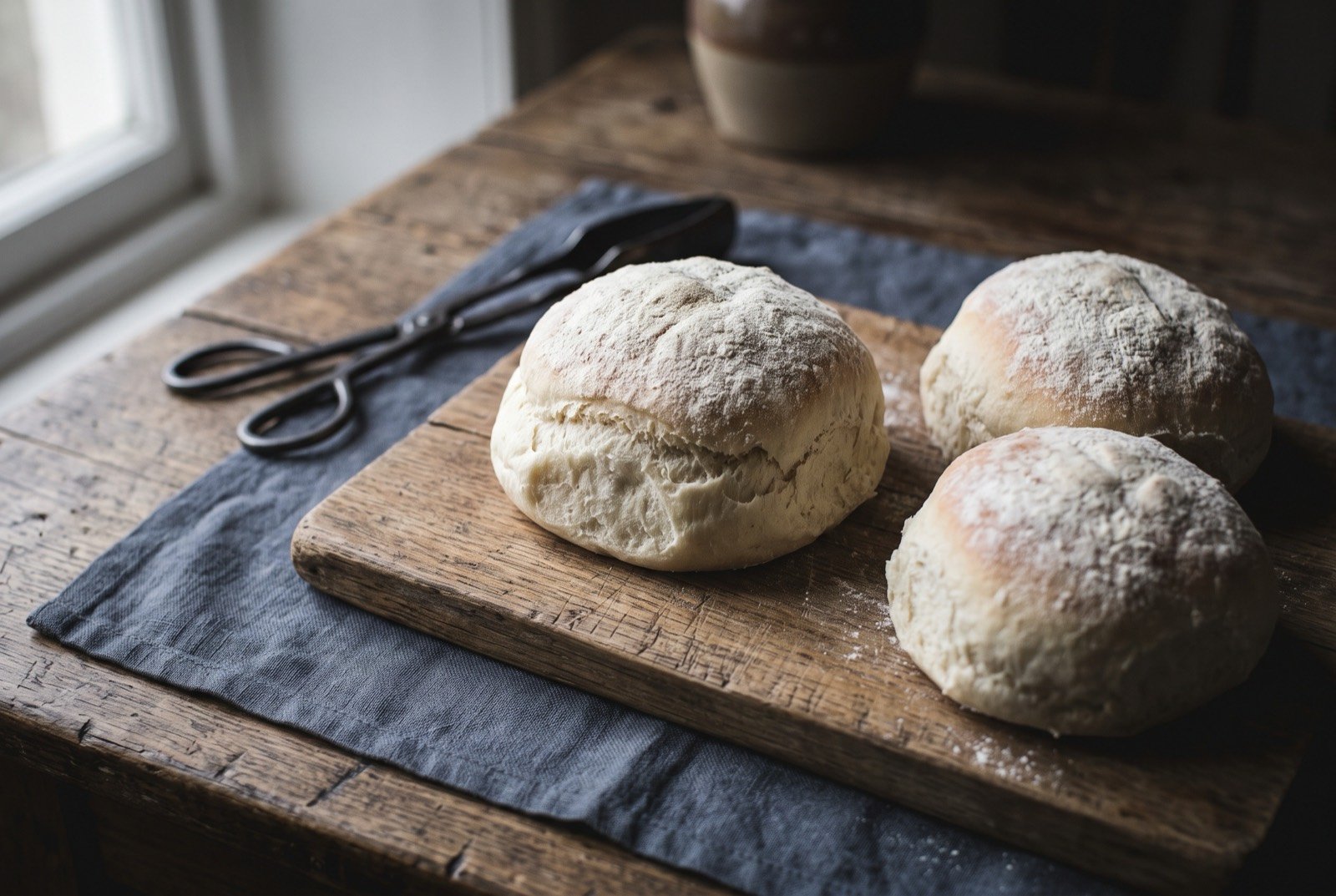
An illustration of the dish, not a photograph of it cooked.
- Time
- 3 hours
- Researched
- 1 source cited
- Reviewed
- Not yet reviewed from inside the tradition
- Cooked
- Not yet cooked and reported
The Waterford Blaa received Protected Geographical Indication status from the European Commission in November 2013, the protection remaining in force on the UK's own register today, following an application by the Waterford Blaa Bakers Association, four family bakeries working together specifically to secure it. What makes it distinct is documented precisely: a doughy, white bread bun, square-ish and irregular, dusted heavily with flour before baking, made traditionally without added fats, eggs or milk, a genuinely lean dough rather than an enriched one. Four bakeries, Walsh's, Hickey's, Kilmacow and Barron's, still produce it, between them roughly 12,000 rolls a day. No fresh blaa currently reaches British shelves, which makes this one of the few entries in this chapter where a UK cook's only honest route to the real thing is baking it.
As tradition built it
Makes 8 rolls. About 3 hours, mostly proving.
Ingredients
- 500 g strong white bread flour
- 10 g salt
- 7 g fast-action dried yeast
- 320 to 350 ml water
- as needed extra flour, for dusting
Method
- Combine the flour, salt and yeast, and work in the water gradually to a soft, slightly sticky dough, with no fat, egg or milk added at any stage, exactly as the tradition specifies.
- Knead 8 to 10 minutes, until smooth and elastic.
- Prove in a covered bowl about 1 hour, until doubled.
- Knock back, divide into 8 pieces, and shape into rough, slightly irregular rounds.
- Prove again, uncovered, on a heavily floured tray, about 30 minutes.
- Dust each roll generously with flour immediately before baking.
- Bake 15 to 18 minutes at 220°C, until pale gold, soft-crusted and well risen.
What a modern chef changes
The proving stage given the same precision this atlas applies to every slow fermentation, since a lean dough like this has nothing else to hide behind.
Rung 1, applied to yeast rather than bicarbonate
Method
- Hold both proves in a controlled, consistent temperature, a sous vide water bath set to around 27°C with the covered bowl standing in it, rather than a variable kitchen worktop, for a genuinely reliable rise on a dough with no enrichment to disguise an uneven one.
- Weigh the water precisely rather than judging hydration by feel, since a lean, no-fat dough is far less forgiving of an inconsistent hydration than a buttery one would be.
- Bake in two batches on a preheated stone or steel rather than a cold tray, for the same fast, even heat a busy commercial oven gives a dough this simple.