Iberia · Volume 08, The Sherry Triangle and the Kitchen Al-Andalus Left Behind
Ajo Blanco Malagueño
Málaga
Illustration
- Time
- Hands on 15 minutes · Waiting 1 hour
- Researched
- Researched from 194 sources in the brief
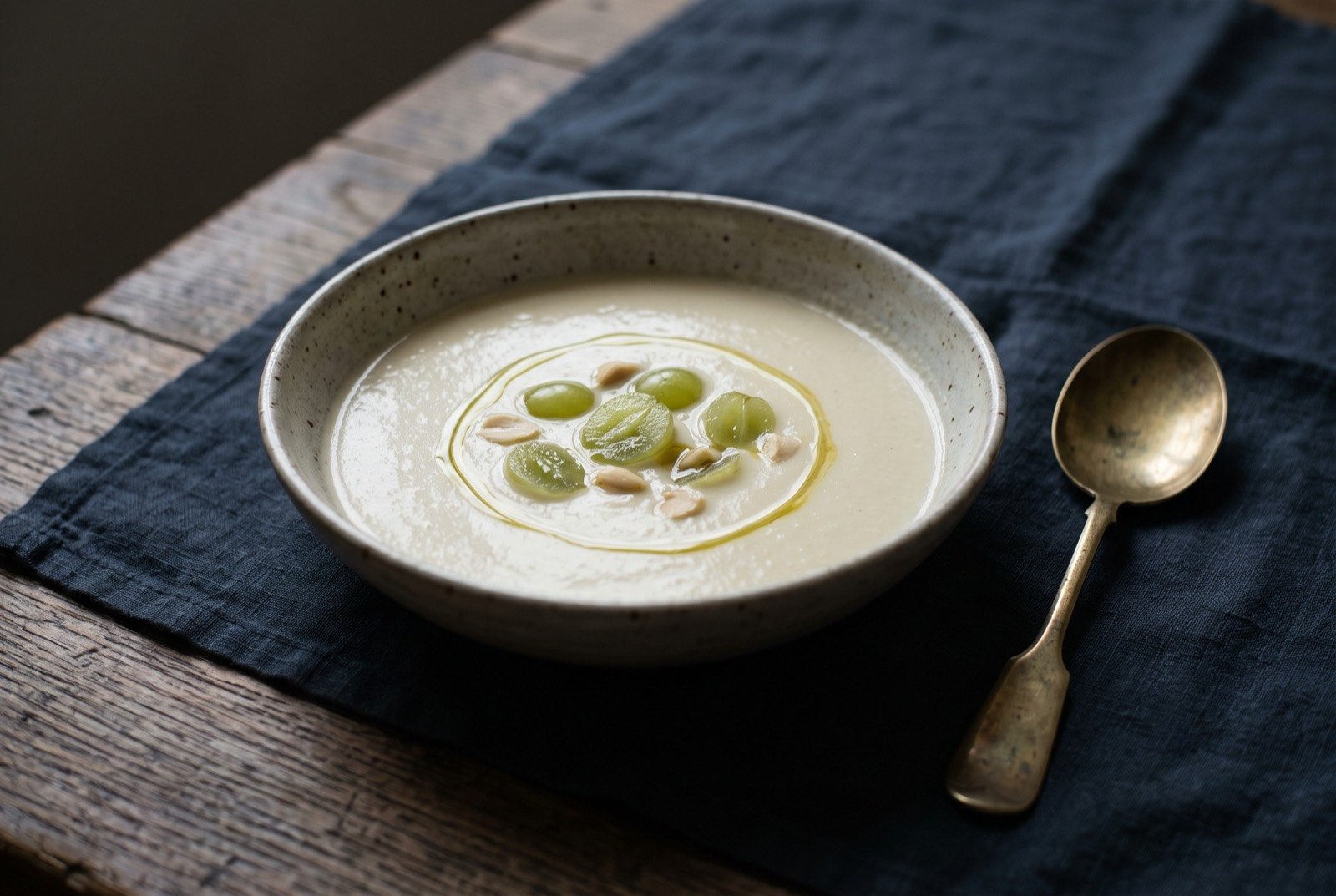
Ajo blanco is a cold emulsified soup of bread, almonds, garlic, olive oil, water and usually vinegar, garnished in Málaga with muscatel grapes. Unlike gazpacho it contains no tomato and no pepper, both New World imports; this is a structural, ingredient-based argument for relative age, not a documented historical claim about who cooked what in which century, and this chapter presents it as such. A representative Málaga home ratio: roughly 250 g raw peeled almonds to 225 g stale bread, several cloves of garlic, extra virgin olive oil added gradually while the mixture is worked, around 6 tablespoons of wine vinegar, salt, and enough cold water to loosen to a pourable soup. There is real, attested regional variation rather than one fixed recipe: Málaga capital sometimes soaks the bread in milk rather than water, while the villages tend to use water; Córdoba's version sometimes adds beaten egg and darker bread; Montilla, in Córdoba province, has a version built from crushed dried broad beans and egg whites rather than almonds. Granada, Málaga and at least three Almería towns each separately claim the dish as their own, which this chapter reads as evidence the dish is old and widely distributed across eastern Andalusia, not as evidence any single origin point is correct.
As tradition built it
Serves 4. About 15 minutes, plus at least 1 hour chilling.
Ingredients
- 250 g raw almonds, blanched and skinned
- 225 g stale bread, crusts removed, soaked and squeezed
- 2 to 3 garlic cloves
- 150 ml extra virgin olive oil
- 6 tbsp white wine vinegar
- to taste salt, to taste
- as available cold water, to loosen
- 100 g muscatel grapes, halved and seeded, to garnish
Method
- Blitz the almonds, soaked bread and garlic together to a rough paste.
- With the blender running, add the olive oil in a slow, steady stream, exactly as for a mayonnaise, so the mixture emulsifies into something glossy and pale rather than grainy.
- Add the vinegar and salt, then thin with cold water until pourable.
- Chill for at least an hour, and serve very cold, with halved muscatel grapes floating on top.
What a modern chef changes
The emulsion pushed to a genuinely mayonnaise-like tightness, and the almond itself given more attention than the recipe usually asks.
Rung 1
Method
- Toast the almonds very lightly before blending, just enough to develop a little more roundness of flavour without tipping into an overtly roasted, savoury note that would fight the soup's cool, clean profile; this is a deliberate departure from the raw-almond tradition, stated as such rather than presented as how ajo blanco is always made.
- Push the emulsion further than a home blender typically achieves, working in the oil more slowly still and finishing with a pass through a chinois, for the tight, glossy, closer-to-nut-milk texture that distinguishes a properly built ajo blanco from a rougher vegetable soup blend.
- Reduce a portion of muscatel grape juice to a thin syrup and use it as a plated accent alongside the halved fresh grapes, doubling the sweet counterpoint the tradition already relies on rather than replacing it.