Iberia · Volume 08, The Sherry Triangle and the Kitchen Al-Andalus Left Behind
Alboronía
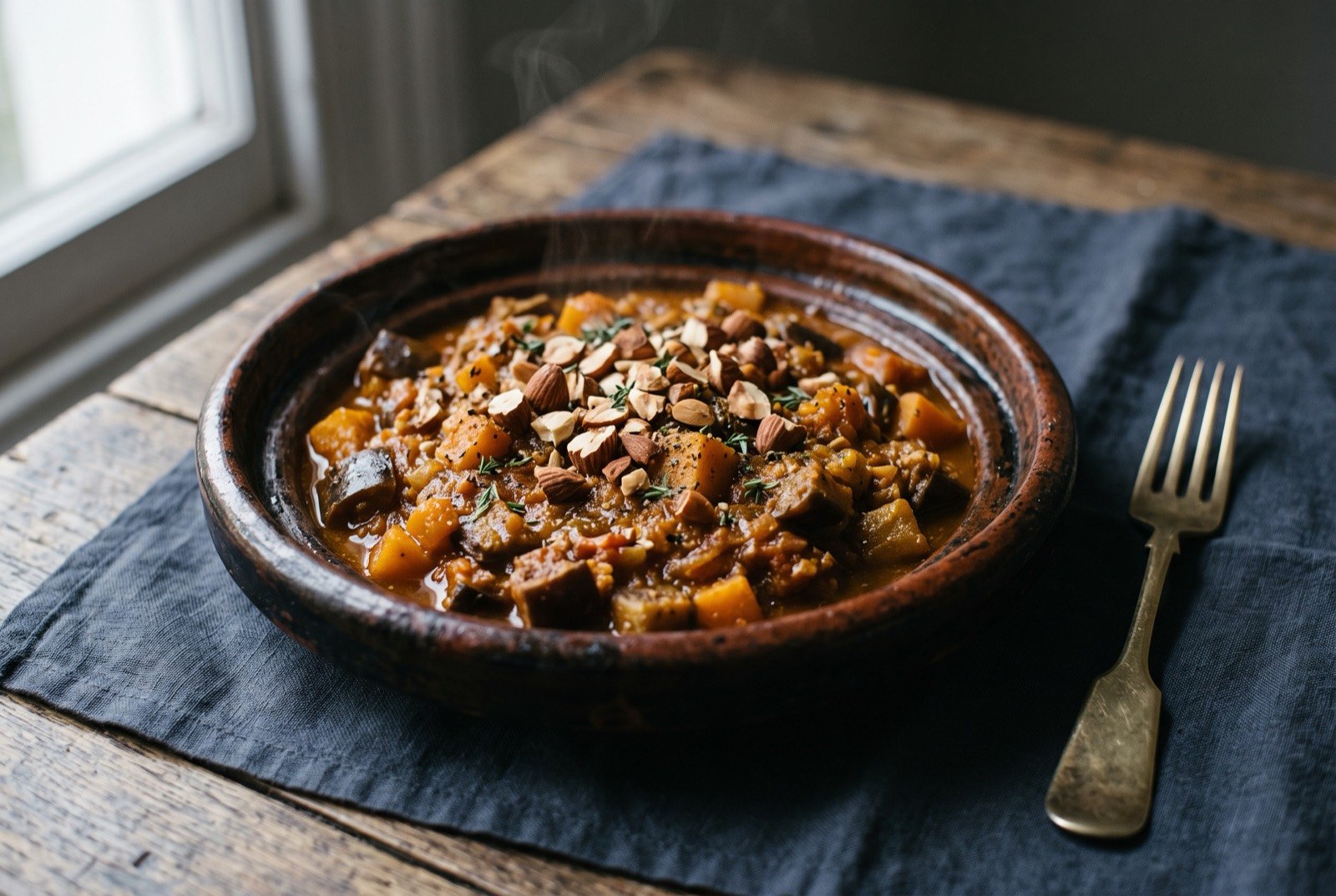
An illustration of the dish, not a photograph of it cooked.
- Time
- 45 minutes
- Reviewed
- Not yet reviewed from inside the tradition
- Cooked
- Not yet cooked and reported
The word derives from Arabic al-buraniyya. A popular legend, that the dish was invented for or named after a princess or queen called Burán, wife of the Abbasid caliph al-Ma'mun, for her wedding banquet, is a Baghdad-court legend, not an Andalusi one, and no primary Andalusi source confirms it; this chapter treats it as folklore, not history. What is better attested, via the historical Diccionario de Autoridades and the lexicographic tradition, is the dish's original composition: aubergine, garlic, onion, squash and ground nuts, almonds, walnuts or hazelnuts, with tomato and pepper, and the paprika made from the latter, added only after the Columbian exchange. Alboronía is widely treated as the direct ancestor of pisto, both Andalusian and Manchego, and was, and to a degree still is, associated with celebration cooking, a continuity that long precedes and postdates any specific founding legend.
As tradition built it
Serves 4. About 45 minutes.
Ingredients
- 1 aubergine, cubed and salted
- 1 small squash or pumpkin, cubed
- 1 onion, chopped
- 2 garlic cloves
- 50 g ground almonds or walnuts
- to taste olive oil, salt
Method
- Salt the aubergine and leave 30 minutes to draw out bitterness, then rinse and pat dry.
- Soften the onion and garlic in olive oil.
- Add the aubergine and squash, and cook gently until both are tender and beginning to break down, around 25 to 30 minutes.
- Stir through the ground nuts to thicken, season, and serve warm, as a dish in its own right or alongside grilled meat or fish.
What a modern chef changes
The nut base given the same emulsifying attention as the cold soups, and the vegetables cooked with more precision.
Rung 1, applied to a warm base rather than a cold soup
Method
- Roast the aubergine and squash whole before cubing, for a deeper, more caramelised flavour than a straight sauté delivers, then cut down and finish in the pan only briefly.
- Blend a portion of the cooked vegetable with the ground nuts and a little oil into a smooth purée, then fold the rest of the dish through it, rather than leaving the whole thing as a rustic chunky stew, for a dish with both a silky base and genuine texture on top.
- If using tomato, roast it separately and fold it through only at the very end, keeping its post-Columbian addition visually and texturally distinct from the older, Al-Andalus-rooted base rather than cooking it down into the whole from the start.