Iberia · Volume 08, The Sherry Triangle and the Kitchen Al-Andalus Left Behind
Salmorejo Cordobés
Córdoba
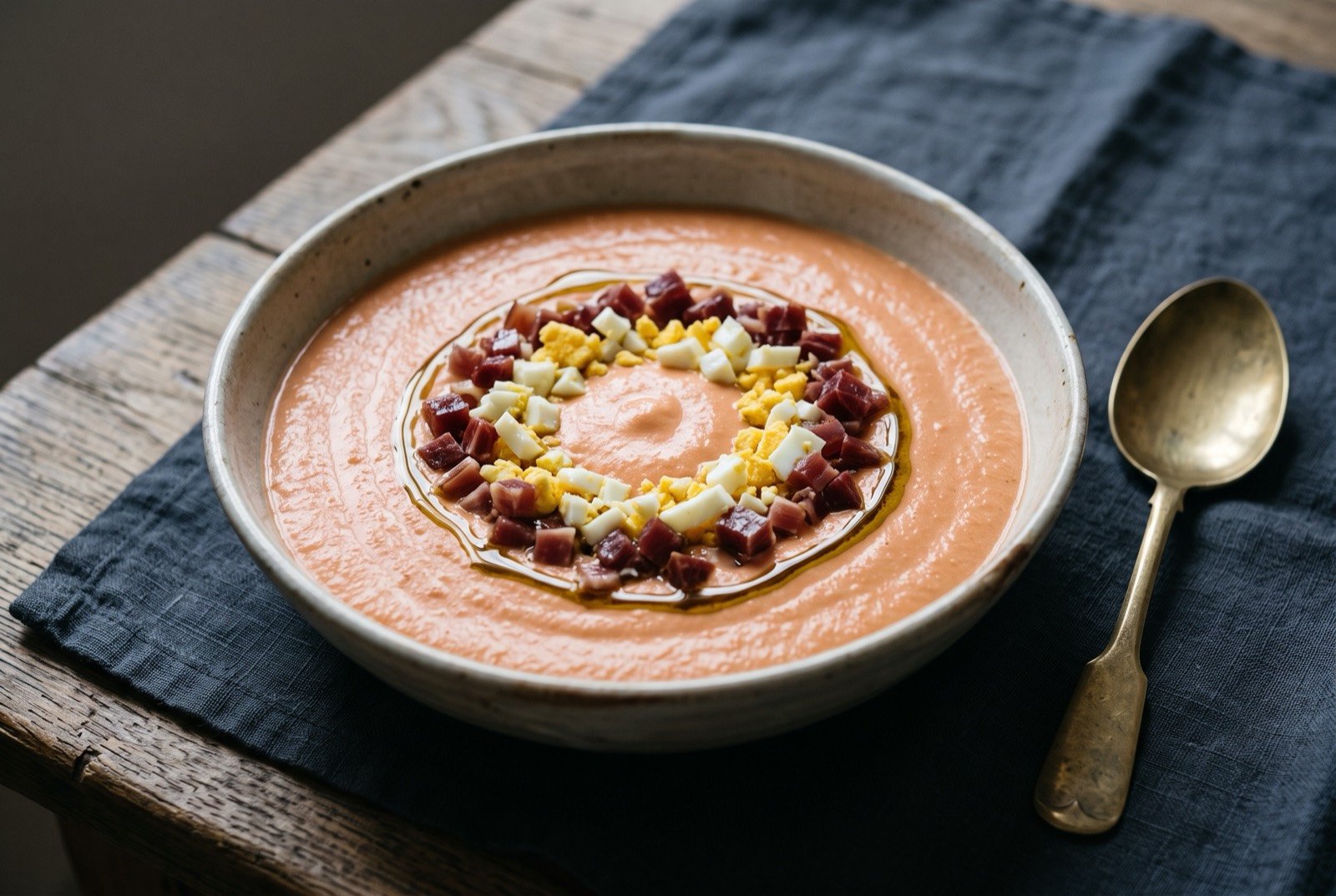
An illustration of the dish, not a photograph of it cooked.
- Time
- 1 hour 15
- Reviewed
- Not yet reviewed from inside the tradition
- Cooked
- Not yet cooked and reported
Salmorejo is gazpacho's thicker, richer, egg-and-ham-garnished cousin: ripe tomato, stale telera-style bread, extra virgin olive oil and salt, with garlic a common but not universal fifth addition. A workable, reasonably specific ratio recurring across sources: 1 kg tomato, 200 g bread, 100 g olive oil, 1 clove garlic, 10 g salt, roughly five to one tomato to bread by weight, ten to one tomato to oil. The claim that "salmorejo" derives from Latin salmurium, brine, and named a medieval sauce of bread, vinegar, salt and oil is repeated across sources without a traceable primary or linguistic academic reference, and this chapter treats it as plausible folk etymology, not settled fact. What is better attested: salmorejo in something like its modern form is a twentieth century popularisation of an older rural habit, stale bread pounded with garlic, oil and salt as a labourer's staple in the Vega del Guadalquivir specifically, with tomato folded in only after its post-sixteenth-century adoption turned an older poor man's paste into the dish now served as a starter.
As tradition built it
Serves 4. About 15 minutes, plus 30 minutes for the bread to soak and at least 1 hour to chill.
Ingredients
- 1 kg ripe tomato
- 200 g stale telera-style bread, crusts removed
- 100 g extra virgin olive oil
- 1 garlic clove
- 10 g salt
- for garnish to garnish: hard-boiled egg, diced serrano or ibérico ham
Method
- Blitz and sieve the tomato to remove seeds and skin, since a smooth base is the whole point of this dish.
- Soak the bread in a little of the sieved tomato liquid, or water, for around 30 minutes, until fully softened, then squeeze lightly.
- Combine the tomato purée, soaked bread and garlic in a blender.
- With the blender running, add the olive oil gradually, not all at once, letting the mixture emulsify and pale in colour as it thickens, the technical step that separates a good salmorejo from a mediocre one.
- Season with salt, chill for at least an hour, and serve topped with finely chopped hard-boiled egg and diced ham.
What a modern chef changes
The emulsion pushed further, and the garnish rendered rather than just chopped.
Rung 1, with jamón fat rendering
Method
- Concentrate the tomato in a dehydrator before blending, reducing its water content for a more intense, less watery base without diluting the final emulsion, then rehydrate only as far as the target consistency needs.
- Add the oil in an even slower, thinner stream than the traditional method describes, treating the whole process explicitly as building an emulsion rather than simply blending everything together, for a genuinely glossier, more stable result.
- Render ibérico ham fat separately and spoon it, warm, over the chilled soup at the table, rather than serving diced cold ham. Ibérico fat has an unusually low melting point; added at the last moment onto the cold soup, residual heat renders it, releasing its characteristic nutty aroma across the surface rather than sitting inert as a cold garnish.