Iberia · Volume 08, The Sherry Triangle and the Kitchen Al-Andalus Left Behind
Pescaíto Frito (Fritura Gaditana)
Cádiz
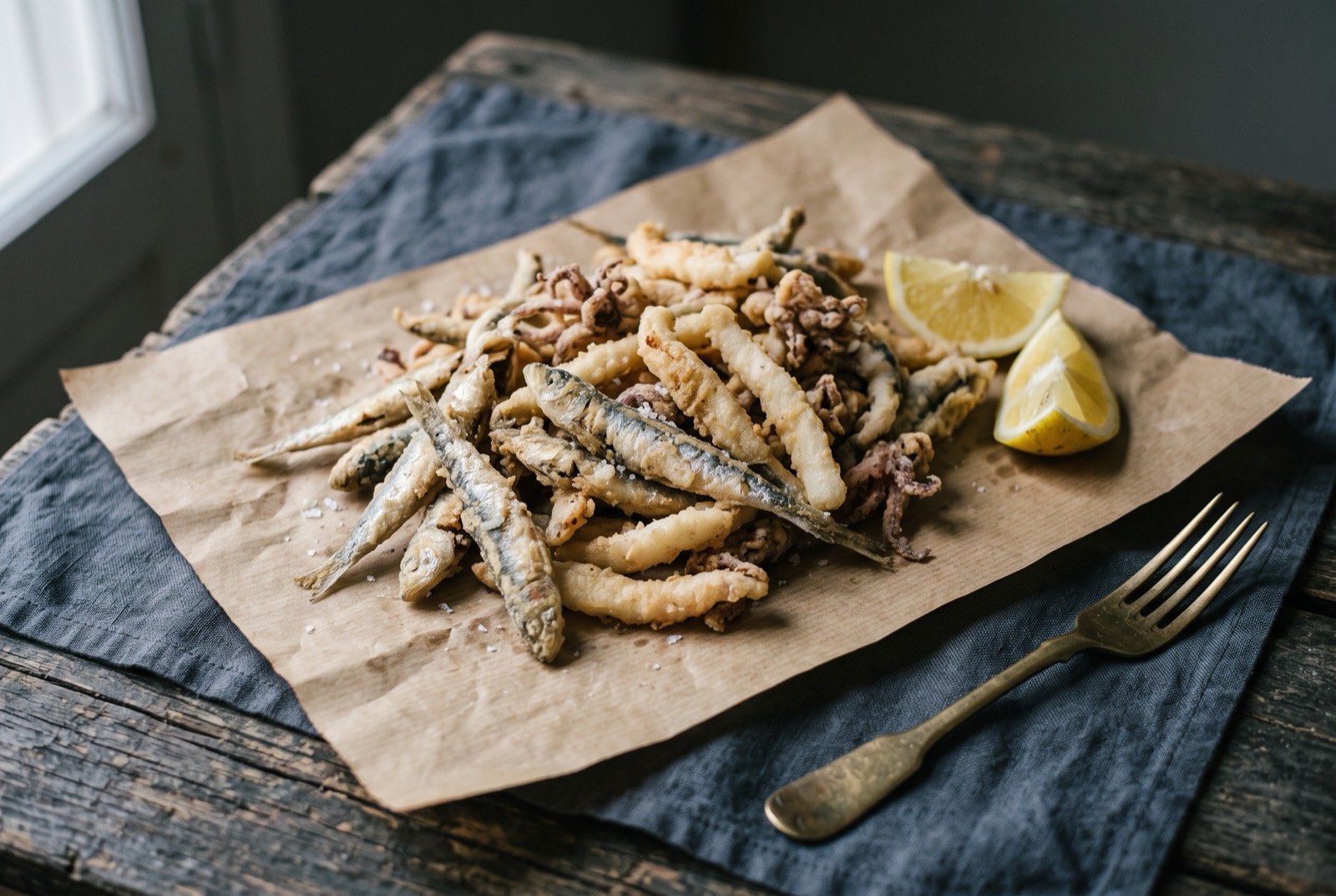
An illustration of the dish, not a photograph of it cooked.
- Time
- 20 minutes
- Reviewed
- Not yet reviewed from inside the tradition
- Cooked
- Not yet cooked and reported
The classic Cádiz frito, also called fritura gaditana or frito variado, commonly includes boquerones (fresh anchovy), chocos (small cuttlefish, cut in strips), cazón (dogfish, usually served as its own dish, adobo, see below), pijotas (small hake) and squid tips. Several converging threads explain why Cádiz specifically: an Atlantic fishing economy running back to the Phoenicians, a long-standing cheap local supply of small pelagic fish suited to fast frying rather than roasting or stewing, and a documented urban culture of dedicated fried-fish shops, freidurías, serving food to be eaten in the street from paper. One widely repeated claim, that Sephardi Jews in al-Andalus "perfected" the technique of flouring fish for frying, documented in medieval souks and ports, recurs across several softer sources but was not traced to a primary medieval source or named historian in this chapter's research, and is not asserted here as established fact.
As tradition built it
Serves 4. About 20 minutes.
Ingredients
- 600 g mixed small fish and seafood: boquerones, chocos, pijotas, squid tips
- as available coarse wheat flour, specific to fish frying if available
- to taste fine salt
- for deep frying olive oil, for deep frying
- to serve lemon wedges, to serve
Method
- Clean and prepare the fish and seafood, keeping pieces small and roughly even in size for even cooking.
- Salt lightly.
- Dredge each piece in flour only, no batter, no egg, shaking off the excess so the coating stays thin.
- Deep fry in plenty of hot olive oil, in small batches so the oil temperature does not drop, until pale gold and crisp; no source behind this chapter gave a precise degree figure, only "a good, properly heated oil," a real and stated gap.
- Drain briefly on paper, and serve immediately, traditionally wrapped in kraft paper, with lemon wedges.
What a modern chef changes
Ángel León's own account of the dish, precision applied to a technique that was already sound.
Rung 2
Method
- Use a three-flour blend, wheat, chickpea and a fine frying semolina, in equal parts, following León's own stated method at Aponiente, for a lighter, crisper coating than wheat flour alone.
- Hold the oil at a genuinely controlled temperature, around 170°C, checked with a thermometer rather than judged by eye, and fry in batches small enough that the temperature never drops meaningfully.
- Source fish that has only ever touched seawater, León's own stated reason being that fresh water strips the sea flavour the dish depends on; for a UK kitchen this means buying from a fishmonger who can speak to how the fish was held and transported, not simply the freshest-looking fillet in the case.