Mesoamerica · Volume 04, Cattle, Wheat and the Border World
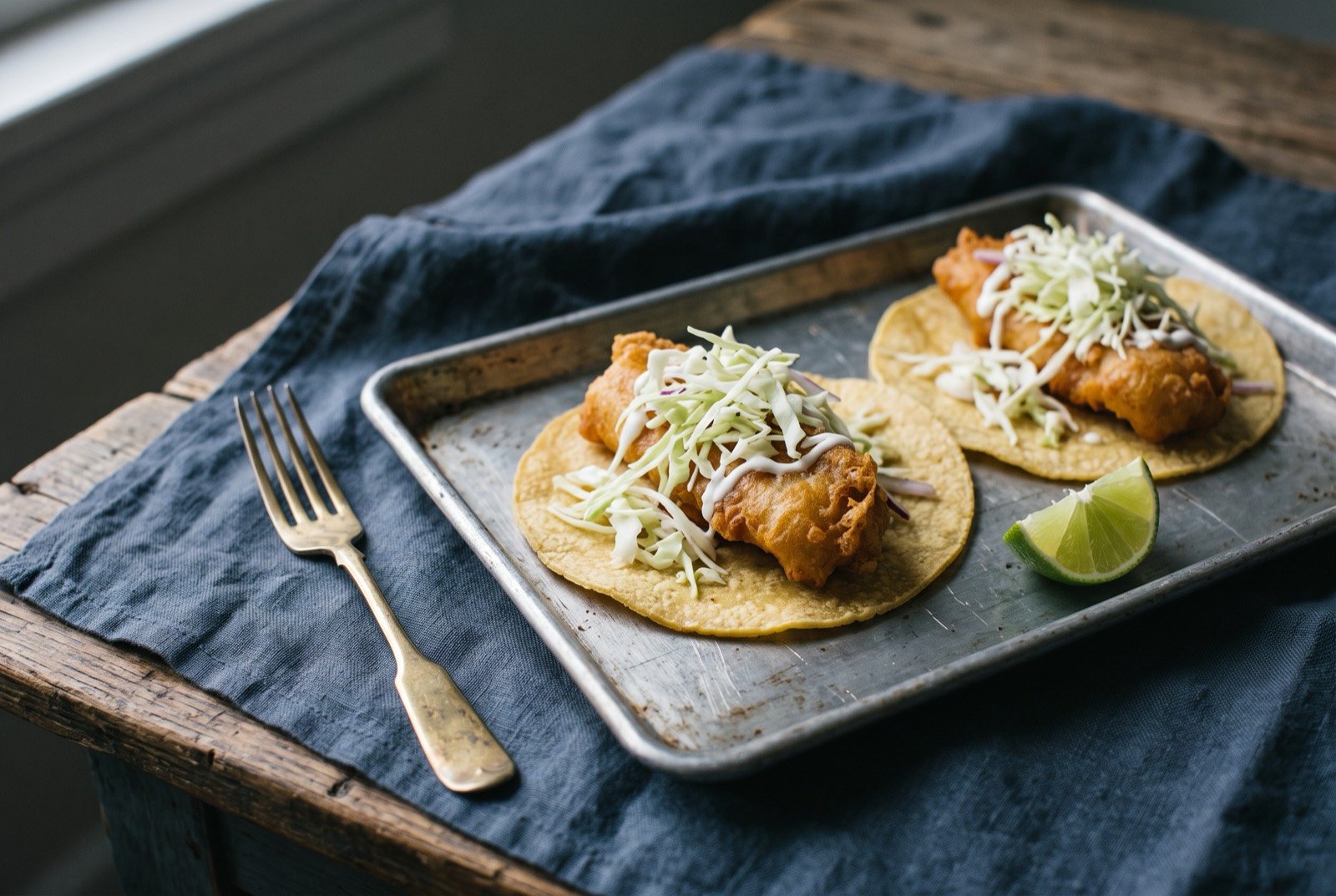
Tacos de pescado estilo Ensenada
Ensenada, Baja California, Mexico
Illustration
- Researched
- Researched from 64 sources in the brief
As tradition built it
Tacos de pescado estilo Ensenada
Mercado Negro, Ensenada, 1957 to 1969
Ingredients
The method as the tradition gives it, ingredients named but not yet weighed. Quantities follow as we verify them, lead dishes first.
- 800g, cut into strips fish fillet, cazón or robalo (historically angelito)
- 1 egg
- evaporated milk
- 1 tbsp baking powder
- 1/2 tsp, dried oregano
- 1/2 tsp garlic powder garlic
- 1 cup (about 125g) flour
- 1 tbsp cornstarch
- 1 tbsp salt
- for deep frying oil, for deep-frying
- 12 corn tortillas
- 2 cups, finely sliced shredded cabbage
- 1/4 cup crema
- as available salsa bandera
- to taste house hot sauce
Method
- Mix oregano, garlic, salt, baking powder, evaporated milk and egg with flour and cornstarch to make the batter.
- Dip the fish fillet, cazón or robalo, in the batter and deep-fry, traditionally in oil over a wood fire for its smoky flavour.
- Assemble in a corn tortilla with shredded cabbage, crema, salsa bandera and a house hot sauce.
Notes
The signature batter is credited in the fullest account to Evelia Abas, wife of Don Zeferino Mancillas Fortuna, who arrived at the market around 1963 to 1964. The dish itself is credited on the best-documented account to a Sinaloan migrant nicknamed "El Bachigualato", originally frying the shark-like ray angelito; modern versions favour cazón or robalo.
What a modern chef changes
The historic batter rested, the wood fire kept
Method
- Keep the batter's actual composition, egg, evaporated milk, baking powder, oregano and garlic, since it is the historically attested recipe, but rest it in the fridge for 30 minutes before frying to let the baking powder's lift develop more evenly.
- Fry over a bed of mesquite embers on the Big Green Egg with a cast-iron pot set into it, the closest home approximation of the original wood-fire drum-frying that gave the dish its smoky character in the first place.
- Dehydrate a portion of the cabbage briefly before shredding it fresh at the last minute, concentrating its flavour slightly without changing its crunch.