North America · Volume 37, The Market, the Truck and the Tide
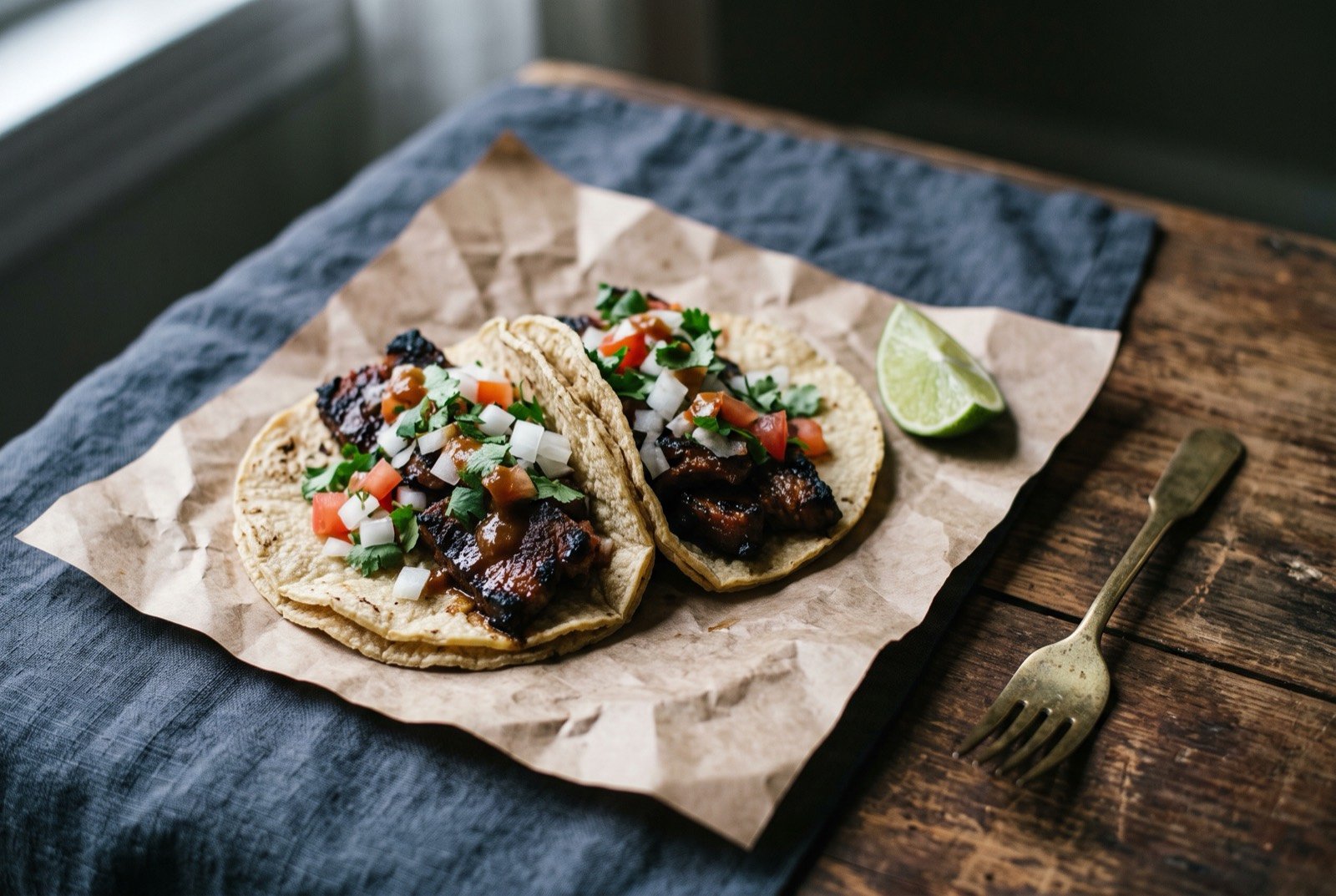
Kogi-style Korean short rib taco
Los Angeles, California, United States
Illustration
- Researched
- Researched from 92 sources in the brief
As tradition built it
Kogi-style Korean short rib taco
Documented Korean and Mexican convention, not a primary published Kogi recipe
Ingredients
The method as the tradition gives it, with the ingredients named. Quantities follow as we verify them, lead dishes first.
For the marinade
- roughly equal parts soy sauce and brown sugar, by volume
- a generous measure garlic, minced
- a generous measure ginger, grated
- half the volume of the soy sauce toasted sesame oil
- to taste black pepper
- half a pear Asian pear or kiwi, grated
- 1.5kg (3lb), bone-in, sliced thin across the bone short rib
For the salsa, slaw and to serve
- 2, doubled corn tortillas, doubled and warmed
- tomato
- onion
- cilantro
- lime
- chile
- napa cabbage
- Korean chile-sesame vinaigrette
Method
- Marinate the short rib in soy sauce, brown sugar, garlic, ginger, sesame oil, black pepper and grated Asian pear or kiwi for its tenderising enzyme, at least a few hours and ideally overnight.
- Grill hot and fast over direct heat until charred at the edges, then slice thin against the grain.
- Serve in a warmed, doubled corn tortilla with a bright, fresh Mexican-style salsa of tomato, onion, cilantro, lime and chile, and a napa cabbage slaw dressed with Korean chile-sesame vinaigrette, finished with a squeeze of lime.
Notes
The marinade is standard, well-established Korean short rib technique and the salsa and slaw are documented Mexican and Korean convention respectively, combined in the format Choi's own truck made famous, rather than transcribed from Kogi's own kitchen: no primary published recipe with exact Kogi quantities was found.
What a modern chef changes
High, direct fire and a reduced glaze
Rung 4: Live fire as a controlled-imprecision instrument
Ingredients
Method
- Grill the marinated short rib on a Big Green Egg over direct, very high heat, the closest domestic equivalent to the intense flat-top or open flame a food truck runs.
- Reduce the leftover marinade separately in a saucepan until syrupy and use it as a finishing glaze brushed on just before the meat comes off the heat, rather than only as a raw marinade discarded after use.
- Dehydrate a portion of the salsa's tomato and chile and grind it into a fine, shelf-stable seasoning dust, dusted over the finished taco alongside the fresh remainder.