Mesoamerica · Volume 05, Agave, Birria and the Manila Galleon Coast
Birria
Jalisco, Mexico
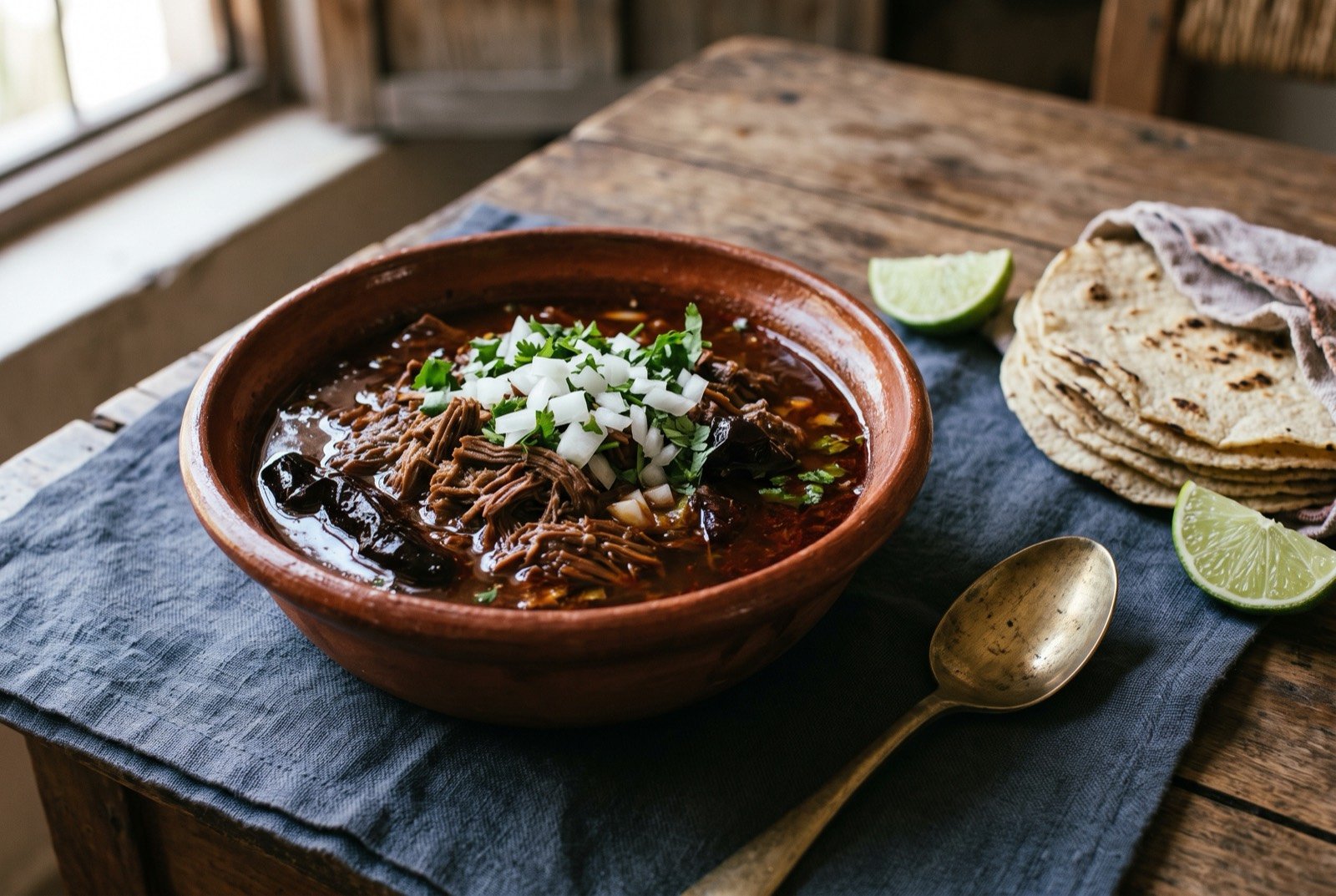
An illustration of the dish, not a photograph of it cooked.
- Time
- 3 hours
- Reviewed
- Not yet reviewed from inside the tradition
- Cooked
- Not yet cooked and reported
As tradition built it
Birria
Jalisco; stovetop approximation about 3 hours
Ingredients
- 1kg goat
- 5 chiles guajillo
- 3 chiles pasilla
- 2 chiles ancho
- 1 onion
- 4 garlic cloves
- 1 cinnamon stick
- 5 cloves
- 1 tsp cumin
- 1 tsp black pepper
- 1 tsp oregano
- to taste salt
- to cover water, to cover the meat
Some households add
Method
- Marinate the goat in an adobo of ancho, guajillo and pasilla chiles, cumin, cinnamon, cloves, black pepper, oregano, garlic and salt; some households add ginger, marjoram and vinegar to the marinade for their tenderising and deodorising effect.
- Wrap in maguey leaves and cook in an horno de tierra, an underground earthen pit, the covered stone-and-earth environment doing the same steam-and-radiant job curanto does elsewhere.
- As a stovetop approximation of the pit method's own timing, simmer for roughly 3 hours until fully tender.
- Serve two ways: pour the consommé as a soup course, and serve the shredded meat in tacos on fresh corn tortillas, garnished only at the table with finely chopped white onion, cilantro and lime.
What a modern chef changes
Vacuum Marinade, Egg-Sealed Braise
Rung 02
Method
- Marinate the goat under vacuum rather than in an open dish, letting the adobo's acid and enzymes work evenly through the whole cut rather than concentrating at the surface.
- Finish the braise in a Big Green Egg run low and enclosed with a water pan, the nearest domestic equivalent to the earth pit's own sealed, moist-heat environment.
- Reduce and clarify the braising consommé through a chinois into something closer to a proper broth than the cloudier result of an open simmer.
- Grind the toasted whole spices, cumin, cinnamon and cloves, fresh in a dedicated spice grinder rather than using pre-ground, the single change with the most obvious effect on the finished adobo's aroma.