Mesoamerica · Volume 05, Agave, Birria and the Manila Galleon Coast
Tortas ahogadas
Guadalajara, Jalisco, Mexico
Illustration
- Researched
- Researched from 65 sources in the brief
As tradition built it
Tortas ahogadas
Guadalajara, 1920s to 1930s
Ingredients
- 1 per torta birote roll (a Guadalajara-specific bread, distinct from a baguette)
- about 100g per torta fried, carnitas-style pork
Mild tomato sauce
- 8 tomatoes, well cooked
- 2 cups tomato cooking water
- 2 cloves garlic
- 1/2 onion
- to taste cumin
- 5 whole cloves clove
- to taste oregano
Chile de árbol sauce
- a further 4 tomatoes, blended with the chiles the mild tomato base, blended again
- 10 chiles de árbol
- 2 garlic cloves
- 1/4 onion
- to taste salt
Method
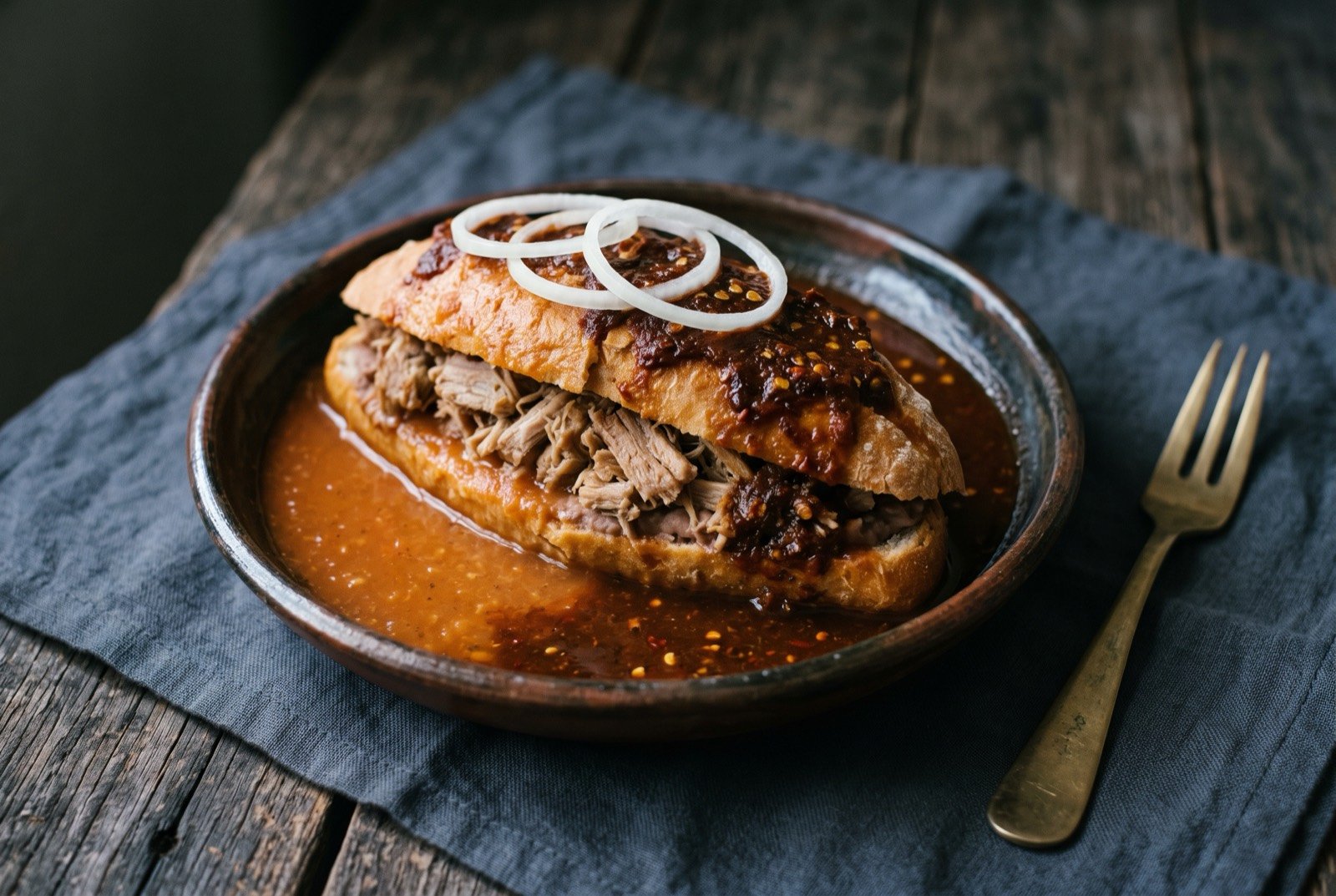
- Build the dish on the birote, a Guadalajara-specific bread genuinely distinct from a baguette despite the visible French influence in its shape: salty, crusty, with a soft finish attributed to the city's own climate and water during fermentation.
- Fill with fried, carnitas-style pork.
- Make the mild tomato base: blend roughly 8 well-cooked tomatoes with 2 cups of their cooking water, garlic, half an onion, cumin and clove, then simmer with oregano for about 5 minutes.
- Make the chile de árbol sauce: blend the same tomato base again with chiles de árbol, 2 garlic cloves, a quarter onion and salt.
- “Drown” the filled torta in both sauces, combined at the point of serving so each eater can calibrate the heat to themselves.
What a modern chef changes
Egg-Baked Birote, Sous Vide Confit
Method
- Bake a birote-style roll at home using a Big Green Egg run as an oven with a pizza stone, the closest domestic route to the enclosing, slightly smoky heat a proper Guadalajara panadería's oven gives.
- Confit the pork shoulder sous vide before the final fry, so the interior stays properly moist through the “drowning” stage rather than drying out once fully submerged in sauce.
- Pass both sauces through a chinois after blending for a genuinely silkier, less fibrous drowning liquid than a home blender alone leaves.
- Hold the two sauces separately so each diner can still calibrate their own heat exactly as the dish's own two-sauce logic intends.