Mesoamerica · Volume 05, Agave, Birria and the Manila Galleon Coast
Sopa tarasca
Pátzcuaro, Michoacán, Mexico
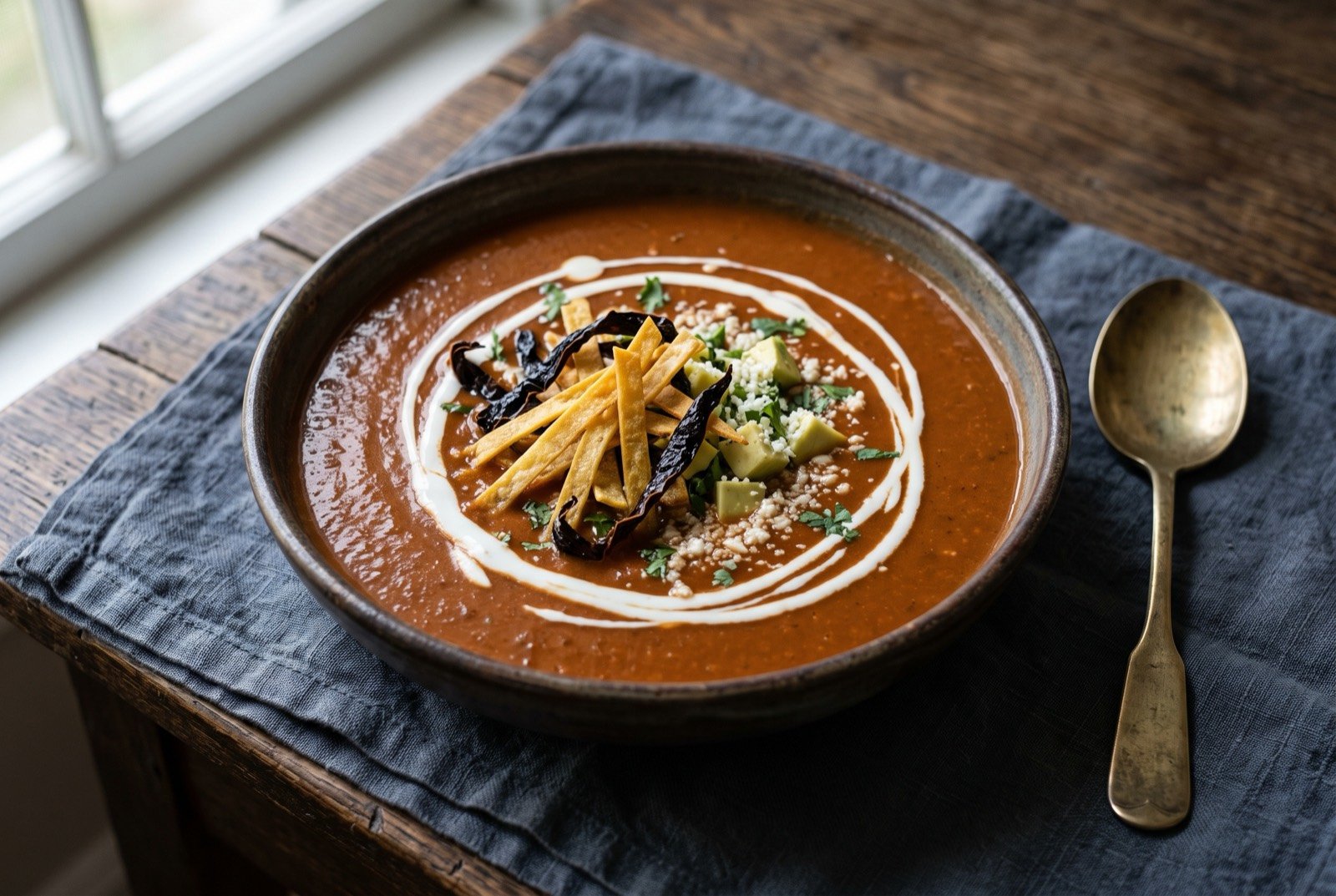
An illustration of the dish, not a photograph of it cooked.
- Time
- Not statedNo source states a time and the atlas has too few comparable dishes to estimate one.
- Reviewed
- Not yet reviewed from inside the tradition
- Cooked
- Not yet cooked and reported
As tradition built it
Sopa tarasca
Created 1966, La Hostería de San Felipe, Pátzcuaro
Ingredients
- 4 medium tomatoes
- 1 onion
- 2 cloves garlic
- 2 cups (black beans) cooked beans
- 1/2 tsp epazote
- 4 cups chicken stock or water
- 3 ancho chiles, deseeded dried pasilla or ancho chile, fried into strips
- 2 tortillas, cut into strips tortilla strips, fried
- to taste cream
- to taste cotija cheese
- 1, diced avocado
Method
- Roast the tomatoes, onion and garlic on a comal, then blend and cook briefly in a cazuela.
- Blend cooked beans with epazote and the chicken stock or water to make a bean sauce, and add it to the tomato base.
- Fry the dried pasilla or ancho chile into strips, and fry tortilla strips separately; add both only at serving.
- Finish with cream, cotija cheese and avocado.
Notes
This chapter is explicit that sopa tarasca is a twentieth century restaurant creation, though it draws on genuinely ancestral milpa and lakeshore staples: tomatoes, onion, garlic, beans and chile.
What a modern chef changes
Egg-Roasted Base, Blended Beans, Dehydrated Chile
Method
- Roast the tomatoes, onion and garlic in a Big Green Egg run hot and direct rather than on a stovetop comal, a closer approximation of the original comal's own smoky, blistered result than an indoor pan gives.
- Blend the bean sauce in a high-power blender, then pass through a chinois for a genuinely silkier finished soup than the traditional blend-and-serve method leaves.
- Fry the tortilla strips in small batches at a precisely controlled temperature for an evenly crisp result, rather than the unevenly browned strips a single large batch tends to give.
- Dehydrate a portion of the fried pasilla before crumbling it over the top for a more concentrated, less greasy final garnish.