Korea and Japan · Volume 53, The Grill, the Broth and the Sealed Port
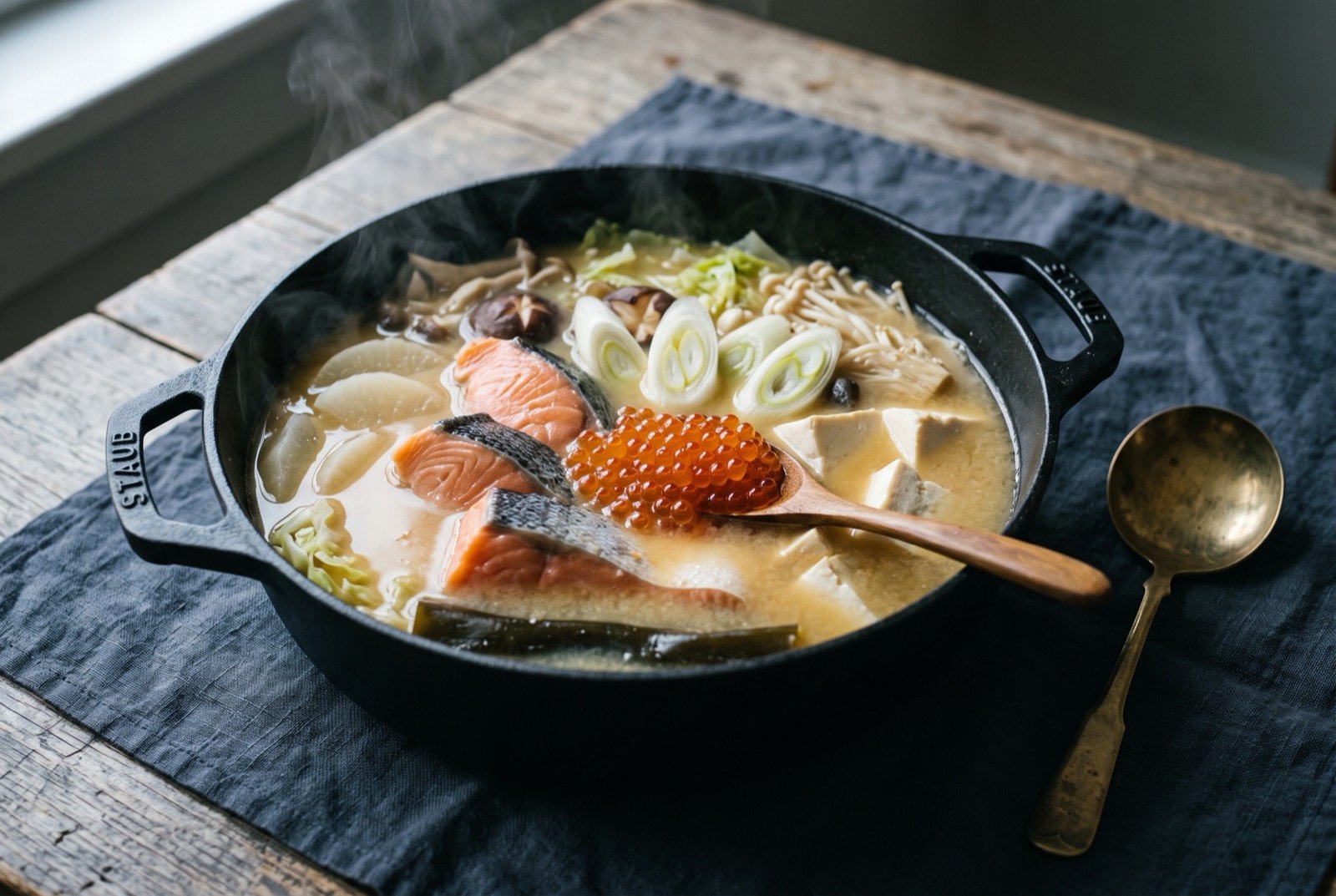
Ishikari nabe, salmon and miso hot pot
Hokkaido
Illustration
- Time
- 25 minutes
- Researched
- Researched from 87 sources in the brief
Credited to Kindaitei, a restaurant founded in 1880 near the Ishikari river mouth, originally a fisherman's reward meal, salmon and its roe dropped straight into a pot of miso soup after a good catch.
As tradition built it
Serves four. About 25 minutes.
Ingredients
- 400g salmon, cut into chunks
- a small amount a small amount of white fish roe and ikura
- 1 block tofu, cubed
- 1 sheet konnyaku, cut into bite sized pieces
- 150g daikon, sliced
- 100g carrot, sliced
- 4 shiitake, halved
- 50g burdock, julienned
- 3 leeks, cut on the diagonal
- 100g spinach, blanched
- 4 napa cabbage leaves, blanched and wrapped round the spinach, tied with a strip of kombu
- 50g string beans, blanched
- 3 sheets, about 30g kombu, for the base of the pot
For the broth
- as needed kombu dashi, as needed
- 100g miso
- 2 tbsp mirin
- a little a little sugar
- to taste salt, to taste
- to finish sansho pepper, to finish
Method
- Line the pot with kombu.
- Place the miso mixture, loosened with the kombu dashi and mirin and seasoned with a little sugar and salt, in the centre.
- Arrange the salmon, block tofu, sheet konnyaku, daikon, carrot, shiitake, burdock, leeks, spinach, napa cabbage leaves and string beans around it, with a small amount of white fish roe and ikura tucked among them.
- Simmer together at the table, finished at the bowl with a dusting of sansho pepper.
What a modern chef changes
A controlled dashi steep and pre-cooked, precisely timed salmon
Rung 2
Method
- Build the dashi as a controlled 60 degree Celsius kombu steep, one hour, rather than a quick simmer, for a cleaner base without bitterness.
- Cure the salmon chunks briefly, ten minutes, in a light 3 per cent salt brine before poaching them sous vide at 48 degrees Celsius for 15 minutes, so they arrive at the table already precisely cooked rather than finishing in the communal pot, where a home cook otherwise has no real control over doneness.
- Char the leeks hard on the Big Green Egg's direct heat before adding them, for a bitterness and smoke the original never had.
- Finish the broth, off heat, with a spoon of 0.5 per cent salinity cured ikura, added at the very last moment so it warms without cooking.
Notes
The cured ikura is the same 0.5 per cent salinity cure used for dish five, ikura-don, below.