Korea and Japan · Volume 53, The Grill, the Broth and the Sealed Port
Cep ohaw, Ainu salmon and mountain vegetable soup
Ainu Hokkaido
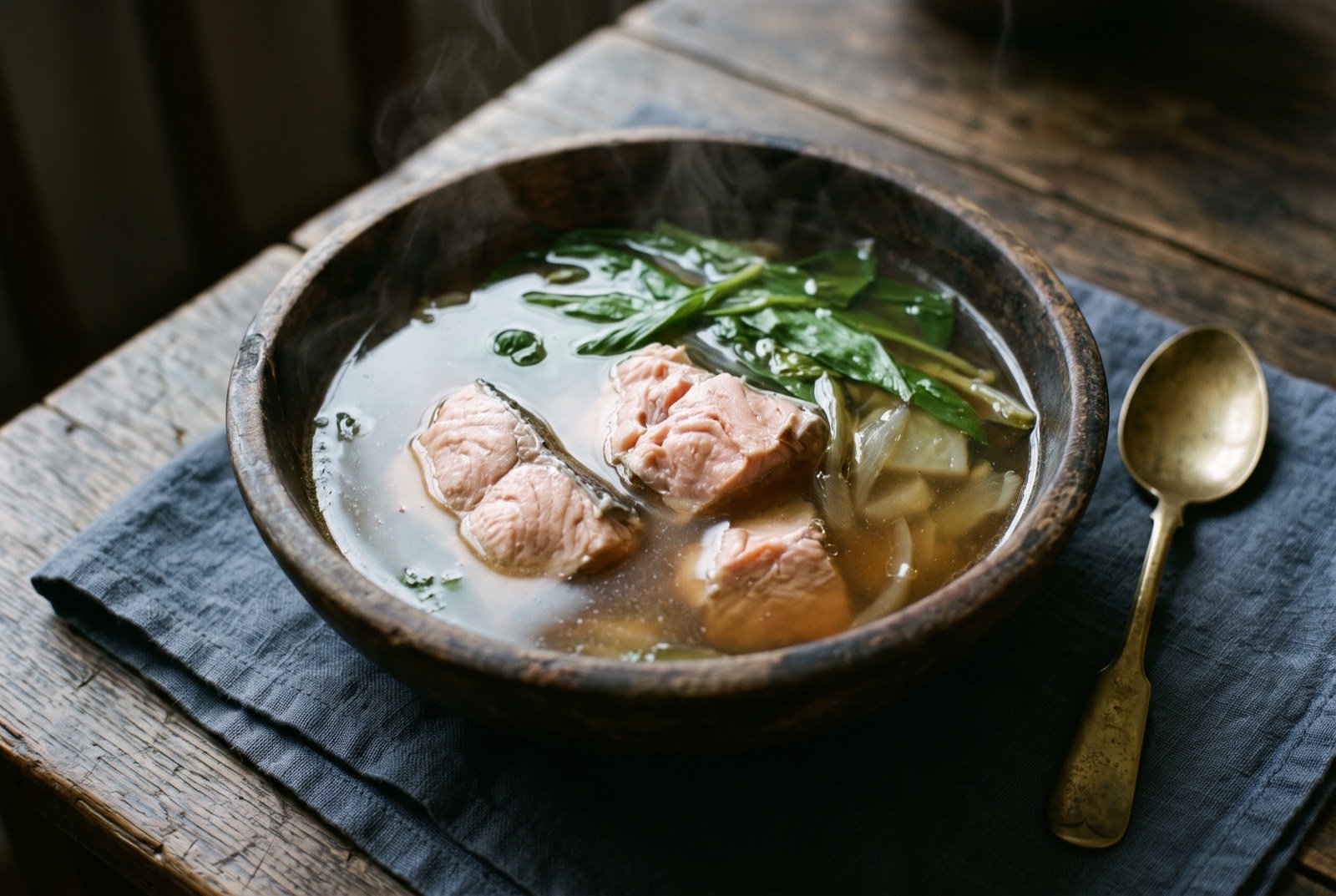
An illustration of the dish, not a photograph of it cooked.
- Time
- 30 minutes
- Reviewed
- Not yet reviewed from inside the tradition
- Cooked
- Not yet cooked and reported
This is the Ainu's own everyday soup, not a ceremonial dish, and it is given here in that spirit: a working, edible, real recipe, not a museum piece. Ohaw, or ruru, is named for its main ingredient, cep ohaw when built on salmon, and it is boiled simply, salmon and its offcuts, foraged greens where they can be had, fat and salt, until the broth carries the fish's own flavour without disguising it.
As tradition built it
Serves four. About 30 minutes.
Ingredients
- 500g salmon, on the bone, cut into large pieces including collar and belly where possible, for four servings
- a generous knob a generous knob of rendered fat, historically bear or deer fat
- to taste salt, to taste
- 1.5 litres water, or as needed to cover generously
- as available pukusakina, wild anemone greens, or in a British kitchen a close, humble substitute such as wild garlic leaves or young spring greens
Method
- Put the salmon, rendered fat, salt and water into a pot.
- Bring to a bare simmer, never a rolling boil, and cook gently for 25 to 30 minutes until the salmon is just cooked through and the broth has taken on colour and body from the bones and skin.
- Add the pukusakina, or the wild garlic leaves or young spring greens substitute, only in the final two minutes, so they wilt rather than overcook.
- Season only with salt.
- Serve in the bowl it was cooked in, the fat visible on the surface rather than skimmed away.
What a modern chef changes
Precision without changing the dish's character
Rung 2
Method
- Poach the salmon collar and belly separately, sous vide at 52 degrees Celsius for 18 minutes, so the fish itself is cooked to a precise, silken doneness independent of the broth's own cooking time.
- Build the broth from the reserved bones and skin only, simmered gently for an hour and strained through a chinois for clarity rather than left rustic.
- Finish the broth with a small amount of rendered pork or duck fat in place of bear fat, whisked in off the heat to emulsify lightly rather than pooling on top.
- Blanch wild garlic leaves for ten seconds, shock in ice water, then blend with a little of the broth in a high power blender to a bright green oil.
- Spoon the wild garlic oil over the dish at the table rather than wilting it into the pot.
Notes
Nothing here changes the dish's character, only its precision.